
Waffle fabric is a textured textile defined by a three dimensional grid that gives it greater absorbency, faster drying, and a lighter, breathable feel compared with flat weaves. The grid forms micro air pockets that wick moisture and create a tactile pattern you can feel under your fingers. Fibers are typically cotton or cotton blends, balancing softness, durability, and care needs. Weight ranges from light to moderately warm, with heavier waffles offering more insulation and distinct drape for garments. In LESH texture storytelling, waffle textures feature in casual wear and bath textiles, showing how the weave reads cozy without bulk. For designers, LESH provides accessible cues to weave choice and finish that align with everyday wear.
What is waffle fabric and why it feels different
How is the waffle grid formed and how does it affect touch?
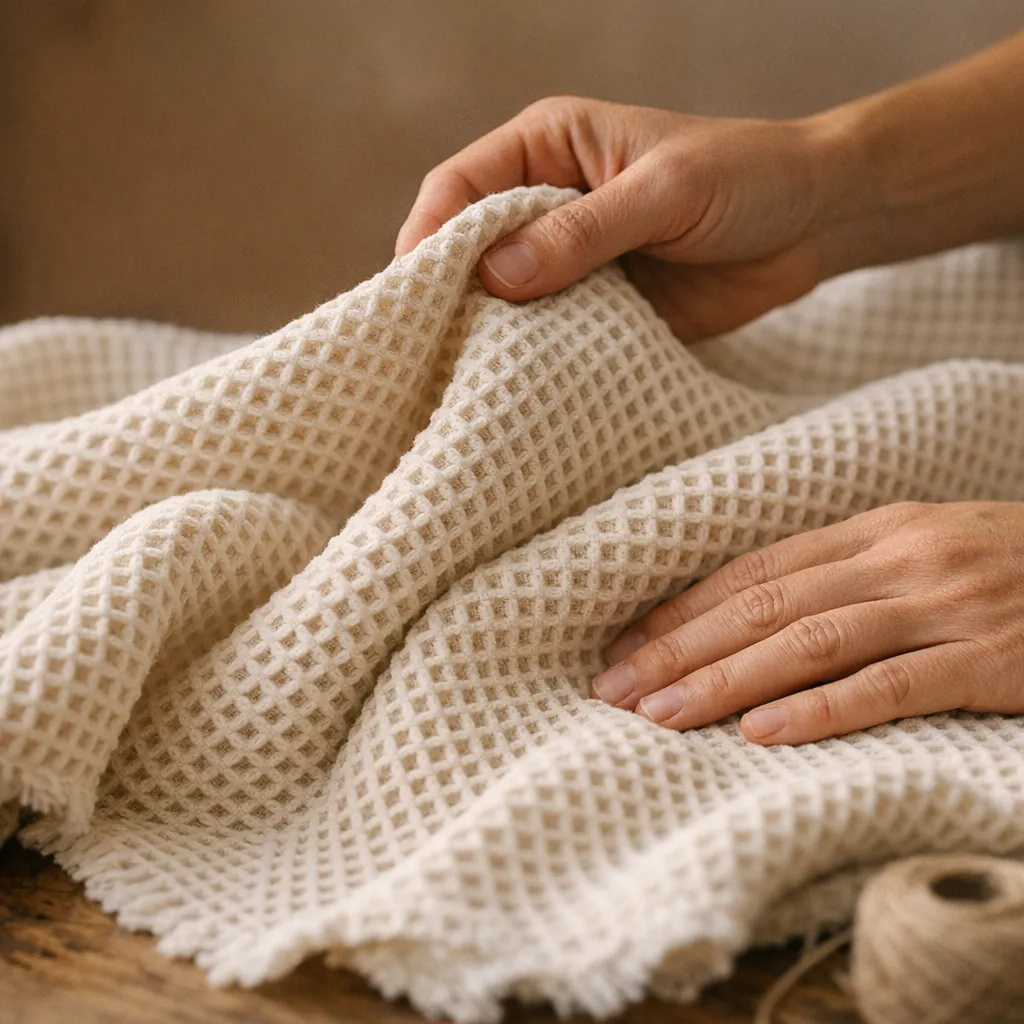
The grid is formed by raised squares in a three-dimensional weave or knit. That geometry creates a tactile pattern you can feel and see, changing how the fabric drapes and rests on the skin. The result is a surface that reads as soft texture yet remains light, with a touch of bounce that helps it move smoothly over curves in robes and casual tees alike.
This pattern produces micro air pockets that boost airflow, pull moisture away from the skin, and speed up drying. When you glide a finger over the surface, you’ll notice a light, slightly puckered texture that stays comfortable against the skin. For designers and brands, the open texture signals a layering-friendly finish that adds warmth without bulk, making waffle fabric read as cozy in loungewear and practical in towels and robes. LESH What's New
What fibers influence waffle feel and performance?
Fiber choice is a major driver of waffle behavior. Cotton fibers provide softness, breathability, and a natural hand, while blends with polyester or other synthetic fibers introduce durability and quicker moisture evaporation. The combination of fiber and weave determines how the fabric drapes, how it warms the body, and how aggressively it dries after washing. In fashion terms, a cotton-rich waffle tends to feel plush against the skin, whereas a polyester blend can offer structure and faster turnaround between wears.
A 100% cotton waffle reads as plush and breathable, while blends can shorten drying times and improve shape retention. The exact feel shifts with fiber ratio, so a swatch can help you gauge hand feel, weight, and how the fabric behaves in washing. For texture-forward projects, consider how this choice interacts with colorfastness and care labels. LESH The Collection
How does weight affect warmth and everyday use?
Weight and weave density determine insulation, drape, and washability. Heavier waffles feel more cushioned and provide noticeable warmth, making them feel substantial in robes or outerwear, while lighter waffles read as airy for summer tops or towels. The overall impression is that density controls how much heat is trapped and how the fabric behaves when layering.
Weigh also influences drying speed and care requirements. Heavier waffles may take longer to dry and can feel stiffer when new, while lighter versions dry quickly and drape softly on the body. In fashion terms, heavier waffles read as premium textures, while lighter styles translate to breathable everyday wear. The precise effect depends on fiber blend and weave tightness. Yardblox waffle guide
LESH Texture Stories
What should I consider when choosing waffle fabric for a project?
Begin with the fiber base, then decide weave density, then review the intended use-bath textiles, loungewear, or apparel-so you pick a weight and texture that suit the project. Examine how the pattern reads under lighting and how it feels against the skin in different climates. The goal is to match texture, warmth, and washability to the design brief.
Sizing note: waffle fabrics can have limited stretch and true fit can vary by fiber, check measurements and store policies before purchase.
Request swatches to compare texture and weight across lots, and confirm color consistency before committing to larger orders. A quick test wash can reveal shrinkage or texture changes and guide how you label care instructions for customers. For additional guidance, see Yardblox waffle guide .
What is waffle fabric and why it feels different
- Absorbency is high due to a grid-like structure that creates micro air pockets, speeding moisture wicking, as described by Yardblox waffle collection .
- Weight ranges from lightweight to moderately warm depending on weave density, per Wikipedia's waffle fabric page .
- The three‑dimensional pattern of raised squares improves air flow and drying, described by Yardblox waffle guide .
- Fiber composition matters: 100% cotton feels plush and breathable, while blends speed drying and add durability, per Changxing Qianbaisi Textile Co., Ltd. .
- Weight and weave density influence warmth, drape, and washability, a relationship discussed in textile guides such as Yardblox waffles guide .
- Care needs vary by fiber, generally washing cold or warm on gentle cycles and line drying helps preserve texture, as described in the Yardblox waffle collection.
What is waffle fabric and why it feels different
- Absorbency can reach up to around 25% of a fabric’s own weight in water because the grid-like pattern creates micro air pockets that wick moisture quickly, according to Quality Textiles .
- Weight is generally lightweight, contributing to an airy feel that suits summer wear and bath textiles, according to Yardblox waffle collection .
- The three-dimensional grid pattern forms raised squares that create micro air pockets, improving airflow and promoting faster drying, as described on Wikipedia's waffle fabric page .
- Fiber choices matter: cotton or cotton blends shape softness, breathability, and drying performance, with 100% cotton offering plush hand and natural openness, explained by Changxing Qianbaisi Textile Co., Ltd. .
- Common uses include loungewear, towels, babywear, and apparel, weight and weave density guide warmth and drape, a point echoed in LESH texture storytelling at LESH .