
This guide outlines a practical, repeatable plan for building a Men's capsule wardrobe: essential basics that stays useful year after year. You'll begin by defining your wear contexts and a simple 2–3 color plan, purge clutter, and select a lean starter of 14 pieces (tops, bottoms, outerwear, and footwear). The simplest path is to choose timeless designs in neutral colors, ensure a clean fit through quick tailoring, test outfits over a week, and shop only gaps with a focused Capsule Wardrobe Shopping List. Establish a weekly laundry routine and an 8‑day buffer so you never run out of ready outfits. The goal is easy, versatile dressing with 2–3 looks per piece, minimal decision fatigue, and a closet that supports work, casual, and travel.
This is for you if:
- You want a neat, versatile wardrobe built from essentials rather than fast fashion.
- You’re short on time and prefer repeatable outfits with minimal decision fatigue.
- You aim to start with a lean starter of 14 pieces and optionally expand later.
- You want neutrals that mix and match easily, with a clear color plan.
- You’re open to tailoring for fit and gradually adding weather-appropriate outerwear and footwear.

Essential prerequisites to start your men’s capsule wardrobe
Prerequisites matter because they set the foundation for a minimal, versatile wardrobe that actually works. By clarifying wear contexts, color rules, and shopping boundaries before you buy, you reduce decision fatigue, prevent impulse purchases, and ensure every piece earns its place. Establishing these basics up front keeps the capsule cohesive across seasons and settings, makes layering predictable, and accelerates online or in-store shopping. With clear prerequisites, you can build faster, dress more confidently, and maintain a timeless, clutter-free closet.
Before you start, make sure you have:
- Defined wear contexts: work, casual, smart-casual, travel
- A simple, repeatable color plan (2–3 main colors + 1 accent)
- A starter capsule of 14 essential pieces (excluding socks/undies)
- Option to expand to a 22-piece core including outerwear and footwear
- A weekly laundry routine and buffer to cover laundering days
- A capsule shopping list or gaps-based purchasing plan
- Access to basic tailoring references or a plan to adjust fits
- A personal budget and system to track purchases
- A clean, organized closet space or wardrobe area
- A method to test outfits for a week and log results
- Weather-appropriate outerwear planned for seasonal coverage
- A simple care routine for fabrics and footwear
Take Action: Build Your Essential Men’s Capsule Wardrobe Step by Step
This procedure guides you to assemble a lean, versatile basics capsule that simplifies daily dressing and reduces decision fatigue. You’ll define practical wear contexts, establish a neutral color plan, and purge nonessentials. Then you’ll select timeless pieces, tailor for fit, test outfits in real-life conditions, and implement a gaps-based shopping approach. Focus stays on practical items that pair across work, casual, and travel settings, helping you present a polished, timeless look with minimal closet clutter.
-
Define wear contexts
Clarify where you’ll wear the capsule: work, casual, smart-casual, and travel. List the core settings you want each piece to cover. Establish a basic color plan that supports mix-and-match.
How to verify: Your contexts and color plan are written and aligned with everyday needs.
Common fail: Vague usage assumptions lead to a bulky, unfocused wardrobe.
-
Audit wardrobe
Review current clothes and remove anything unwearable, ill-fitting, or rarely worn. Create a short list of gaps to fill with essentials only.
How to verify: Only clean, fit, and versatile items remain, with gaps clearly identified.
Common fail: Clutter persists because you keep nonessential items.
-
Build lean capsule
Choose core tops, bottoms, and layering pieces that are timeless and easy to mix. Prioritize neutrals and simple silhouettes that pair with most outfits.
How to verify: Each chosen piece has at least two potential outfit pairings.
Common fail: Selecting fashion-forward or ill-fitting items that don’t mix well.
-
Add outerwear & footwear
Add weather-appropriate outer layers and a versatile pair of shoes for most settings. Ensure combinations work across seasons.
How to verify: Outerwear and shoes are compatible with at least 80% of the capsule items.
Common fail: Missing a critical outer layer or footwear that limits outfits.
-
Validate fit & test mix-and-match
Try outfits using the capsule pieces. Note which items need tailoring or swapping for better proportions.
How to verify: You can assemble multiple outfits without gaps or clashing styles.
Common fail: Discovering ill-fitting pieces after purchase.
-
Create outfit templates
Document a few go-to templates for core scenarios (workday, weekend, evening out). Use them as quick-start guides.
How to verify: Templates cover 80% of your weekly needs.
Common fail: Templates are too rigid or incomplete for real life.
-
Shop gaps only
Buy one item at a time that directly fills a stated gap. Avoid impulse purchases and big shopping sprees.
How to verify: Purchases strictly follow identified gaps and budget.
Common fail: Overbuying before gaps are clear.
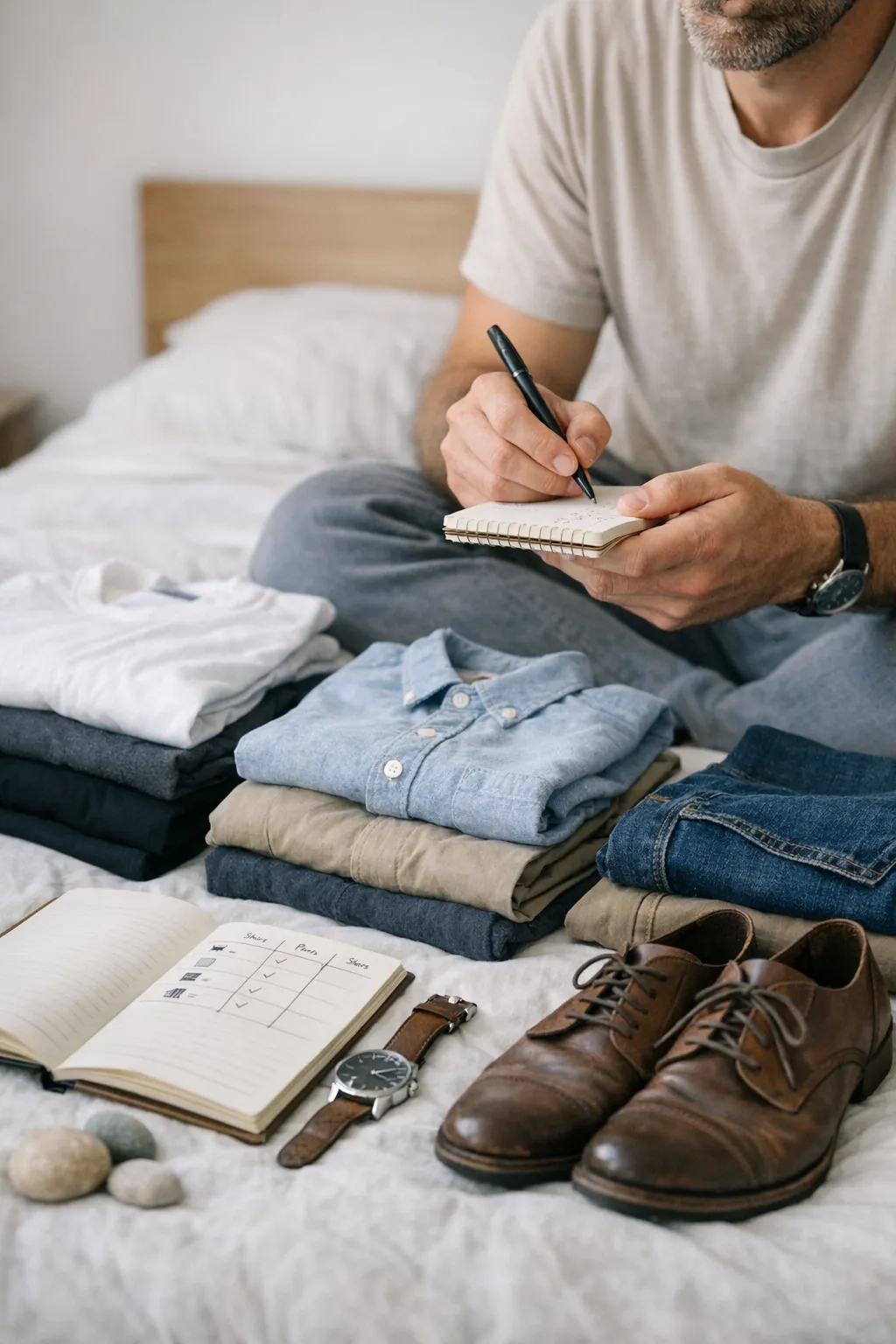
Verification: Confirm Your Capsule Wardrobe Is Working For You
Verification happens as you test real-world wear and measure whether the capsule actually saves time and reduces decision fatigue. Confirm success by confirming you can assemble work, casual, and travel looks from a small set of pieces, without scrambling for options or duplicating outfits. Track how long dressing takes, whether all pieces still fit and pair well, and whether you can launder and re-wear with your standard weekly routine. If you can do this comfortably across a week and a changing season, the capsule is delivering value.
- Core looks exist for work, casual, and travel contexts using the same starter pieces
- Every item pairs with at least two other pieces to form multiple outfits
- Dressing time is consistently quick and decision fatigue is reduced
- All pieces still fit and maintain their silhouette after a week of wear
- Laundry and rotation keep clean outfits available on schedule
- Gaps are identified and addressed with targeted purchases only
- Care routines keep fabrics looking fresh and extend garment life
- Outfits remain cohesive across seasonal changes
- You can articulate a clear path for future refinements without overhauling the wardrobe
| Checkpoint | What good looks like | How to test | If it fails, try |
|---|---|---|---|
| Core looks exist for work, casual, and travel | Plan a three-day rotation across contexts using only the capsule items | Identify missing context and add a versatile piece that fits multiple contexts | |
| mix-and-match viability | Each item pairs with at least two others for multiple outfits | Create six distinct outfits from the capsule set | Reassess color neutrals and silhouette compatibility, swap one or two pieces |
| fit and tailoring readiness | All pieces fit well and hold shape across outfits | Try full outfits and check for comfort and movement | Schedule quick tailoring for any waist, sleeve, or length issues |
| Laundry adherence | Laundry schedule fits weekly routine with a clean buffer | Simulate a week of wear and verify clean options remain | Adjust washing frequency or add one extra versatile piece |
| gap-based shopping adherence | Purchases target identified gaps only | Review shopping list against items in rotation | Reprioritize gaps and defer non-essential buys |
| care and maintenance efficacy | Care routines keep fabrics in good condition | Perform routine care steps and inspect for wear | Update care methods or replace worn items |
Troubleshooting: Quick fixes to keep your essential basics capsule on track
When your capsule wardrobe isn’t performing, you need fast, actionable diagnostics. This section helps you identify common problems, understand why they occur, and apply practical fixes that restore cohesion, fit, and versatility. Use these checks to refine your pieces, optimize outfits, and maintain a minimalist closet that still covers work, casual, and travel needs through changing seasons.
-
Symptom:
Outfits feel repetitive or similar every day
Why it happens: Limited mix-and-match options, neutrals overlap, not enough silhouette variety.
Fix: Ensure each item pairs with at least two others, add a second versatile top or layer with a different silhouette, rotate outfits on a weekly schedule.
-
Symptom:
Colors look off or outfits clash
Why it happens: Undefined color plan, too many neutrals or conflicting accents.
Fix: Revisit the color plan, restrict to 2–3 neutrals plus 1 accent, swap items for coordinating shades, test in natural light.
-
Symptom:
Not enough outerwear for seasons
Why it happens: Missing weather-appropriate layers, narrow outerwear selection.
Fix: Add a lightweight layer and a heavier option that pair with most looks, choose versatile textures and colors.
-
Symptom:
Items don’t fit well or feel uncomfortable
Why it happens: Poor sizing, fabrics drape poorly, or mismatched proportions.
Fix: Prioritize proper fit, tailor sleeves, hems, and waists as needed, replace ill-fitting pieces with better options.
-
Symptom:
Laundry backlog disrupts rotations
Why it happens: Washing cadence misaligned with capsule size, too few outfits for the week.
Fix: Establish a weekly laundry routine and maintain an 8-day rotation buffer, adjust capsule size if necessary.
-
Symptom:
Footwear doesn’t cover occasions
Why it happens: Over-reliance on one shoe type, lack of versatile options.
Fix: Include at least one casual sneaker and one dressier pair that coordinate with neutrals, ensure heel heights and silhouettes suit most outfits.
-
Symptom:
Underwear and socks run low
Why it happens: Inadequate inventory planning or irregular restocking.
Fix: Maintain a baseline of 8 underwear and 8 socks, restock seasonally and rotate through the set.
-
Symptom:
Purchases drift from gaps
Why it happens: Impulse buys or unclear gaps in the shopping plan.
Fix: Adhere to a gaps-based shopping approach, pause non-essential buys and log why you’re purchasing each item.
Next questions about essential basics for a men’s capsule wardrobe
- How many pieces should be in a starter capsule? A starter capsule uses a lean set of essentials-14 pieces excluding socks and underwear-designed to mix and match across work, casual, and travel looks.
- How should I choose colors? Start with 2–3 neutrals and 1 accent, neutrals mix easily and keep outfits cohesive, with color kept minimal and intentional.
- Do I need tailoring? Yes, ensure proper fit and consider alterations for sleeves, hems, and waists to maximize wearability of basics.
- What outerwear is essential? Include at least a versatile jacket for layering and a second option for weather, with a navy blazer as a strong, timeless option.
- How often should I wash the wardrobe? Plan weekly laundry with a buffer to cover eight days of outfits, so you always have clean options.
- How do I test mix-and-match? Create simple outfit templates and try combinations across work, casual, and travel contexts to verify versatility.
- How to shop without clutter? Use a gaps-based approach and a Capsule Wardrobe Shopping List to buy only what’s missing.
- Can I add color later? Yes, after establishing neutrals, introduce color sparingly as accents that complement existing pieces.
Common questions about essential basics for a men’s capsule wardrobe
-
How many pieces should I start with in a men’s capsule wardrobe?
Start with a lean starter capsule of fourteen essentials, excluding socks and underwear. This typically includes two jackets, eight tops, two pants, and two shoes. You can expand later to a 22-piece core that adds weather-appropriate outerwear and additional footwear. The goal is maximum mix-and-match with minimal clutter, not a running inventory.
-
Should I tailor clothing for a capsule wardrobe?
Yes, tailoring matters because basics rely on clean lines and correct proportions. Start by checking shoulder fit, sleeve length, and hem length, then tailor as needed to preserve a neat silhouette across multiple outfits. Even small adjustments can dramatically improve how a jacket drapes over a tee or how trousers sit with different shoes.
-
What color scheme works best?
Begin with a neutral base of two to three core neutrals, plus one accent color for subtle variety. Neutrals like white, black, grey, navy, olive, and khaki mix effortlessly and anchor your outfits. Add color sparingly as accents in tees, a shirt, or a layer to avoid visual clutter while keeping options versatile.
-
Which outerwear is essential?
Select weather-appropriate outerwear that pairs with most looks. A versatile navy blazer or a simple blazer-like jacket provides smart-casual polish, while a mid-weight puffer or trench offers season-ready warmth and coverage. The key is choosing silhouettes and colors that layer over all tops and under all coats without creating bulk.
-
How often should I launder and rotate outfits?
Plan regular laundry on a weekly cadence and maintain a buffer to cover days between washes. With a capsule, you should be able to assemble outfits for a full week, plus a few extra options, while clean items remain accessible. This habit reduces stress and ensures your wardrobe remains fresh and breathable.
-
How do I test mix-and-match effectively?
Create a few straightforward outfit templates, then test combinations across typical days. Track which pieces pair well, which silhouettes feel off, and how many distinct looks you can generate with the same capsule. Rotate the pieces to avoid repetitive looks, and log what works to guide future tweaks.
-
How to shop without clutter?
Adopt a gaps-based shopping approach. Identify missing items that prevent more outfits, then buy one item at a time to fill those gaps. Avoid impulse buys by sticking to neutrals and pieces that mix with existing closet staples. Use a Capsule Wardrobe Shopping List to stay focused and prevent overbuying.
-
Can I introduce color after establishing neutrals?
Yes. Start with neutrals to build the foundation, then introduce color sparingly as accents. Small doses of color can refresh outfits without sacrificing versatility. Reserve brighter tones for one-item statements (like a tee or a surprising accessory) that can be swapped in or out depending on mood and setting.