
You're about to learn how to identify a high-quality men's T-shirt that will stand up to daily wear. This guide walks you through the essential checks: confirm natural fibers (cotton, linen, hemp) or clearly labeled organic options, verify credible certifications or transparent origin notes, assess weight and hand feel for breathability and durability, inspect construction-reinforced seams, clean stitching, stable collar, and well-finished hems-then use the size guide to lock in a fit that matches your body and style. Finally compare value by considering longevity and cost per wear, while favoring timeless designs with minimal branding. At LESH, we prioritize durable, versatile basics that age well, follow these steps to choose one T-shirt you’ll reach for again and again.
This is for you if:
- You want a high-quality T-shirt made from natural fibers (cotton, linen, hemp) with a soft hand and lasting fit.
- You’re shopping for durability, a timeless style, and careful construction (reinforced seams, well-finished collars).
- You value clear material details and ethical/sustainable cues (organic options, certifications, transparent origin notes).
- You rely on a size guide to pick the correct measurements and achieve the intended silhouette.
- You prefer minimal branding and versatile designs that pair easily with other pieces from LESH's Classics line .
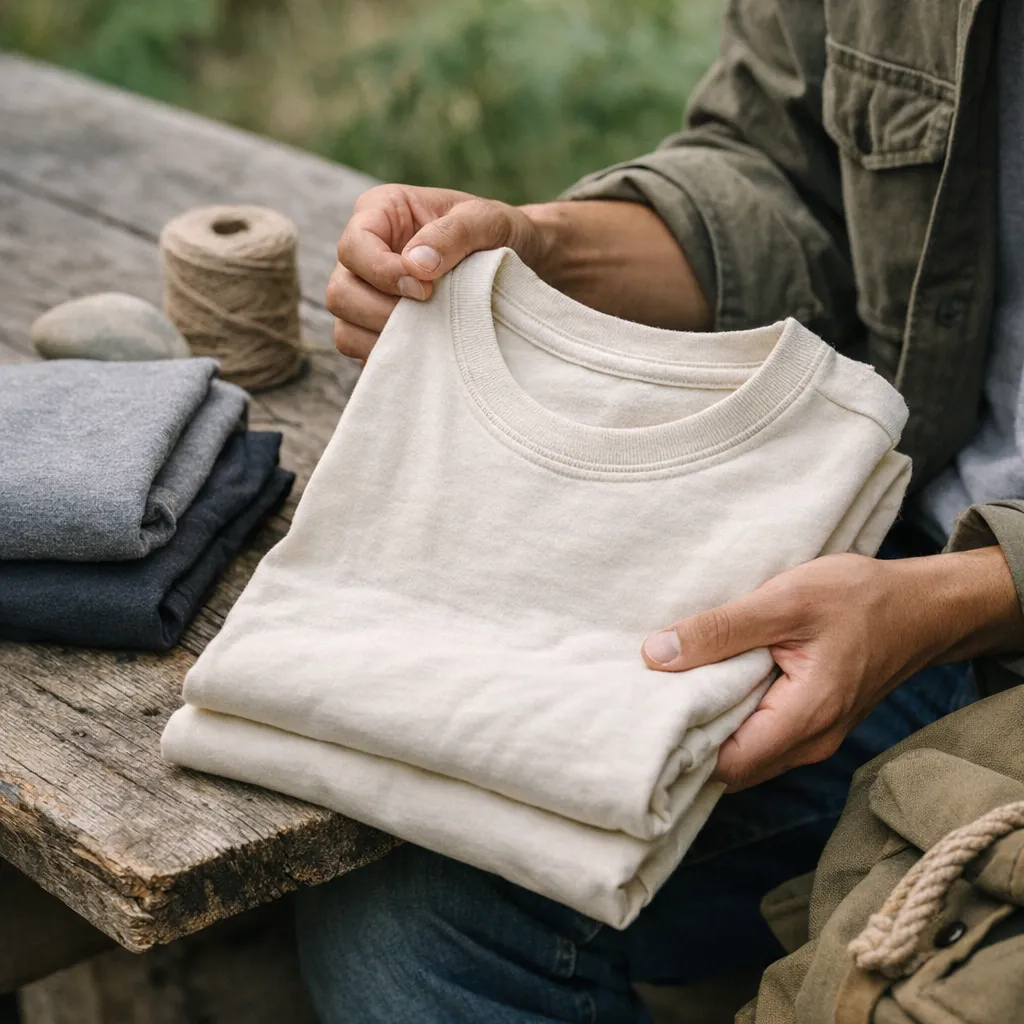
Prerequisites before you start shopping for a high-quality men's T-shirt
Having the right tools and information at the outset saves time, helps you compare options accurately, and ensures you select a T-shirt that lasts. Understanding fabric options, certifications, weight, and construction, along with your own measurements and budget, lets you evaluate each product page with confidence. This prep work reduces guesswork, avoids ill-fitting choices, and positions you to choose a timeless, well-made tee that ages well.
Before you start, make sure you have:
- Access to product pages with fabric composition, weight, and construction details
- A size guide or the ability to take your measurements (chest, length, shoulder, sleeve)
- Clear understanding of natural fibers vs synthetics (cotton, linen, hemp, organic options)
- Knowledge of certifications or credible origin statements (GOTS, OCS, OEKO-TEX) or transparent sourcing
- Awareness of care labels and washing guidelines to preserve fit and color
- A rough budget range and plan to compare multiple options
- Ability to assess durability cues (reinforced seams, collar retention, pre-shrunk fabrics)
- Recognition of fit preferences (crewneck, V-neck, straight, boxy) and how length affects wear
- Access to customer reviews or feedback on real-world wear and colorfastness
- Interest in sustainability/ethics and the brand’s transparency on sourcing
- Understanding of care and maintenance to maximize longevity
- Clarity on when you will be buying (in-store vs online) and return policies
Act now: a practical step-by-step to verify a high-quality T-shirt
This procedure guides you through a focused, efficient check before buying a high-quality men's T-shirt. You’ll define how you’ll wear it, confirm fabric and certifications, assess weight for comfort and durability, inspect stitching and finishes, verify fit with the size guide, evaluate sustainability claims, compare value through reviews, and lock in care guidance and purchase terms. Following these steps helps you avoid common missteps and choose a long-lasting tee that fits your wardrobe and lifestyle.
-
Determine use-case
Identify whether the T-shirt will function as an undershirt, a standalone layer, or a dressier basic. Consider climate, daily activities, and how you typically style tees with other pieces. This clarity will streamline subsequent material and cut decisions.
How to verify: Align the use-case with your current wardrobe and routine.
Common fail: Choosing a vibe that only suits one occasion and doesn’t adapt to your outfits.
-
Check fabric content and certifications
Read product specs for fiber type (cotton, linen, hemp) and whether it’s organic or carries certifications like GOTS/OCS/OEKO-TEX. Look for transparent sourcing notes when available. If details are missing, treat the listing with caution.
How to verify: Review the fiber composition and any certification statements on the product page.
Common fail: Relying on marketing language without concrete material or cert information.
-
Assess weight and breathability
Check the fabric weight (GSM or oz) and consider how it will behave in your climate. A midweight cotton, for example, often balances breathability with durability. If possible, handle a sample or compare with similar fabrics.
How to verify: Compare weight specs across options intended for the same use-case.
Common fail: Assuming heavier equals better without considering knit and weave quality.
-
Inspect construction and finishes
Examine seams, collar, hems, and any edge finishes. Look for reinforced stitching and minimal puckering. A well-made tee shows consistent stitch density and clean lines on visible edges.
How to verify: View close-up product photos or inspect in-store samples for stitching quality.
Common fail: Overlooking subtle flaws that affect longevity, like loose hems or distorted collars.
-
Check fit and length via size guide
Consult the brand’s size guide for chest, shoulder, sleeve, and torso measurements. Ensure the length works with your preferred bottoms and layering approach. If you’re between sizes, consider brand-specific guidance on tall or slim fits.
How to verify: Match your measurements to the guide and read recent fit notes from other buyers.
Common fail: Relying on photos alone or picking a size without checking the measurements.
-
Review sustainability and origin claims
Note any organic certifications, environmental claims, or origin details. Transparency helps assess long-term value and ethics. If a listing lacks this information, weigh whether you’re comfortable proceeding without it.
How to verify: Look for explicit statements or certifications in the product description.
Common fail: Accepting vague eco claims without verifiable evidence.
-
Compare value and read reviews
Balance price with material quality, weight, and construction. Scan reviews for notes on wash durability, color retention, and true-to-size fit. Consistent, multi-review feedback strengthens confidence.
How to verify: Read a mix of reviews across multiple purchase cycles, if available.
Common fail: Focusing solely on price or visuals without corroborating durability signals.
-
Confirm care and purchase terms
Check washing instructions, drying guidance, and whether the retailer offers straightforward returns or exchanges. Clear care details help maintain shape and color, while favorable terms reduce purchase risk.
How to verify: Review the care label and the store’s return policy before checkout.
Common fail: Ignoring care requirements or return options, leading to post-purchase disappointment.
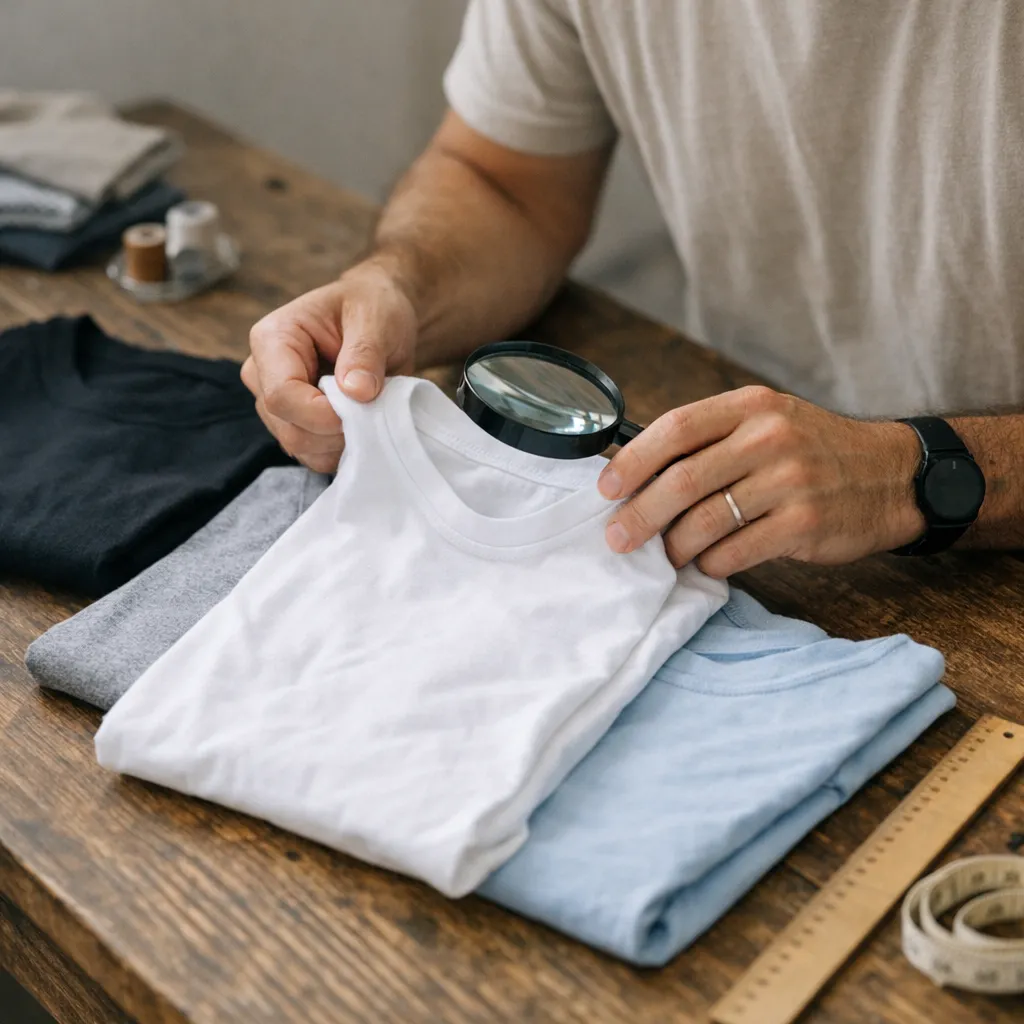
Verification checkpoints to confirm a high-quality T-shirt
Use these checks to confirm you’re buying a well-made T-shirt that will age well. Validate fabric content and credible certifications, assess weight and breathability, inspect construction and finishes, and verify the fit against the brand’s size guide. Confirm care instructions align with long-term wear, and review sustainability claims for transparency. If all checks pass, you can proceed with confidence knowing the tee supports daily wear, comfort, and longevity.
- Fabric content and certifications align with product page
- Organic or certified fibers are clearly labeled
- Fabric weight matches the intended climate and use
- Construction shows reinforced seams and clean stitching
- Collar and hems retain shape after light handling
- Size guide is used to confirm proper fit
- Care instructions support long-term wear
- Brand sustainability claims are verifiable and transparent
| Checkpoint | What good looks like | How to test | If it fails, try |
|---|---|---|---|
| Fabric content and certifications | Clear fiber type (e.g., 100% cotton, linen, hemp) with certifications or transparent origin notes | Review product page specs, read labels for exact fiber percentages and cert logos | Choose items with explicit certification or verifiable origin details |
| Weight and breathability | Weight appropriate for climate, breathable feel, balanced durability | Compare GSM/oz specs, handle a sample or compare to similar fabrics | Opt for a lighter or heavier option within the same fabric family |
| Construction and finishes | Reinforced seams, clean stitching, no puckering, durable collar and hems | Inspect close-up photos or in-store samples, perform a gentle tug test | Prefer items with more durable stitching and edge finishes |
| Fit and length via size guide | Shoulder seams align, chest and sleeve measurements match your body, length suits your styling | Compare your measurements to the guide, read reviews on true-to-size notes | Size up or down based on reviewer feedback or try a near size |
| Care instructions | Clear guidance that preserves shape and color, pre-shrunk if claimed | Read care label, follow washing/drying steps and re-test after first wash | Choose alternatives with simpler maintenance if care is heavy |
| Sustainability/origin claims | Explicit, verifiable statements or certifications, minimal greenwashing | Look for logos or origin notes, verify against brand disclosures | Prefer brands with transparent sourcing or more robust certifications |
| Value and durability signals | Durable fabric and construction justify price, positive long-term wear signals | Scan reviews for wash durability, color retention, and true-to-size feedback | If reviews are consistently negative, re-evaluate choice or compare with alternatives |
Troubleshooting: actionable fixes for common T-shirt quality issues
Use this quick guide to diagnose problems you encounter after selecting a high-quality men’s T-shirt. Each symptom includes a concise cause and an actionable fix you can apply now or use to refine future purchases. The goal is to safeguard fit, durability, and comfort over time by choosing better fabrics, construction, and care practices.
-
Symptom:
Collar loses shape after washing
Why it happens: The collar may lack reinforcement or use a weak rib knit, allowing distortion with washing.
Fix: Choose tees with a reinforced collar and securely stitched neck seam, wash per label and air-dry to preserve shape.
-
Symptom:
Seams pucker or hems unravel
Why it happens: Low stitch density or poor finishing can cause edges to ripple and seams to loosen.
Fix: Look for dense stitching and reinforced seams, prefer double-stitched hems and neat finishes, handle with gentle washing.
-
Symptom:
Shrinkage after washing
Why it happens: Fabric not pre-shrunk, cotton fibers contract when exposed to water and heat.
Fix: Prioritize pre-shrunk fabrics, wash in cold water, and air-dry to minimize further shrinkage.
-
Symptom:
Color fades or dyes bleed
Why it happens: Low-quality or non colorfast dyes can fade or transfer to other fabrics.
Fix: Choose colorfast options and wash with similar colors on gentle cycles, avoid hot water and high-heat drying.
-
Symptom:
Fabric feels rough or itchy
Why it happens: Fabric may be a low-grade cotton or lack finishing that smooths the yarn.
Fix: Opt for long-staple cotton or organic options, read reviews for hand feel and pre-wash outcomes, launder on gentle cycles to soften.
-
Symptom:
Tee is too sheer
Why it happens: Fabric weight or weave is too light for reliable opacity.
Fix: Select midweight or heavyweight tees and check fabric weight (GSM/oz) before purchase, test wear under regular lighting.
-
Symptom:
Size runs large or small vs. guide
Why it happens: Inconsistent sizing across brands or atypical cuts can misalign with standard guides.
Fix: Always consult the specific size chart and recent buyer notes, try adjacent sizes if in doubt, verify return options if needed.
-
Symptom:
Print or graphic cracks after washing
Why it happens: Graphic application or screen print not durable under washing temperatures or cycles.
Fix: Choose tees with durable print methods (e.g., embroidery or high-quality screen prints), wash inside out and follow heat guidance.
What readers ask next about high-quality men's T-shirts
- How can I tell if a T‑shirt is 100% cotton or a blend? Check the product page for the fiber listing and percentages, if in doubt, look for brands that clearly state the fabric composition and avoid vague marketing terms.
- What certifications should I look for? Look for credible labels like GOTS, OCS, or OEKO-TEX, or transparent origin notes from the brand to confirm eco-claims and fiber safety.
- What weight is best for daily wear? A midweight cotton (roughly 6 oz / about 180–210 GSM) offers a good balance of breathability and durability for most climates.
- How can I gauge construction quality from photos? Inspect for reinforced seams, dense stitching, a stable collar, and neatly finished hems, if possible, compare close-up images or view in-store samples.
- Is organic cotton always worth it? Organic or certified fabrics often align with better dye practices and fiber integrity, prioritize credible certifications when sustainability matters.
- How do I choose the right size without trying it on? Use the brand’s size guide to match your measurements (chest, shoulder, sleeve, length) and read recent buyer notes for fit feedback.
- Does weight alone indicate quality? Not necessarily, fabric type and knit/finish quality matter more, so compare weight alongside construction and hand feel.
- What about care requirements before buying? Review the care labels and brand guidance, pre-shrunk fabrics and colorfast dyes simplify long-term maintenance.
Common questions about high-quality men's T-shirts
What fabric qualities define a high-quality T-shirt?
High-quality T-shirts typically use natural fibers with a soft hand and durable construction. Look for 100% cotton, linen, or hemp, or clearly labeled organic options. Avoid fabrics with heavy synthetic blends that trap heat or wear poorly after washing. Pay attention to pre-shrunk or colorfast claims, as these features reduce surprises after the first few washes. A balanced hand feel and dependable opacity signal lasting wear.
Do certifications like GOTS or OEKO-TEX matter for T-shirts?
Certifications like GOTS, OCS, or OEKO-TEX provide third-party verification of fiber content and chemical safety, but credible origin statements can also help. They matter because they reduce the risk of harmful dyes and ensure organic farming practices. Always read the product page for explicit certification logos or transparent sourcing notes rather than marketing claims alone.
How can I assess weight and breathability effectively?
Fabric weight and weave influence how a tee feels across conditions. A midweight cotton usually balances breathability with durability, while heavier cottons wear longer but can feel warm in hot weather. Gauge breathability by how the fabric drapes and vents heat during wear, and compare weights across options in the same fabric family to pick the right level for your climate.
What construction cues show a T-shirt will last?
Construction durability comes from reinforced seams, dense stitching, and a stable collar that holds its shape. Look for double-stitched hems, clean edge finishes, and minimal puckering. These cues signal the garment was made to withstand regular washing and wear. When in doubt, compare close-up photos or inspect in-store samples for evidence of sturdy construction.
How should I use the size guide to pick the right fit?
Size selection is critical for comfort and layering. Use the brand’s size guide to map chest, shoulder, sleeve, and torso measurements to your body, read recent buyer notes for fit hints. If you’re between sizes, choosing the near size or checking for tall variants can prevent tightness or excess length that ruins the look.
Is organic cotton worth the extra cost?
Organic or certified fibers can improve fiber integrity and dye performance, but they’re not a guarantee of higher quality alone. Look for explicit certifications and transparent sourcing details to verify ethics and sustainability. If sustainability matters, factor in these credentials alongside material quality and construction when deciding whether a tee is worth the premium.
Should I prefer minimal branding or versatile design?
Minimal branding and timeless design often outlast fast-season logos. Choose tees with neutral colors, clean silhouettes, and durable fabrics so they pair with many outfits. This versatility reduces the need to replace pieces and supports a longer wardrobe life, maximizing value from your investment while keeping styling options open across different outfits and occasions.
How can I verify care instructions to maximize longevity?
Care instructions make or break longevity. Always read the label and follow washing recommendations to protect shape and color. When possible, air-dry or use low heat, avoid aggressive tumble drying that can warp necklines or shrink fabric. Proper care reduces wear and keeps colors vibrant, extending the time between replacements and preserving the tee’s performance.