
To get pant hems right at home, start by wearing the shoes you will pair with the pants and marking the intended length all the way around. Create a crisp crease at that line and check that the mark sits evenly around the leg. Next, unfold and cut a conservative hem allowance, then fold the raw edge up twice to hide it. Secure the fold with pins or clips and sew with a straight stitch (or use a blind stitch if you prefer an invisible outside finish). If you want a no sew option, apply iron on tape and press according to the product instructions. Finally, press the new hem from the inside and test by walking and sitting in the shoes to ensure the length stays even everywhere. Adjust by trimming or redoing a section if needed. This method yields a neat, durable LESH ready hem.
This is for you if:
- You want to hem pants at home with a precise, even length and a clean finish
- You are a beginner who needs a simple, reliable method
- You are working with LESH pants or similar silhouettes that require a crisp look
- You have basic sewing supplies and want a cost effective solution
- You want to test the final length while wearing the intended shoes before cutting
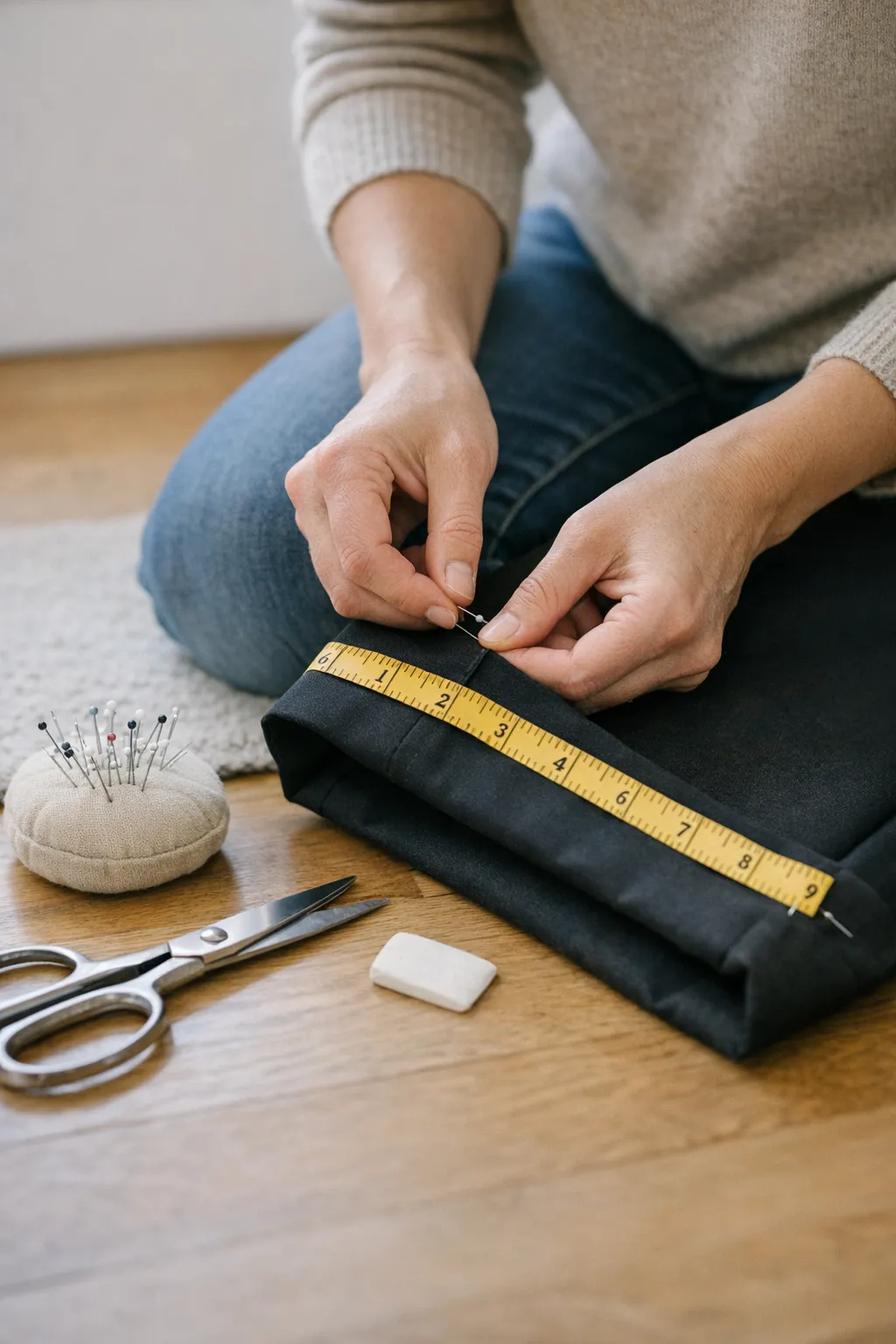
Prerequisites for a precise pant hem
Having the right tools and setup before you begin saves time, prevents mistakes, and ensures a clean, even hem. By gathering everything in one place, you can focus on measurement and folding rather than hunting for supplies mid-project. This prerequisites section outlines the essential items and conditions to prepare, so the pant hemming process (including choosing a finish and test wearing with your shoes) proceeds smoothly and yields a durable LESH-ready hem .
Before you start, make sure you have:
- Pants to hem and the shoes you will wear with them
- Measuring tape
- Tailor's chalk or washable marker
- Pins or clips to secure folds
- Iron and ironing board for crisp creases
- Scissors
- Sewing machine (optional) or hand sewing supplies
- Matching thread and an appropriate needle
- Iron-on hemming tape (optional)
- Extra fabric for test or adjustments
- Mirror or assistant to check even length around the hem
- Clean workspace with good lighting
Take Action: Hem Pant Length Precisely at Home
This step by step procedure is designed to set a reliable length before cutting, avoiding guesswork and ensuring the final hem stays even around the entire circumference. Focus on accurate measurement with the shoes in mind, careful folding, and consistent sewing or bonding. The aim is a durable, clean finish that looks intentional on LESH pants and similar silhouettes. Stay patient with each fold and check alignment frequently as you move through the steps.
-
Mark the length while wearing
Put the pants on inside-out with the shoes you will wear. Mark the intended hem line all around and create a crisp crease. Check that the mark sits evenly around the leg. This establishes the target length before any cutting.
How to verify: Crease remains uniform around the hem and aligns with the shoe line.
Common fail: The crease shifts when moved or the mark isn’t continuous around the circumference.
-
Trim for hem allowance
Unfold the hem and cut the fabric about 0.5 to 1 inch below the crease to create the hem allowance. Keep the cut even all around to avoid a lopsided edge.
How to verify: Hem allowance is consistent around the entire garment.
Common fail: Cutting too little or too much in some areas.
-
Fold to form double fold
Fold the raw edge up toward the crease, then fold again along the crease to hide the raw edge. Press each fold smooth for an even edge.
How to verify: Raw edge is completely inside the hem with even folds.
Common fail: Uneven folds or visible raw edge.
-
Pin the folded hem
Place pins or clips around the entire hem to prevent shifting. Align side seams and keep the edge level all the way around.
How to verify: Pins hold fabric securely without any wobble.
Common fail: Shifting fabric during sewing due to insufficient pins.
-
Sew the hem
Set up your machine and sew along the inner folded edge with a straight stitch, or use a hand stitch if preferred. Backstitch at the start and end for security.
How to verify: Stitches lie flat and secure with no skipped stitches.
Common fail: Tension problems or stitches too close to the edge.
-
Press the finish
From the inside, press the hem to set the crease and flatten edges. Use steam if available for a crisper result.
How to verify: Hem lies flat and crease holds after pressing.
Common fail: Creases loosen after handling or washing.
-
Bond with iron-on tape (optional)
Place iron-on tape between folded layers and press with a hot iron for a short time until bonded. Let cool completely before wearing.
How to verify: Bond feels strong after cooling.
Common fail: Tape loosens after washing or with heavy fabrics.
-
Test the length with shoes
Wear the pants with the intended shoes and move through walking and sitting. If length is off, adjust by reworking a section as needed.
How to verify: Length remains even around the circumference during movement.
Common fail: Hem shifts after first wear.
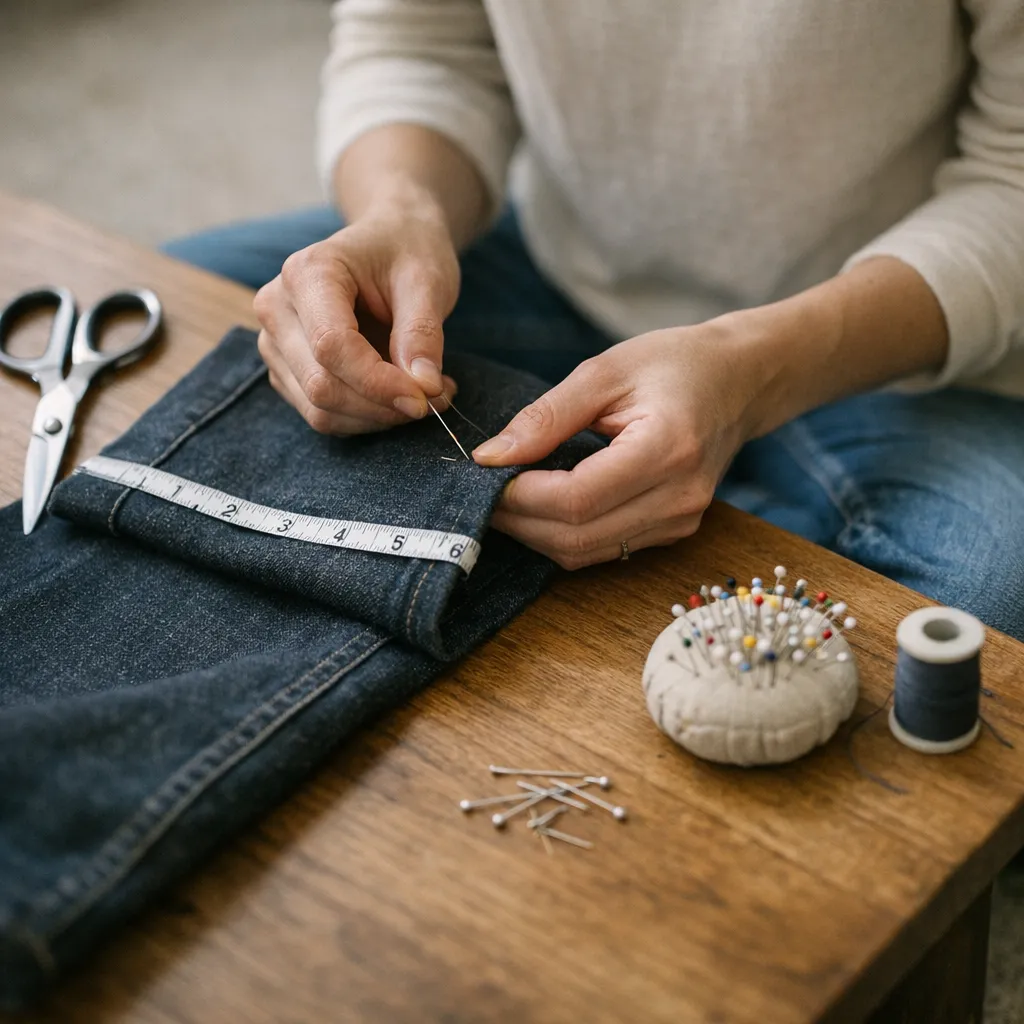
Validation: Confirm a Perfect Pant Hem Before Final Wear
To confirm the pant hem is correct after finishing, walk through a wearing test with the intended shoes, inspect the crease, and check evenness around the circumference. Look for a flat seam, consistent length, and no pulling or distortion at the edge. Use the same checking routine you would apply in store or on set to ensure the hem holds during movement, sitting, and washing. If adjustments are needed, rework the affected area and re-test until the result feels and looks intentional on LESH pants.
- Hem length matches the wear with the chosen shoes around the entire circumference
- Hem lies flat with no puckers or waviness
- Outer edge is finished and free of fraying
- Stitches are neat and secure
- The crease remains crisp after movement and washing
- The hem holds through walking and sitting
- Any iron-on tape bond remains intact after a wash cycle
| Checkpoint | What good looks like | How to test | If it fails, try |
|---|---|---|---|
| Length accuracy | Equal length around the hem | Wear with shoes and sit/walk to assess length | Re-mark and re-cut or adjust with re-sew |
| Edge finish | Raw edge hidden inside double-fold | Inspect from outside for any exposed edge | Re-fold and re-stitch, consider finishing stitch |
| Flatness | No wrinkles along the hem | Press from inside with steam, view under light | Re-press with steam and ensure pressure distribution |
| Crease retention | Crisp crease that holds after wear | Move through typical activities, re-crease if needed | Stitch closer to edge or use a stronger stitch type |
| Bond integrity | Iron-on tape bonds stay secure | Wash test (gentle cycle) and recheck | Rebond with heat or switch to sewn edge |
Troubleshooting pant hemming: common issues and practical fixes
When hemming pants at home the result depends on careful measurement, stable fabric handling, and appropriate sewing methods. If something looks off during or after finishing, address it with targeted checks and fixes instead of redoing the whole process. This section offers immediate, actionable steps to solve frequent hemming problems and keep the final length accurate for LESH pants and similar silhouettes.
-
Symptom:
Hem is uneven around the circumference
Why it happens: Marking or cutting wasn’t uniform, fabric shifted while folding or sewing.
Fix: Re-mark using the shoes to confirm length, re-cut evenly all around, re-pin, and resew with consistent seam allowances.
-
Symptom:
Hem edge puckers after sewing
Why it happens: Tension or stitch length not suited to the fabric, fabric wasn’t fed evenly.
Fix: Reset machine tension, use a suitable needle for the fabric, and test stitch on scrap before proceeding.
-
Symptom:
Crease doesn’t hold after washing
Why it happens: Insufficient pressing or incorrect iron temperature, no stabilizing crease.
Fix: Re-press with steam at the proper temperature and ensure the crease is well set before wear testing.
-
Symptom:
Iron-on tape bond fails in washers or with thick fabrics
Why it happens: Tape not suitable for fabric type or heat settings, insufficient press time.
Fix: Use tape designed for the fabric, apply heat for the recommended time, and verify the bond with a gentle test wash.
-
Symptom:
Hem shifts during wear
Why it happens: Pins or clips not securing the fold, no stay-stitch along the fold.
Fix: Re-pin closely, add light stay-stitches near the fold, and confirm alignment before final sewing.
-
Symptom:
Stitches visible from the outside
Why it happens: Stitch line too close to the raw edge, fabric thickness causes shifting.
Fix: Move the stitching away from the edge by a small margin or switch to a blind/hidden stitch if appropriate.
-
Symptom:
Fraying along the raw edge after finishing
Why it happens: Raw edge wasn’t finished or the fold doesn’t fully cover the edge.
Fix: Use a double-fold hem or finish the edge with zigzag/serger before folding, then re-sew.
-
Symptom:
Hem feels bulky on thick fabrics
Why it happens: Multiple layers and thick fabric create bulk at the fold.
Fix: Consider a single wider fold, use a walking foot, and verify needle and thread choices for thick textiles.
What readers ask next about pant hemming
- How do I know the right hem length when wearing the pants with shoes? Put the pants on inside-out with the shoes, mark the line all around, crease, and then recheck around the leg to confirm even length before cutting.
- Is there a method that doesn’t require cutting fabric? You can create a hem allowance by cutting a small amount below the crease, and you can opt for a no-sew option with iron-on tape if the fabric permits.
- What stitch is best for a durable denim hem? Use a heavy-duty needle and thread and consider sewing two parallel rows for added durability.
- How can I prevent the fabric from shifting while I sew? Secure the fold with plenty of pins or clips and, for slippery fabrics, use a walking foot.
- How should I finish the edges to prevent fraying? Use a double-fold hem to hide raw edges or apply a zigzag/serger finish before folding.
- How do I test if the crease will hold after washing? Re-press with steam, then perform a gentle wash test to verify the crease and bond if using tape.
- What if the hem ends up too long or too short after testing? If too long, re-mark and re-cut, if too short, let down an existing hem or add a decorative band.
- Can I adapt this method for knit fabrics? Yes, use a zigzag or stretch stitch and a ballpoint needle to accommodate stretch and prevent runs.
Common questions about pant hemming at home
-
How do I know the right hem length when wearing the pants with shoes?
To know the right hem length with shoes, start by putting the pants on inside-out with the shoes you’ll wear. Mark the hem all the way around, then crease evenly. Double-check that the length aligns with the shoe line around the leg by walking and bending slightly. If the mark shifts, re-mark and re-crease until the measurement holds around every area. This ensures a balanced, professional finish on LESH pants.
-
Is there a method that doesn’t require cutting fabric?
Yes. You can create a conservative hem allowance without cutting off fabric by folding the raw edge up and pressing, then proceeding with a no sew option using iron-on tape if your fabric accepts heat bonding. This approach preserves fabric length while still giving a secure, clean edge when you don’t want to cut.
-
What stitch is best for a durable denim hem?
Denim benefits from a heavy duty approach: use a denim needle and matching thread, plan for two parallel rows of stitching for durability. If you’re working with stretch denim, choose a stretch stitch and maintain consistent feed. This combination resists wear through repeated washing and movement. Backstitch at the ends for extra security, and test on scrap fabric first.
-
How can I prevent the fabric from shifting while I sew?
Secure the hem by pinning or clipping around the entire circumference and keep side seams aligned. For slippery fabrics, use a walking foot and consider tissue paper under the fabric to reduce slipping. Avoid moving the fabric as you sew by pausing to recheck alignment after each major section.
-
How should I finish the edges to prevent fraying?
Hide raw edges with a double-fold hem so no raw edge is exposed. For lighter fabrics or where a quicker finish is needed, apply zigzag or overlock stitches along the cut edge before folding. Always press the folds well to set the finish and prevent fraying during wear.
-
How do I test if crease will hold after washing?
After finishing, re-press the crease with steam and let the fabric cool fully. Then wash the garment on a gentle cycle or according to fabric care, dry, and recheck the crease. If the crease relaxes, resew along the fold or reinforce with a stronger stitch.
-
What if the hem ends up too long or too short after testing?
If the hem is too long, re-mark and re-cut, then re-crease and re-sew. If too short, let down the existing hem or add a decorative band or cuff. When possible, test a small adjustment first on a scrap or a hidden area.
-
Can I adapt this method for knit fabrics?
Absolutely. For knits, use a zigzag or stretch stitch and a ballpoint needle to prevent runs. Keep stitches slightly looser and test the hem on scraps before sewing the final edge. If you’re unsure, choose a longer hem allowance so you can adjust later.