
Men's trousers: how to choose a flattering fit is about identifying your body type and the occasion, then selecting a fit category (Slim, Tapered, or Regular) that balances comfort with silhouette. You will start with a practical path: determine your body type (lean, muscular, or all-body-type), pick a fit category (Slim, Tapered, or Regular) that matches your daily needs, and test the fit by moving in real ways-walking, sitting, bending-while wearing your typical shoes. Keep the waistband at your natural waist with a 1–2 finger clearance, ensure the seat drapes smoothly, and check break length against your footwear. If off-the-rack isn’t perfect, plan targeted tailoring or explore custom options such as LESH Made-to-Order for precise results. This straightforward route delivers a flattering, versatile trouser fit with confidence.
This is for you if:
- You want a versatile trouser fit that works across formal and casual settings.
- You’re between off-the-rack and tailored options and want practical steps to decide.
- You value comfort at the waist, seat, and through the thigh, plus correct break for your shoes.
- You’re ready to test fit with real movement (walk, sit, bend) rather than just looking in a mirror.
- You’re open to tailoring or Made-to-Order (like LESH) if needed for precision.
Prerequisites for a flattering trouser fit
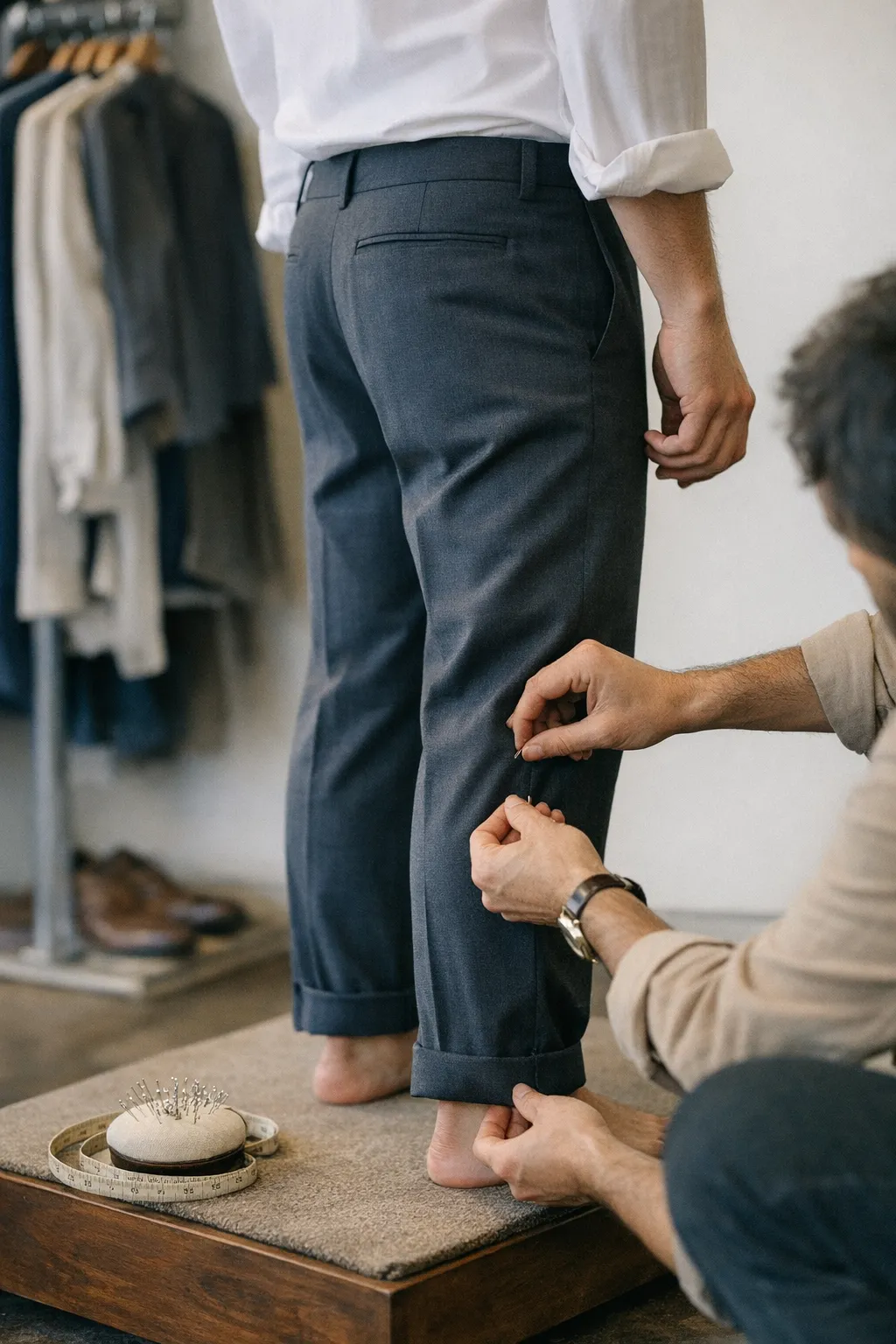
Having the right prerequisites ensures you measure, assess, and decide on a flattering trouser fit efficiently. With the proper tools, reference pants, and knowledge of break and fabric, you can move from guessing to precise evaluation in a fitting room or online order. This groundwork speeds up choosing between off-the-rack, tailoring, or custom options, and reduces the risk of ill-fitting trousers that require multiple alterations.
Before you start, make sure you have:
- A flexible measuring tape for waist, hips, inseam, and rise measurements
- A pair of trousers that fit you well to reference when testing fit
- A flat surface to lay pants on during measurements
- A full-length mirror and good lighting for accurate assessment
- A reliable pair of shoes to test break and hem interaction
- Access to a skilled tailor or alteration service if adjustments are needed
- Knowledge of break styles: no-break, slight break, and full break
- Understanding of how fabric weight and stretch affect drape and fit
- A space and time to test movement: standing, walking, sitting, bending
- A plan to compare off-the-rack, tailoring, and custom options (e.g., Made-to-Order) for your budget and goals
Take action: choose a flattering trouser fit with purpose
This step-by-step procedure guides you through assessing your body type, selecting a base fit, testing in real movement, and deciding on alterations or customization. You’ll evaluate waistband and seat, check thigh and leg ease, and confirm rise works for your daily routine. By testing with your usual footwear and considering break and hem, you’ll arrive at a balanced silhouette that feels comfortable across settings. If off-the-rack isn’t ideal, plan tailored options or explore Made-to-Order to guarantee precision.
-
Identify body type
Assess whether you are lean/athletic, muscular, or an all-body-type shape. Use proportions and how clothes sit to guide your choice. Reference your measurements and your range of motion to confirm your classification if possible.
How to verify: Compare your proportions with body-type descriptions and select the fit that provides comfortable room without excess fabric.
Common fail: Misclassifying your body type leads to a silhouette that’s tight in one area and loose in another.
-
Decide use-case
Determine where you’ll wear the trousers: formal settings, smart-casual offices, or casual weekend looks. This choice guides fabric weight, color, and break preferences. Aligning the use-case with your wardrobe goals keeps your fit versatile.
How to verify: The chosen use-case should match the intended outfits you already own.
Common fail: Selecting a fabric or break that clashes with your usual shoes or activities.
-
Choose initial fit category
Pick Slim for those with a lean frame, Tapered when you want a balanced silhouette with room at the top, or Regular for all-day comfort. Consider how much you want the leg to taper and where you want it to sit on your shoe.
How to verify: Try each option with your typical footwear and evaluate the line from hip to ankle.
Common fail: Locking into a single fit too early without movement testing.
-
Check waistband and seat
Ensure the waistband sits at your natural waist and allows 1–2 fingers of clearance. The seat should drape smoothly without pulling or creasing, and pockets should lie flat.
How to verify: With a reference shirt on and standing, walk a few steps and sit to confirm no pulling at the seat.
Common fail: Waistband too tight or seat pulling in seated positions.
-
Evaluate thigh and leg ease
Look for smooth drape from hip to knee, with no visible pulling or horizontal creases. Check that pockets lie flat and don’t flare when you sit or move.
How to verify: Move through a natural stride and bend, fabric should glide without showing strain.
Common fail: Too-tight thigh or overly loose seat creating bagginess.
-
Test rise and movement
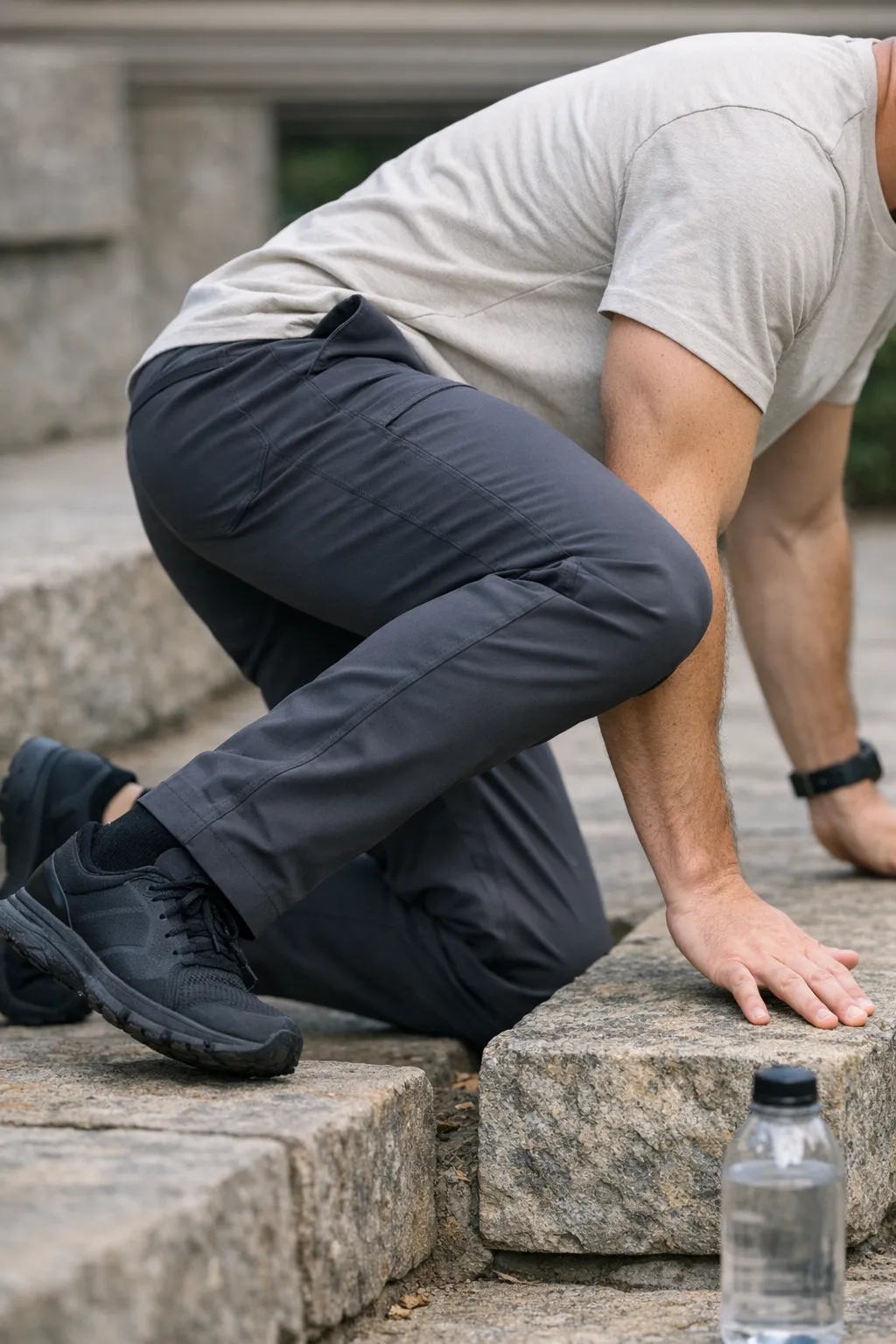
Stand, sit, and bend to verify comfort and how the fabric behaves through common actions. A higher rise often improves seat comfort for sitting, a lower rise may suit leaner torsos but can constrain movement.
How to verify: You should feel unrestricted when sitting or standing for longer periods.
Common fail: Rise that's too high or too low causing uncomfortable posture.
-
Decide break and hem with footwear
Choose break type based on your shoes and formality. There are three break types: No Break, Slight Break, and Full Break. Source Ensure the hem sits near the shoe line without bunching.
How to verify: The break aligns cleanly with shoe tips and appears intentional from a distance.
Common fail: Break length mismatches footwear, creating a clumsy silhouette.
-
Plan alterations or customization
If off-the-rack isn’t ideal, plan tailoring or explore Made-to-Order options from LESH. Source This helps guarantee a precise fit when standard sizes fall short.
How to verify: Confirm the alteration plan aligns with your measurements and timeline.
Common fail: Skipping modifications and ending with persistent fit issues.
Verification: Confirm a flattering fit through real-world checks
After completing the fit steps, verify success by moving through typical actions in your regular footwear and observing how the fabric behaves. Look for a clean silhouette and a comfortable range of motion. You should be able to sit, stand, walk, and bend without pulling or bunching, and the break should align with your shoes. If anything feels off, revisit the relevant step or consider alterations or a Made-to-Order option to lock in precision.
- Waistband at natural waist with comfortable clearance
- Seat drapes smoothly with no pulling or creases
- Thigh and leg maintain a clean line without pulling
- Rise supports sitting and standing without restriction
- Break and hem align with your shoes
- Pockets lie flat and do not pull the silhouette
- Hem length sits at the shoe line without bunching
- Full range of movement tested (walk, sit, bend)
- Alteration or Made-to-Order plan in place if needed
- Outfit balance validated with typical top and shoes
| Checkpoint | What good looks like | How to test | If it fails, try |
|---|---|---|---|
| Waist fit | Natural waist with comfortable clearance | Move side-to-side, check for tightness | Tailor waist or consider Made-to-Order |
| Seat drape | Smooth across seat without pulling | Sit and stand, watch for creases | Take in or adjust seat/hips |
| Thigh/leg line | Clean line from hip to knee | Walk and bend, pockets lie flat | Switch to a different cut |
| Break/hem | Proper break for shoes, no bunching | Try with footwear, inspect hem | Adjust hem length or break type |
Troubleshooting: fix common fit issues quickly
This section helps you diagnose why a trouser fit isn’t flattering and provides concrete, actionable fixes you can apply before you commit to alterations or custom orders. Use these steps to refine waist, seat, and leg geometry, test with your usual shoes, and decide whether to tailor or pursue Made-to-Order options for precision.
-
Symptom:
Waistband feels tight around the middle.
Why it happens: The waist is too small for your current measurements or the cut lacks sufficient ease.
Fix: Try a size up or opt for a waist alteration, and consider Made-to-Order options from LESH if frequent tweaks are needed. Source
-
Symptom:
Waistband is loose and slips down.
Why it happens: The waistband sits below the natural waist or the pant cut lacks proper belt compatibility.
Fix: Add a slight waist taper or belt, or explore a different rise with Made-to-Order tailoring. Source
-
Symptom:
Seat creases or pulls when sitting.
Why it happens: The seat/hip area is too tight or the cut restricts movement.
Fix: Move to a cut with more hip/seat ease or have the seat adjusted by a tailor, consider custom patterns if needed.
-
Symptom:
Thighs feel tight or fabric pulls at the knee.
Why it happens: The leg width is too narrow for your thighs or the rise is misaligned.
Fix: Choose a cut with more thigh room (or a different taper) and verify rise compatibility, tailor if necessary.
-
Symptom:
Break length is incorrect (too long or too short).
Why it happens: Incorrect hem, or break type not suited to footwear or formality.
Fix: Re-hem to the correct length or adjust break type, test with your usual shoes.
-
Symptom:
Pockets flare when seated or moving.
Why it happens: The hip/seat fit is too tight or the pocket placement is off for your shape.
Fix: Address hip/seat fit with tailoring or choose a different cut, consider Made-to-Order for precise pocket placement.
-
Symptom:
Hem rides up or drags on the ground.
Why it happens: Footwear interaction or improper hem length for your shoe stack.
Fix: Adjust hem length and ensure break aligns with your typical footwear, test with multiple shoes.
-
Symptom:
Inconsistent sizing across brands.
Why it happens: Body shape interacts with varying brand cuts and grade rules.
Fix: Rely on measurements and consider Made-to-Order for consistency across styles.
What readers ask next about flattering trouser fits
- How do I know which trouser fit flatters my body type? Start by identifying whether you’re lean/athletic, muscular, or an all-around shape, then compare Slim, Tapered, and Regular options. Look for ease at the waist, smooth drape at the seat, and a clean line from hip to knee.
- What fit works best for formal events versus casual wear? For formal events, opt for Regular or a tailored Slim with a crisp crease and correct break, for casual looks, a Slim or Chino-inspired fit often provides versatility depending on fabric and color.
- How should the waistband actually fit? The waistband should sit at your natural waist and allow 1–2 fingers of clearance for comfort.
- What does the break type mean and how do I choose? Break describes how fabric meets the shoe, No break looks modern, Slight break is versatile, Full break is traditional, choose based on formality and footwear.
- How can I test fit beyond just looking in a mirror? Move through walking, sitting, bending while wearing your typical shoes, check that pockets lie flat and fabric drapes without pulling.
- Can alterations or Made-to-Order really improve fit? Yes, small alterations can fix waist or hem, for major seat or thigh issues, Made-to-Order lets you specify exact measurements.
- What fabrics are best for drape and a flattering silhouette? Lightweight wools and cotton blends drape well and hold shape, heavier fabrics add formality but can reduce ease, consider stretch fabrics for comfort.
- How do I decide between off-the-rack, tailoring, or custom? Start with off-the-rack, if you consistently encounter seat or thigh issues, tailor, for precision from the start, custom or Made-to-Order options provide exact measurements.
Readers' next questions on flattering trouser fits
How do I know which trouser fit flatters my body type?
Identify your body type first: lean/athletic, muscular with broader thighs, or an all-around shape. Then compare Slim, Tapered, and Regular across the key areas: waist, seat, thigh, rise, and break. Look for a balance between room and drape-comfortable at the waist, clean through the hip, and with a natural break that doesn’t pull. Always test movement with your usual footwear.
What fit works best for formal events versus casual wear?
For formal events, lean toward Regular or a tailored Slim with a crisp crease and correct break, for casual looks, a Slim or chino-inspired fit often provides versatility depending on fabric and color. The fabric weight should support the intended setting, and tailoring can refine the silhouette without sacrificing comfort.
How should the waistband actually fit?
The waistband should sit at your natural waist and allow 1–2 fingers of clearance for comfort. If it pinches or slides, you’ll need a minor adjustment or a different rise. Test while standing and walking in your typical shoes to confirm consistent positioning during movement.
What does break length mean and how do I choose?
Break length describes where the fabric meets the shoe. No-break reads modern and sleek, slight break blends with most footwear, full break works with traditional silhouettes and heavier shoes. Choose based on formality, shoe type, and personal style, then verify the hem sits near the shoe line to avoid bunching.
How can I test fit beyond just looking in a mirror?
Move through real actions: walk, sit, bend, and stand in your regular footwear. Check that the fabric drapes smoothly, pockets lie flat, and there’s no pulling at the seat or thigh. If you notice tension, revisit the corresponding section-waist, seat, or leg-and adjust or tailor as needed.
Can alterations or Made-to-Order really improve fit?
Yes, small alterations can fix waist or hem, for major seat or thigh issues, Made-to-Order lets you specify exact measurements. Start with off-the-rack to identify limitations, then tailor or customize for precision. Check timelines and costs before committing to a longer lead time.
What fabrics best support a flattering silhouette?
Fabric weight and stretch influence drape and comfort. Lightweight wools and cotton blends drape well for formal looks, while heavier fabrics provide structure for traditional silhouettes. If you want comfort with movement, consider fabrics with a touch of stretch and a weave that holds shape without feeling stiff.
How do I decide between off-the-rack, tailoring, or custom?
Begin with off-the-rack to gauge fit in common areas, if you consistently encounter issues at the seat or thigh, tailor. For precision from the start, custom or Made-to-Order options capture exact measurements and preferred silhouette, reducing the need for subsequent alterations.