
How to style a long sleeve shirt in a minimalist outfit provides a practical path to a calm, versatile look. You will anchor the look with a well-fitting neutral long sleeve, then build with simple denim or tailored pants, and add at most one slim outer layer to preserve clean lines. Focus on a restrained color palette-white, gray, black, or taupe-and avoid loud prints or branding. Keep jewelry minimal and footwear neutral to maintain the uncluttered vibe. The simplest correct path is to start with the base piece, check fit at shoulders and sleeve length, pair with balanced bottoms, introduce a single light layer if needed, and finish with clean accessories and footwear. Check in natural light for color harmony, then confirm the silhouette reads as streamlined from all angles. This approach is fast, repeatable, and adaptable to everyday wear.
This is for you if:
- You want a clean, low-contrast wardrobe built around a single long sleeve base.
- You value versatile outfits that work in casual and semi-formal settings.
- You prefer neutral tones, streamlined silhouettes, and minimal accessories.
- You want quick, repeatable styling steps without complexity.
- You aim to balance the top with tailored or straight-leg bottoms.
Prerequisites for a Minimalist Long Sleeve Outfit
Prerequisites matter because a minimalist look relies on precise fit, restrained styling, and cohesive color. Having the right base pieces ensures clean lines, reduces clutter, and makes the final ensemble feel intentional rather than assembled. By confirming you have a neutral long sleeve, suitable bottoms, and a slim outer layer, you can quickly create a versatile look that works in casual and semi-formal settings. A calm lighting setup and a clear plan help you judge proportion and movement before you style.
Before you start, make sure you have:
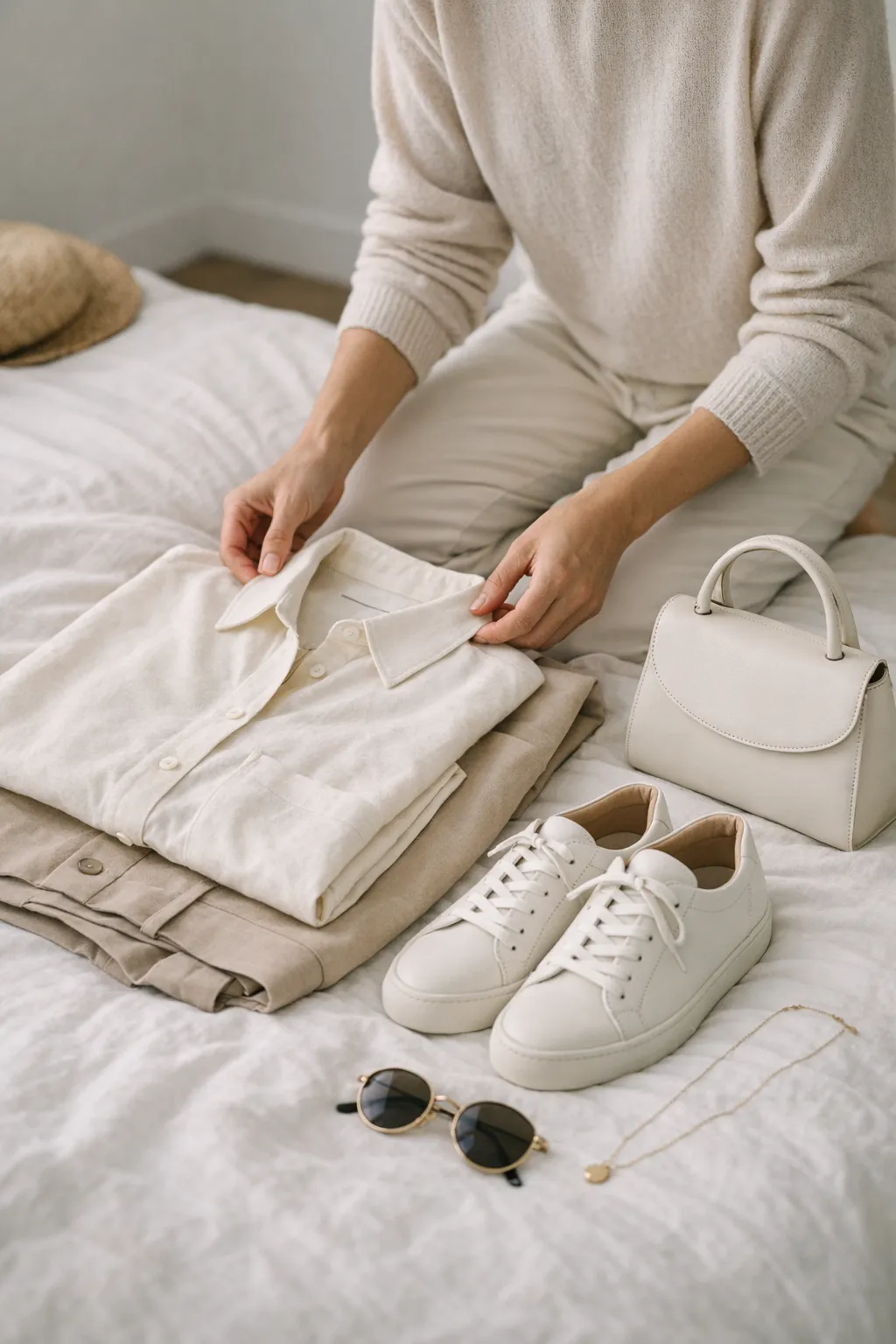
- A well-fitting neutral long sleeve top (white, gray, or black)
- A simple bottom in a coordinating neutral (straight/slim denim or tailored pants)
- One light outer layer (cardigan or unstructured blazer)
- Minimal accessories (watch or thin piece, nothing flashy)
- Neutral footwear (clean sneakers or loafers)
- A LESH neutral long sleeve top to anchor the look
- Neutral color palette in mind (white, gray, black, taupe)
- A full-length mirror for evaluation
- Good natural lighting to assess color harmony
- A plan for one or two outfits on paper or digital notes
- A device to reference style ideas if needed (phone/tablet)
- Basic tailoring tools for minor adjustments (optional)
- Confidence to adapt for weather and occasion
Execute a Minimalist Long Sleeve Look
This step-by-step procedure guides you to craft a clean, minimalist long sleeve look in minutes. You'll start with a well-fitting neutral base, pair it with streamlined bottoms, add a slim outer layer if needed, and keep accessories to a minimum. Focus on fit, color harmony, and proportion, small adjustments matter. The method emphasizes practical checks in natural light and quick motion tests to ensure the silhouette stays crisp from every angle.
-
Analyze Base Top
Inspect the long sleeve for color, fabric, and fit. Confirm shoulder alignment and sleeve length to avoid bunching. Observe how the fabric drapes when you move and whether it reads as a clean base. Decide if you will wear it solo or under a slim layer.
How to verify: Base top sits with clean lines and no pulling.
Common fail: Overlooking subtle fit issues creates bulk at the shoulders or wrists.
-
Pair with Balanced Bottoms
Choose straight or slim denim or tailored pants in a neutral shade. Ensure the rise and length flatter your silhouette and keep the top's line uninterrupted. Avoid bulky or oversized bottoms that compete with the top.
How to verify: Bottoms align with the top to maintain a streamlined silhouette.
Common fail: Baggy bottoms disrupt proportion and draw attention away from the base.
-
Add Slim Outer Layer
Select a cardigan or unstructured blazer in a close-neutral tone. Keep the outer layer lightweight and tailored to preserve the minimalist line. Ensure it sits smoothly over the base without adding extra bulk.
How to verify: Outer layer adds subtle structure without bulk.
Common fail: Over-layering creates a bulky silhouette that hides the base.
-
Simplify Accessories
Limit jewelry to one small piece or none, skip busy belts or loud bags. Choose a simple watch or thin chain if any.
How to verify: Accessories do not clutter the silhouette.
Common fail: Too many pieces compete with the clean lines.
-
Harmonize Color Palette
Stick to neutrals such as white, gray, black, and taupe. Avoid high-contrast combinations or prints that disrupt calm harmony. If needed, introduce a tiny tonal variation through texture.
How to verify: Colors read as cohesive across the entire outfit.
Common fail: Bold color clashes break the minimalist vibe.
-
Polish Fit and Proportions
Double-check sleeve length, cuff width, and hemline for balance. Do a quick forward and side view to ensure no fabric pulls or sagging.
How to verify: Proportions read as balanced from multiple angles.
Common fail: Mismatched lengths create uneven silhouettes.
-
Test for Versatility
Consider how the look translates with different footwear and under varying lighting. Visualize both casual and semi-formal settings to confirm adaptability.
How to verify: Outfit adapts across occasions with minimal tweaks.
Common fail: Only suitable for one setting.
Verification: Confirm Minimalist Long Sleeve Outfit Success
Use a calm, methodical check to confirm the look remains clean, cohesive, and wearable across settings. Start by assessing fit at the shoulders and through the sleeves, then evaluate the silhouette with and without a light outer layer in natural light. Verify that the color palette stays neutral and the textures stay restrained. Ensure accessories are minimal and the overall line is unbroken from top to bottom. Movement and comfort matter as much as appearance, confirming the outfit truly aligns with a minimalist aesthetic.
- Base long sleeve top sits on shoulders without pulling
- Sleeve length and cuff placement read cleanly
- Bottoms balance the silhouette, with no bulk at the top
- Outer layer (if worn) adds structure without bulk
- Color palette remains cohesive neutrals with subtle texture variation
- Accessories are minimal and unobtrusive
- Footwear complements the overall vibe without clashing
- Textures are restrained and thoughtfully paired
- The look reads as streamlined from front, side, and back
- The outfit transitions well between casual and semi-formal settings
| Checkpoint | What good looks like | How to test | If it fails, try |
|---|---|---|---|
| Base Fit | Shoulders aligned, sleeves not tight or loose | Move arms, inspect in natural light from multiple angles | Choose a different size or fabric with better drape |
| Silhouette Balance | Top line flows into bottoms evenly | Stand straight, walk, view side profile | Adjust tuck or swap to slimmer bottoms |
| Color Cohesion | Neutral hues harmonize without harsh contrasts | Compare with white paper beneath and in daylight | Rebalance to cohesive neutrals, remove any clash |
| Layering Effect | Outer layer adds subtle structure without bulk | Compare looks with and without layer | Switch to a lighter knit or remove layer |
| Accessories | Minimal and unobtrusive | Remove one accessory briefly and reassess | Keep only one delicate piece or none |
| Texture Balance | Two complementary textures create depth without distraction | Visually compare to a flat texture baseline | Simplify textures to one dominant and one subtle |
Troubleshooting Minimalist Long Sleeve Outfit
When a minimalist look isn’t landing, identify the specific issue and apply a precise, actionable fix that preserves clean lines and neutral tones. Focus on fit, proportion, and restrained layering, testing changes in natural light and with simple movements. These steps help you restore balance quickly without breaking the minimalist aesthetic.
-
Symptom:
Base top feels bulky at shoulders or across the chest
Why it happens: Fabric is heavy or the top is oversized, creating bulk that disrupts the clean line.
Fix: Swap to a slim-fit base or lighter knit, verify shoulder seams align and consider tailoring if needed.
-
Symptom:
Outer layer adds noticeable bulk under the minimal look
Why it happens: Heavier cardigan or structured blazer overwhelms the base.
Fix: Remove the outer layer or choose a thin, unstructured piece that drapes smoothly over the top.
-
Symptom:
Color palette reads loud or high-contrast
Why it happens: Mixing bold colors or prints with neutrals disrupts the calm aesthetic.
Fix: Rebalance to cohesive neutrals and test in natural light, minimize accent colors.
-
Symptom:
Accessories clutter silhouette
Why it happens: Multiple pieces or chunky accessories compete with the clean lines.
Fix: Limit to a single delicate piece or none, simplify the bag or watch choice.
-
Symptom:
Bottoms overwhelm the top silhouette
Why it happens: Bulky or oversized bottoms disrupt proportion and draw attention downward.
Fix: Swap to straight/slim denim or tailored pants, ensure rise and length balance with the top.
-
Symptom:
Sleeves appear misaligned or too long
Why it happens: Incorrect sleeve length or bulky cuffs disrupt the line.
Fix: Roll or tailor cuffs, choose a top with proper sleeve length for your arm length.
-
Symptom:
Layering creates midsection bulk
Why it happens: Wearing two heavy layers or fabrics with poor drape.
Fix: Limit to one lightweight outer layer, ensure drape is smooth and doesn’t bulk the middle.
-
Symptom:
Texture lacks depth
Why it happens: All pieces share the same flat texture, flattening the silhouette.
Fix: Introduce a subtle texture variation (knit, weave) while keeping to two textures max.
Common Questions About Minimalist Long Sleeve Outfits
- How do I start a minimalist long sleeve outfit? Begin with a well-fitting neutral long sleeve, pair it with straight or slim denim or tailored pants, and add one light outer layer if needed for structure.
- What colors work best for neutrals? Stick to white, gray, black, and taupe, avoid bold prints and saturated tones to keep the calm, cohesive look.
- How should I choose bottoms to balance the top? Choose straight or slim silhouettes to maintain a clean line, avoid baggy or oversized pants that create bulk.
- Do I need an outer layer, and what kind? An optional lightweight cardigan or unstructured blazer can add shape without bulk, keep the color close to the base neutrals.
- How should I accessorize in a minimalist look? Limit to one delicate piece or none, skip large statement jewelry and keep a simple watch or ring.
- Can I wear patterns or textures? Yes, but keep patterns subtle or rely on texture (ribbed knit, smooth cotton) rather than loud prints.
- How can I test if the look is balanced in natural light? Check the overall harmony by stepping to a window and viewing from front, side, and back to confirm line continuity and color accuracy.
- What footwear fits a minimalist long sleeve outfit? Neutral sneakers or loafers typically pair best, avoiding shoes with bold colors or heavy logos.
Common Questions About Minimalist Long Sleeve Outfits
What is the first step to start a minimalist long sleeve outfit?
Begin with a well-fitting neutral long sleeve top. Pair it with straight or slim denim or tailored pants to establish a clean line. If needed, add one light outer layer such as a cardigan or unstructured blazer. Keep colors neutral and textures simple to avoid visual clutter. Ensure the base reads as calm and cohesive before adding any extras.
How should I choose colors for a minimalist look?
Stick to neutral colors such as white, gray, black, and taupe. Avoid bold prints and saturated tones that disrupt the quiet harmony of the outfit. If you want subtle variation, introduce texture rather than color. The goal is a calm palette that allows lines and silhouette to speak.
How do I balance the top with bottoms?
Choose straight or slim silhouettes for the bottoms to maintain a clean line with the top. Avoid baggy or oversized pants that create bulk and steal attention from the base piece. Ensure the rise and length work with the top’s hem, so the silhouette stays uninterrupted from waist to toe.
When should I use an outer layer?
An outer layer is optional and should add structure without bulk. Choose a lightweight cardigan or unstructured blazer in a close-neutral tone. It should drape smoothly over the base without distorting the line, and be easy to remove if the setting calls for simplicity. The goal is to augment the silhouette, not overwhelm it.
How should I handle accessories?
Keep accessories minimal to preserve the clean lines. Use at most one delicate piece, such as a fine watch or thin ring, and skip bulky belts or statement jewelry. If you carry a bag, choose a simple, unobtrusive design in a neutral shade. The aim is to avoid visual clutter while maintaining a polished finish.
Can I use patterns or textures?
Yes, but keep patterns subtle or rely on texture rather than loud prints. A ribbed knit or smooth cotton with a slight sheen can add depth without breaking the minimalist vibe. Limit pattern exposure to small areas or ensemble-wide but only two textures maximum to avoid visual noise.
How can I test the look in natural light?
View the outfit near a natural light source and assess the lines from front, side, and back. Check color cohesion and ensure there’s no unexpected glare or color shift. If colors look off, adjust neutrals or textures until the overall palette remains calm and cohesive.
What footwear works with minimalist long sleeve outfits?
Choose neutral footwear such as clean sneakers or loafers that align with the overall vibe. Avoid bold colors, heavy logos, or overly ornate designs. The goal is to maintain a cohesive line from top to bottom, so keep footwear understated and in harmony with the neutral palette.