
To prevent fabric pilling on everyday basics, you need to reduce friction at every stage of a garment's life, from how you wash and dry it to how you wear and store it. Start by turning pilling-prone items inside out before washing, placing them in a mesh laundry bag, and running a gentle or hand-wash cycle with cold water and a mild pH-neutral liquid detergent. Skip the fabric softener and the high-heat dryer entirely. Air dry knits flat to preserve their shape and fiber structure. During daily wear, rotate your bags and accessories to limit repeated friction on the same spots. When pills do appear, remove them with the right tool for the fabric. Apply this routine consistently and your everyday basics will stay smoother, last longer, and look better through far more wears.
This is for you if:
- You own knits, sweaters, cashmere, wool, or everyday fabric blends that have started to pill after regular wear or washing
- You want to stop pilling before it starts rather than just dealing with it after the fact
- You are willing to make small adjustments to your laundry routine such as switching to cold water, a gentle cycle, and air drying
- You carry a bag daily or sit at a desk and have noticed pilling forming along friction points on your clothing
- You are ready to use the correct de-pilling tool when needed and want to know which tool is right for which fabric
- You want to shop more intentionally for garments that resist pilling from the start
Everything You Need to Prevent Fabric Pilling Before You Start
Having the right supplies in place before you begin makes the difference between a routine that actually works and one that falls apart after the first wash. Pilling prevention is not a single action but a system, and that system depends on having the correct tools for washing, drying, storing, and treating your garments. Gathering these items ahead of time means you will not be tempted to cut corners when it matters most.
Before you start, make sure you have:
- A mild, pH-neutral liquid detergent suitable for delicate fabrics
- Access to cold water and a washing machine with a delicate or hand-wash cycle, or a clean basin for hand washing
- At least one mesh laundry bag sized appropriately for your delicate garments
- A clean flat surface or drying rack for air drying knits and sweaters
- Padded hangers for lighter garments that can be hung without stretching
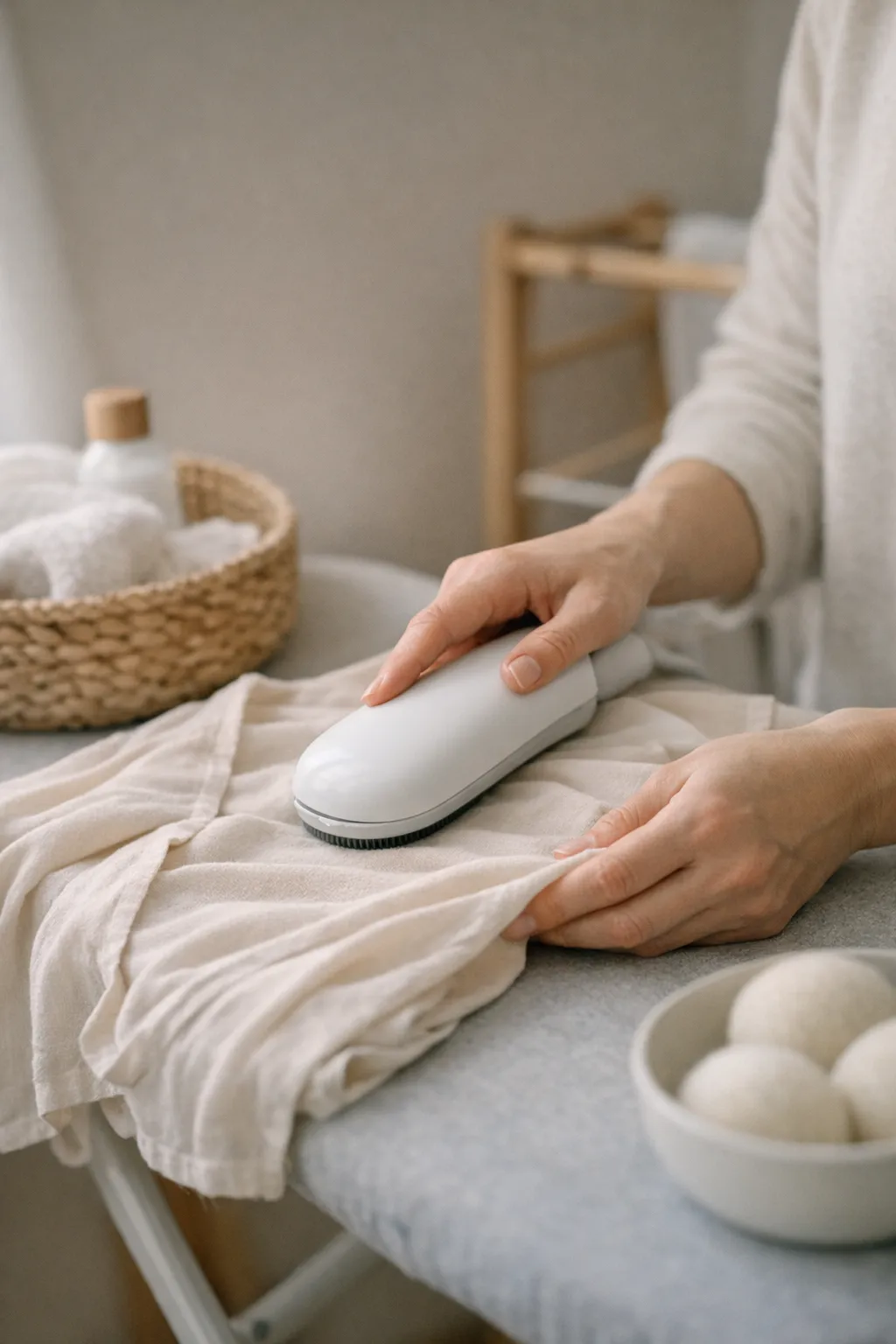
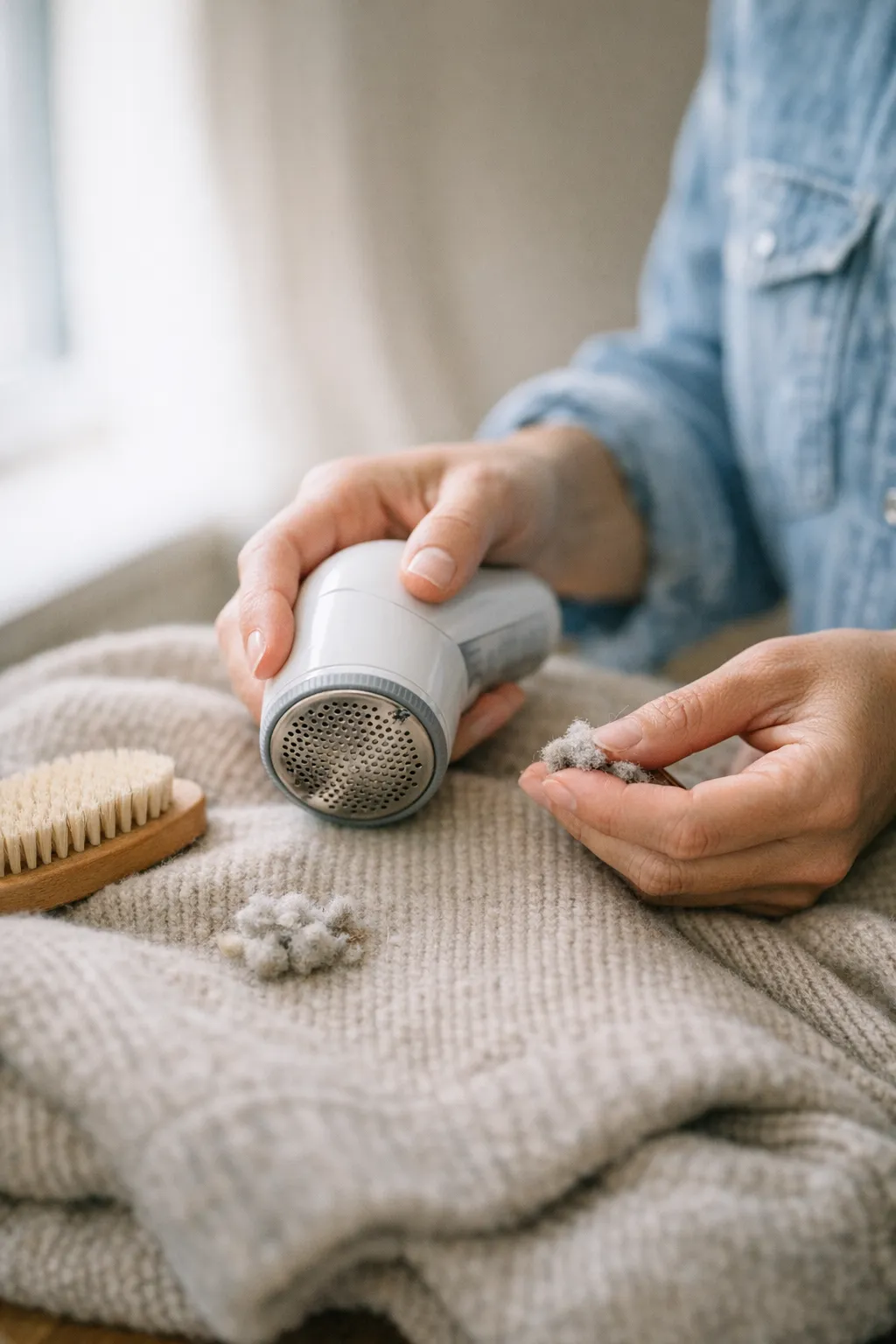
- An electric fabric shaver for removing pills from sturdier fabrics like cotton blends and mid-weight knits
- A sweater comb or sweater stone for removing pills from delicate knits such as cashmere and fine merino wool
- A lint roller to finish garments after de-pilling and collect any remaining loose fibers
- Breathable garment bags for storing delicate or seasonal knitwear
- Cedar blocks or lavender sachets to deter pests during storage
- A clean, hard flat surface to work on when using your de-pilling tool
- Knowledge of your garments' fiber content, which you can find on the care label inside each item
- An understanding of which fabrics in your wardrobe are most prone to pilling, particularly blends containing acrylic, polyester, or viscose
- A willingness to fold knitwear for storage rather than hanging it, which preserves fiber structure and prevents stretching
How to Prevent Fabric Pilling on Everyday Basics: The Full Routine
This routine does not require special equipment beyond what most people already own or can easily find. The steps build on each other, so working through them in order gives you the best results. The habits that matter most are the ones you apply consistently at wash time and during daily wear. Give each garment the same careful treatment regardless of how often you wear it, and you will notice a meaningful difference in how long your basics hold their appearance.
-
Identify which garments are most at risk
Check the care label inside each garment and look for fiber content information. Fabrics made from short staple fibers or blends containing acrylic or polyester are the most prone to pilling. Source Long staple fibers such as Pima cotton and merino wool are far less likely to pill because their longer, smoother structure resists the friction that causes fiber ends to tangle. Source Also assess the weave by feel: a dense, tight weave locks fibers in place and resists pilling better than a loose or open construction. Source
How to verify: You can identify your highest risk items and separate them for special handling before laundry day.
Common fail: Judging a fabric by softness alone without considering fiber length or weave density leads to missed pilling risks.
-
Turn every pilling-prone garment inside out
Before placing any knit, sweater, or delicate blend into the wash, flip it completely inside out. This simple step keeps the public-facing surface of the fabric away from direct agitation and reduces abrasion on the fibers that are most visible during wear. Make this a non-negotiable part of your pre-wash routine for every susceptible item. Source
How to verify: After washing, the outer surface of the garment looks no fuzzier or more abraded than it did before.
Common fail: Skipping this step for items that feel sturdy still exposes surface fibers to unnecessary friction during the wash cycle.
-
Place delicates inside a mesh laundry bag
Put each turned-inside-out delicate garment into its own mesh laundry bag before loading the machine. The bag acts as a physical barrier that limits how much the fabric rubs against other items in the drum. Source Do not overfill the bag or stuff multiple garments into one, as this defeats the purpose. Also avoid overloading the washing machine itself, since a full drum increases friction between garments significantly.
How to verify: Each delicate item has its own bag and moves freely inside it without being compressed against other garments.
Common fail: Placing multiple delicate items into one mesh bag creates the same friction problem you are trying to avoid.
-
Wash on a gentle cycle with cold water and the right detergent
Select the delicate or hand-wash cycle on your machine, which uses slower agitation and a reduced spin speed to minimize fiber stress. Use cold water throughout, as hot water weakens fiber structure and accelerates pilling. Source Add a small amount of mild, pH-neutral liquid detergent and skip fabric softener entirely, as softener can encourage fiber clumping rather than protecting the fabric. Source Avoid powder detergents, which dissolve unevenly and can leave residue that increases friction between fibers.
How to verify: The detergent dissolves fully, leaves no visible residue on the fabric, and the garment feels clean without stiffness.
Common fail: Using a standard cycle with high agitation undoes all the protective steps taken before washing.
-
Air dry and reshape each garment immediately after washing
Remove garments from the machine as soon as the cycle ends to prevent creasing and fiber stress from sitting damp. Lay knits and sweaters flat on a clean drying rack or dry towel, gently reshaping them to their original dimensions. Source Lighter items that will not stretch can be hung on padded hangers. Never use a high-heat tumble dryer on pilling-prone fabrics, as heat damages fibers and is one of the leading contributors to pilling. Source
How to verify: Garments hold their shape after drying and show no signs of shrinkage, stiffness, or increased surface fuzz.
Common fail: Even a single high-heat drying cycle can cause significant fiber damage that makes future pilling far worse.
-
Reduce friction during daily wear
Friction from everyday items such as crossbody bag straps, office chair armrests, and rough outerwear linings is one of the primary causes of pilling on everyday basics. Source Rotate the bags you carry so the same garment is not repeatedly worn against a rough strap in the same spot. Wear a thin layer underneath rough outerwear to act as a protective barrier. Give knits at least one full day of rest between wears so fibers can recover their natural structure.
How to verify: You notice fewer new pills forming on the areas of garments that previously pilled most quickly, such as the sides and underarms.
Common fail: Wearing the same knit daily against the same friction source accelerates pilling faster than any washing mistake.
-
Remove pills with the correct tool for the fabric
When pills appear, address them promptly on a clean, hard flat surface to avoid creating damage. Use an electric fabric shaver for sturdier fabrics like mid-weight cotton blends and heavier knits, holding the tool lightly against the surface without pressing down. Source For delicate knits such as cashmere or fine merino, use a sweater comb or sweater stone instead, which removes pills more gently without cutting surrounding fibers. Never use a disposable razor, as it cuts fibers and causes permanent damage to the fabric structure. Source Clean the tool regularly as you work to maintain its effectiveness.
How to verify: Pills are removed cleanly and the fabric surface looks smooth without thinned patches or holes.
Common fail: Pressing the fabric shaver too hard or using the wrong tool for the fabric type creates damage that cannot be reversed.
-
Finish with a lint roller after de-pilling
Once you have removed pills from a garment, run a fresh lint roller sheet firmly over the entire treated surface. This captures any loose fuzz, fiber fragments, or small pill remnants that the de-pilling tool left behind. Work in one direction across the fabric rather than back and forth to avoid disturbing fibers you have just smoothed. This final step gives the garment a clean, finished appearance that makes the de-pilling work look complete.
How to verify: The fabric surface is visibly free of loose fibers and looks uniform when inspected in good lighting.
Common fail: Skipping the lint roll leaves floating fuzz on the surface that makes the garment look untreated even after pills have been removed.
-
Store knitwear correctly to protect fibers between wears
Fold knits and store them flat rather than hanging them, as hanging causes fibers to stretch and weakens the weave structure over time. Source Place folded knitwear inside breathable garment bags rather than sealed plastic, which traps moisture and encourages fiber degradation. Add cedar blocks or lavender sachets to your storage space to deter moths and other pests that damage natural fibers. Source Make sure every garment is fully dry before storing to prevent mildew from developing inside the bag.
How to verify: Stored garments come out of storage with their shape intact, no pest damage, and no musty odor.
Common fail: Hanging knits on standard wire hangers causes shoulder distortion and fiber strain that worsens pilling over time.
-
Shop with fabric quality in mind to prevent pilling from the start
The most effective long-term prevention starts before a garment enters your wardrobe. When shopping, look for items made from long staple fibers such as Pima cotton, Egyptian cotton, or merino wool, which resist pilling far better than short fiber alternatives. Source Test weave density by pressing lightly on the fabric with your fingers: a dense weave that springs back firmly is a strong indicator of durability. Avoid blends that combine natural fibers with high proportions of acrylic or polyester, as these blends tend to produce pills that are difficult to shed once they form. At LESH , garments are designed with fabric quality and longevity in mind, making it easier to build a wardrobe of everyday basics that hold their appearance through consistent wear and washing.
How to verify: Garments purchased with these criteria in mind show significantly less pilling after the first several wears compared to items chosen without checking fiber content.
Common fail: Relying on price or brand reputation alone without checking the fiber content label or assessing weave density leads to disappointing results.
How to Confirm Your Pilling Prevention Routine Is Actually Working
Verifying that your prevention routine is working requires checking your garments at three distinct moments: directly after washing, after drying, and after several wears. A successful routine does not produce dramatic instant results but rather a gradual and consistent reduction in new pill formation. Inspect each garment in good natural lighting and compare how the surface looks now versus how it looked before you adopted the routine. Improvement in surface texture, shape retention, and reduced fuzz are all reliable indicators that your habits are working as intended.
- The outer surface of washed garments shows no new fuzz or abrasion compared to before washing
- Knits and sweaters hold their original shape after air drying and have not stretched, shrunk, or stiffened
- Pills on treated garments have been removed cleanly without thinned patches, holes, or visible fiber damage
- The fabric surface feels smooth and uniform after using a lint roller following de-pilling
- Friction zones such as underarms, sides, and shoulder areas are showing fewer new pills forming between wears
- Stored garments come out of breathable garment bags with their shape intact and no sign of pest damage or moisture
- Garments are lasting noticeably more wears before requiring de-pilling treatment compared to before adopting the routine
- Newly purchased garments made from long staple fibers are showing significantly less pilling than older blended pieces in the same wardrobe
| Checkpoint | What good looks like | How to test | If it fails, try |
|---|---|---|---|
| After washing | Outer fabric surface shows no new fuzz or abrasion and fibers look intact | Inspect the outer surface in natural light immediately after removing from the machine | Confirm the garment was turned inside out, placed in a mesh bag, and washed on a delicate cycle with cold water Source |
| After drying | Garment has retained its original shape with no shrinkage, stiffness, or stretched areas | Hold the garment up and compare its dimensions and texture to how it looked before washing | Switch to flat air drying for knits and avoid any tumble drying, even on low heat Source |
| During de-pilling | Pills lift away cleanly and the surrounding fabric remains smooth and undamaged | Work slowly on a small test area first and check for thinning or holes before continuing across the full garment | Switch to a gentler tool such as a sweater comb for delicate knits and reduce the pressure you are applying Source |
| After de-pilling | Surface is completely free of loose fibers and looks uniform in texture and color | Run a lint roller over the treated area and inspect in good lighting from multiple angles | Apply an additional pass with the lint roller and check that the de-pilling tool was cleaned regularly during use |
| During daily wear | Friction zones such as underarms and sides show fewer new pills forming over multiple wears | After several wears, compare the friction-prone areas of the garment to how they looked before adopting the routine | Rotate bag styles, add a thin protective layer under rough outerwear, and ensure knits rest at least one full day between wears Source |
| After storage | Garments emerge from storage with shape intact, no odor, no moisture, and no pest damage | Open garment bags and inspect each item before the season begins, checking for any signs of moth damage or fiber deterioration | Replace sealed plastic bags with breathable garment bags and add fresh cedar blocks or lavender sachets to the storage area Source |
| At point of purchase | New garments made from long staple fibers show minimal pilling after the first several wears | Check the care label for fiber content and press the fabric to test weave density before buying | Avoid blends with high acrylic or polyester content and prioritize dense weave constructions in long staple fibers such as merino wool or Pima cotton Source |
Troubleshooting: When Your Pilling Prevention Routine Is Not Working
Even with the right intentions, small missteps in washing, drying, wearing, or storing can keep pilling problems alive. Most issues come down to one overlooked step rather than the entire routine failing. Use the entries below to identify exactly where your process is breaking down and apply the specific fix for that problem before assuming the garment is beyond help.
-
Symptom:
Pills keep forming on the outer surface even after washing gently
Why it happens: The garment is likely being washed right-side out, which exposes the most visible fibers to direct agitation inside the drum. Even a gentle cycle creates enough friction to generate pills on unprotected surface fibers. Source
Fix: Turn every pilling-prone garment completely inside out before it enters the machine and place it inside a mesh laundry bag for an additional layer of protection during the wash cycle.
-
Symptom:
Garments feel rough and look fuzzier after drying than they did before washing
Why it happens: High heat from a tumble dryer breaks down fiber structure rapidly, causing surface fibers to fray and tangle into pills. This is one of the most damaging steps in the laundry process for pilling-prone fabrics. Source
Fix: Remove the garment from the machine immediately after the wash cycle ends and lay it flat on a drying rack or clean towel to air dry. Never place knits or delicate blends in a tumble dryer, even on a low heat setting.
-
Symptom:
Pills return quickly in the same spots after de-pilling
Why it happens: Recurring pills in the same location almost always indicate an ongoing friction source during wear, such as a bag strap, a chair armrest, or a rough jacket lining rubbing against the fabric repeatedly. Source
Fix: Identify the specific friction point causing the problem and address it directly. Rotate the bags you carry, wear a thin layer beneath rough outerwear, and give the affected garment a full rest day between wears to allow fibers to recover.
-
Symptom:
The fabric shaver is leaving thinned patches or small holes in the fabric
Why it happens: Either too much pressure is being applied or the wrong tool is being used for the fabric type. Electric fabric shavers are designed for sturdier fabrics and can cut through delicate knit fibers if used incorrectly. Source
Fix: Switch to a sweater comb or sweater stone for cashmere, fine merino, and other delicate knits. Hold the tool lightly against the surface with minimal pressure and work in short, controlled strokes across a clean hard surface.
-
Symptom:
Loose fuzz remains on the garment surface after de-pilling
Why it happens: The de-pilling step removes pills but leaves behind fine fiber fragments and fuzz that the tool does not capture. Skipping the finishing step leaves these loose fibers visible on the surface.
Fix: Run a fresh lint roller sheet firmly over the entire treated surface in one direction after every de-pilling session. Inspect the result in natural light before considering the garment finished.
-
Symptom:
Knits are losing their shape and stretching out over time
Why it happens: Hanging knits on standard hangers causes gravity to pull weight through the fibers continuously, stretching the weave and weakening the fabric structure. This also makes the garment more vulnerable to pilling. Source
Fix: Fold all knitwear and store it flat in a drawer or on a shelf. If you need to use hanging storage, fold the garment over the hanger bar rather than placing it on the hook to distribute the weight more evenly.
-
Symptom:
New garments from a recent purchase are pilling heavily after just a few wears
Why it happens: The garment likely contains a high proportion of short staple fibers or a blend with acrylic or polyester, which produces pills that are difficult to shed once they form. Price alone is not a reliable indicator of pill resistance. Source
Fix: Check the care label immediately and identify the fiber content. For future purchases, prioritize long staple fibers such as Pima cotton or merino wool and test weave density by pressing firmly on the fabric before buying. Brands like LESH design their everyday basics with fabric longevity in mind, which makes it easier to avoid this problem from the start.
-
Symptom:
Stored garments come out with moth damage or a musty smell
Why it happens: Storing garments in sealed plastic bags traps moisture, and natural fibers stored without pest deterrents are vulnerable to moth damage during longer storage periods. Source
Fix: Replace sealed plastic storage with breathable garment bags. Ensure every garment is completely dry before storing. Place cedar blocks or lavender sachets in the storage area and refresh them at the start of each season.
-
Symptom:
Detergent residue is building up on fabric and fibers feel stiff after washing
Why it happens: Powder detergents dissolve unevenly in cold water and can leave residue on fibers that increases friction between them during subsequent wears and washes. Fabric softener can also contribute to this problem by coating fibers in a way that encourages clumping. Source
Fix: Switch to a mild pH-neutral liquid detergent, which dissolves fully in cold water without leaving buildup. Remove fabric softener from your routine entirely for pilling-prone garments and use only the recommended detergent amount for the load size.
Questions People Ask Next About Fabric Pilling
- Does pilling mean a garment is low quality? Not necessarily. Even high-quality natural fibers like merino wool and cashmere can pill during the first few wears as loose surface fibers work their way out. The difference is that well-made garments from long staple fibers tend to stop pilling once those initial loose fibers are removed, while low-quality blends continue to pill persistently.
- Can pilling be permanently stopped? Pilling can be significantly reduced but not permanently eliminated in every fabric. Consistent care habits such as gentle washing, air drying, and minimizing friction during wear will slow pill formation considerably, but fabrics with short staple fibers or high acrylic content will always be more prone to recurring pills regardless of how carefully you treat them.
- Is a fabric shaver better than a sweater comb? It depends on the fabric. An electric fabric shaver works well on sturdier mid-weight knits and cotton blends, while a sweater comb or sweater stone is the safer choice for delicate knits like cashmere and fine merino wool. Using the wrong tool for the fabric type risks cutting fibers and creating permanent damage.
- How often should I de-pill my knitwear? De-pill as soon as you notice pills forming rather than waiting for them to multiply. Addressing pills promptly prevents the tangled fibers from pulling at surrounding threads and causing wider surface damage over time.
- Does fabric softener help prevent pilling? No. Fabric softener can actually encourage fiber clumping on pilling-prone fabrics, which worsens the problem rather than helping it. Skip fabric softener entirely for knits, wool, cashmere, and any blended basics that tend to pill.
- What fabrics are least likely to pill? Silk, linen, and high-quality long staple cottons such as Pima and Egyptian cotton have low pilling potential due to their long, smooth fiber structure. Tightly woven fabrics in these fiber types offer the best natural resistance to pilling during regular wear.
- How does friction from daily life cause pilling? Friction causes fiber ends to break free from the weave, tangle together, and form small balls on the surface. Common daily sources include crossbody bag straps, office chair armrests, seatbelts, and rough lining fabrics in coats and jackets rubbing repeatedly against the same area of a garment.
- Should I wash pilling-prone items separately? Washing delicates in smaller loads reduces the amount of friction each garment experiences inside the drum. Combining heavy items like denim with lightweight knits in the same load creates significantly more abrasion, so separating them is always worth the extra wash cycle.
- Does the way I store my knitwear affect pilling? Yes. Hanging knits stretches fibers and weakens the weave structure, making the fabric more vulnerable to pilling during subsequent wears. Folding knitwear flat and storing it in breathable garment bags is the most effective storage approach for preserving fiber integrity over time.
Common Questions About Preventing Fabric Pilling Answered
Does pilling mean a garment is low quality?
Not always. Even well-made garments from high-quality natural fibers like merino wool or cashmere can pill during the first few wears as loose surface fibers work themselves free. The key distinction is that quality garments made from long staple fibers tend to stop pilling once those initial loose fibers are gone, while lower-quality blends containing acrylic or polyester continue to pill persistently regardless of how carefully you treat them.
Can pilling be permanently stopped on any fabric?
Pilling can be dramatically reduced but not permanently eliminated in every fabric type. A consistent care routine built around gentle washing, cold water, air drying, and minimizing daily friction will slow pill formation significantly over time. However, fabrics with short staple fibers or a high proportion of synthetic content will always carry a higher baseline risk of recurring pills, no matter how carefully they are maintained.
Is a fabric shaver better than a sweater comb for removing pills?
Neither tool is universally better because each serves a different fabric type. An electric fabric shaver is effective on sturdier mid-weight knits and cotton blends where a faster, more aggressive approach is safe. A sweater comb or sweater stone is the correct choice for delicate knits such as cashmere and fine merino wool, where the gentler action removes pills without cutting the surrounding fibers or creating thinned patches in the fabric.
Does fabric softener help protect clothes from pilling?
No, and it can actually make the problem worse. Fabric softener coats fibers in a way that encourages clumping, which increases the likelihood of pill formation rather than reducing it. For any garment that is prone to pilling, fabric softener should be removed from the laundry routine entirely and replaced with a small amount of mild, pH-neutral liquid detergent used in cold water on a gentle cycle.
What fabrics are naturally most resistant to pilling?
Silk, linen, and high-quality long staple cottons such as Pima and Egyptian cotton have the lowest pilling potential because their long, smooth fibers anchor securely within the weave and resist the friction that causes fiber ends to tangle. Tightly woven fabrics in these fiber types offer the strongest natural resistance to pilling and are worth prioritizing when building a wardrobe of everyday basics designed to last. LESH focuses on exactly this kind of considered fabric selection across its collections .
How does daily friction cause fabric pilling?
Friction forces fiber ends to break free from the weave, and once free, those ends tangle together into the small balls of fuzz known as pills. The most common daily friction sources include crossbody bag straps pressing repeatedly against the same spot, office chair armrests rubbing the sides of sleeves, seatbelts dragging across chest fabric, and rough coat linings grinding against finer knit layers underneath during movement.
How often should I de-pill my knitwear?
De-pill as soon as you notice pills beginning to form rather than waiting for them to multiply across the surface. Addressing pills early prevents the tangled fiber clusters from pulling at the surrounding weave threads, which can cause the damage to spread and deepen over time. Treating pilling as a regular part of garment maintenance rather than a last resort keeps your basics looking consistently clean and well cared for.
Is it safe to wash all knits in a washing machine?
Many knits can be machine washed safely as long as you use the delicate or hand-wash cycle, cold water, a mild pH-neutral liquid detergent, and a mesh laundry bag for protection. However, very fine or fragile knits such as loosely constructed cashmere may benefit from hand washing in cool water to give you the most control over agitation levels and reduce the risk of fiber stress during the cleaning process.
Why do pills keep coming back in the same spots on my clothes?
Recurring pills in the same location almost always point to an ongoing and unaddressed friction source during wear. If the underarm area, shoulder, or side seam of a garment continues to pill after de-pilling, something in your daily routine is repeatedly rubbing against that exact spot. Identifying and removing that friction source, whether by rotating bags, changing how you sit, or adding a protective layer, is the only way to break the cycle.
Does how I store my knitwear affect how quickly it pills?
Yes, storage habits have a direct impact on fiber integrity and pilling vulnerability. Hanging knits on standard hangers puts continuous gravitational stress on the fibers, weakening the weave structure and making the fabric more susceptible to pilling during subsequent wears. Folding knitwear flat and keeping it in breathable garment bags protects the fiber structure between wears and significantly extends the time between de-pilling treatments.