
Above-the-knee men's shorts: how to pick the right length gives you a practical plan to achieve a balanced, versatile look. You’ll start with a baseline inseam that suits most heights, typically 7 inches, and then tailor up or down based on your height and how much thigh you’re comfortable showing. The simplest correct path is to test lengths in action: move, sit, bend, and squat in 5", 7", and 9" options, aiming for the hem to sit about 1–3 inches above the knee. Use The Pinch Trick to check thigh width, and ensure the waistband remains comfortable with an adjustable closure. Consider fabrics with stretch and quick-dry properties, and match the length to the setting (casual, golf, beach, or office). Validate your sweet spot by repeating tests until you feel confident in the balance and mobility.
This is for you if:
- Are shopping for shorts that read balanced on your height and thigh confidence
- Want a repeatable method to pick length rather than guessing
- Value comfort, mobility, and a clean silhouette above the knee
- Wear shorts for casual, beach, golf, or light office settings
- Are open to testing 5", 7", and 9" inseams to find a personal sweet spot
Prerequisites for selecting the right above the knee shorts length
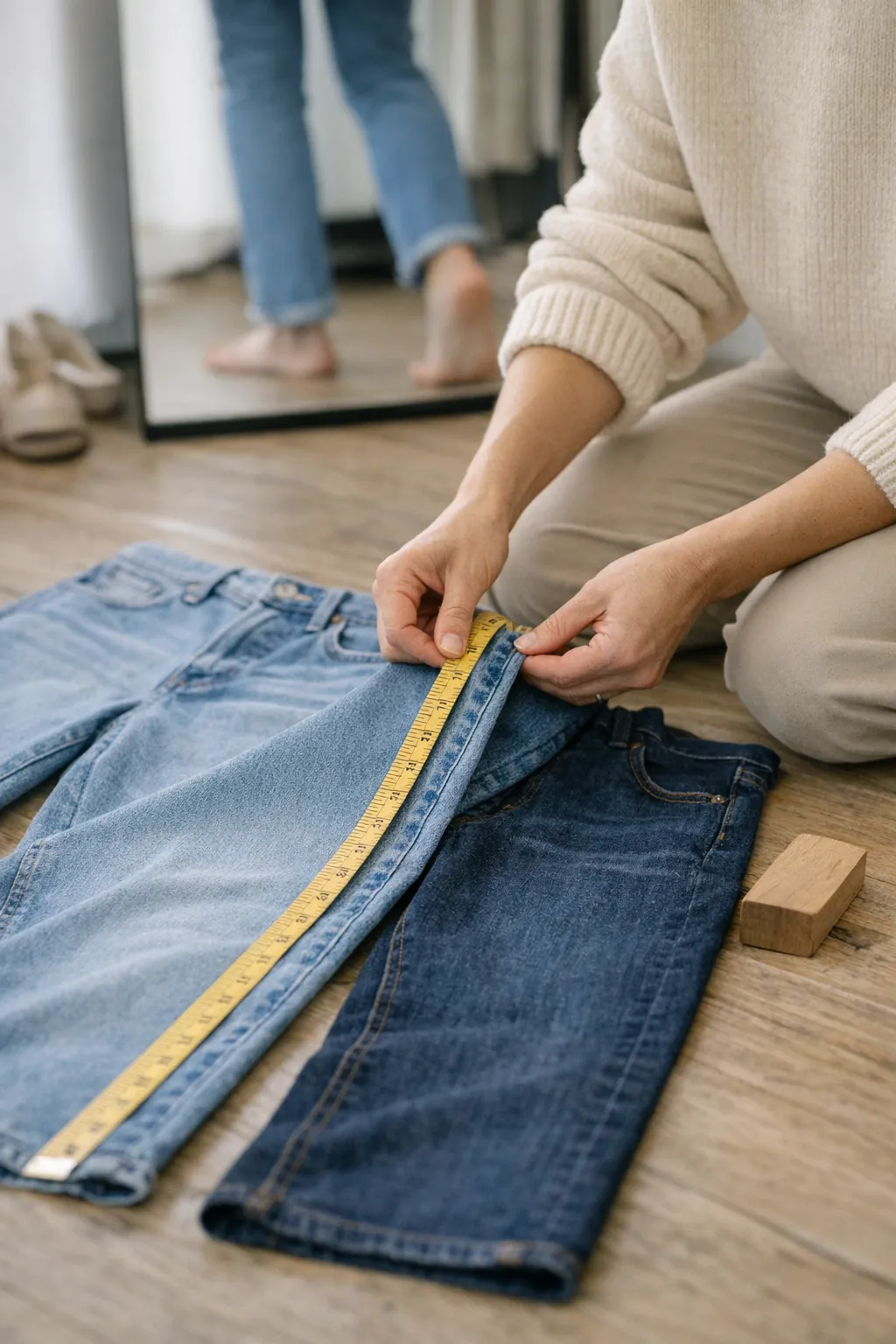
Prerequisites matter because the right length depends on your height, how much thigh you’re comfortable showing, and the setting you’ll wear them in. By gathering the essential tools and establishing a baseline, you can test lengths objectively rather than guessing. This section ensures you have everything to measure, compare, and confirm your sweet spot across 5, 7, and 9 inch inseams, so your final choice reads balanced and comfortable in daily activities.
Before you start, make sure you have:
- Mirror for trying on shorts to judge length and proportion
- Measuring tape or ruler to confirm inseam measurements
- A flat surface to lay shorts flat for measurement
- A selection of shorts in 5", 7", 9" inseams (and 11" if available)
- Height information or a height category (short, medium, tall)
- Knowledge of the setting you will wear shorts in (casual, beach, golf, office)
- Ability to move in the shorts (standing, sitting, bending, squatting)
- The Pinch Trick or a method to test width and thigh fit
- A plan to record and compare inseam results for reference
- Test fabrics that match your activity (stretch, breathable, quick-dry)
- Neutral color options to start (navy, grey, khaki) and a versatile accent color
- Access to a mirror to evaluate leg line and footwear compatibility
Take Action: Pick the Right Above-the-Knee Shorts Length
Take control of your shorts length in a focused, action-oriented session. You’ll determine your height category, pick an appropriate setting, and test multiple inseams on real movement to find your personal sweet spot. Start with a versatile baseline and refine by moving, sitting, bending, and squatting in several lengths. Use The Pinch Trick to verify thigh width and ensure the waistband remains comfortable. Consider performance fabrics for stretch and quick-dry comfort, and match the length to the occasion. The result should be a balanced, confident look you can wear anywhere.
-
Identify height category
Identify your height category to guide length decisions. Use simple brackets to map height to recommended inseams, then start with a versatile baseline that works across most builds. This approach avoids guesswork and creates a repeatable starting point. Source
How to verify: Height category aligns with the inseam mapping and baseline selection.
Common fail: Skipping height consideration and choosing a length that reads unbalanced on your frame.
-
Decide wear setting
Decide where you’ll wear the shorts (casual, beach, golf, office) to guide inseam choice. The setting dictates whether a shorter or longer length is appropriate and helps you avoid mismatch. Start with a baseline and adjust for activity. Source
How to verify: The chosen setting aligns with the inseam range you plan to test.
Common fail: Selecting lengths without considering the occasion and environment.
-
Start with baseline inseam
Begin with a versatile baseline inseam, typically 7 inches, and plan to test 5", 7", and 9" options. Source This baseline helps you compare lengths and identify your personal sweet spot.
How to verify: Baseline length feels balanced on your frame during movement.
Common fail: Fixating on a single length without comparing alternatives.
-
Aim for hem position
Set the target hem to sit 1–3 inches above the knee to balance height and leg visibility. Adjust based on comfort and activity. Source
How to verify: The hem sits clearly above the knee when standing and walking.
Common fail: Ending at or below the knee, which can look disproportionate.
-
Test movement
Move in the shorts: sit, stand, bend, and squat to ensure freedom of movement and no digging or ride-up.
How to verify: Movements are unrestricted and comfortable across the tested lengths.
Common fail: Shorts pinch or ride up during movement.
-
Apply The Pinch Trick
Apply The Pinch Trick to check width and ensure the thigh area mirrors a tailored fit. Adjust if fabric feels loose or tight. Source
How to verify: Width feels similar to your pants through the thigh.
Common fail: Width feels baggy or restrictive across lengths.
-
Pair with outfits
Pair the tested lengths with typical tops and footwear to gauge overall balance and proportion for common settings.
How to verify: The outfit reads cohesive and intentional for the chosen length.
Common fail: Mismatched tops or shoes that undercut the silhouette.
-
Compare between lengths
If between lengths, compare 5", 7", and 9" to identify your personal sweet spot through real wear. Source
How to verify: One length clearly feels more balanced and comfortable in daily use.
Common fail: Sticking with the first length tried without testing alternatives.
Verification: Confirm your above-the-knee length is balanced across activities
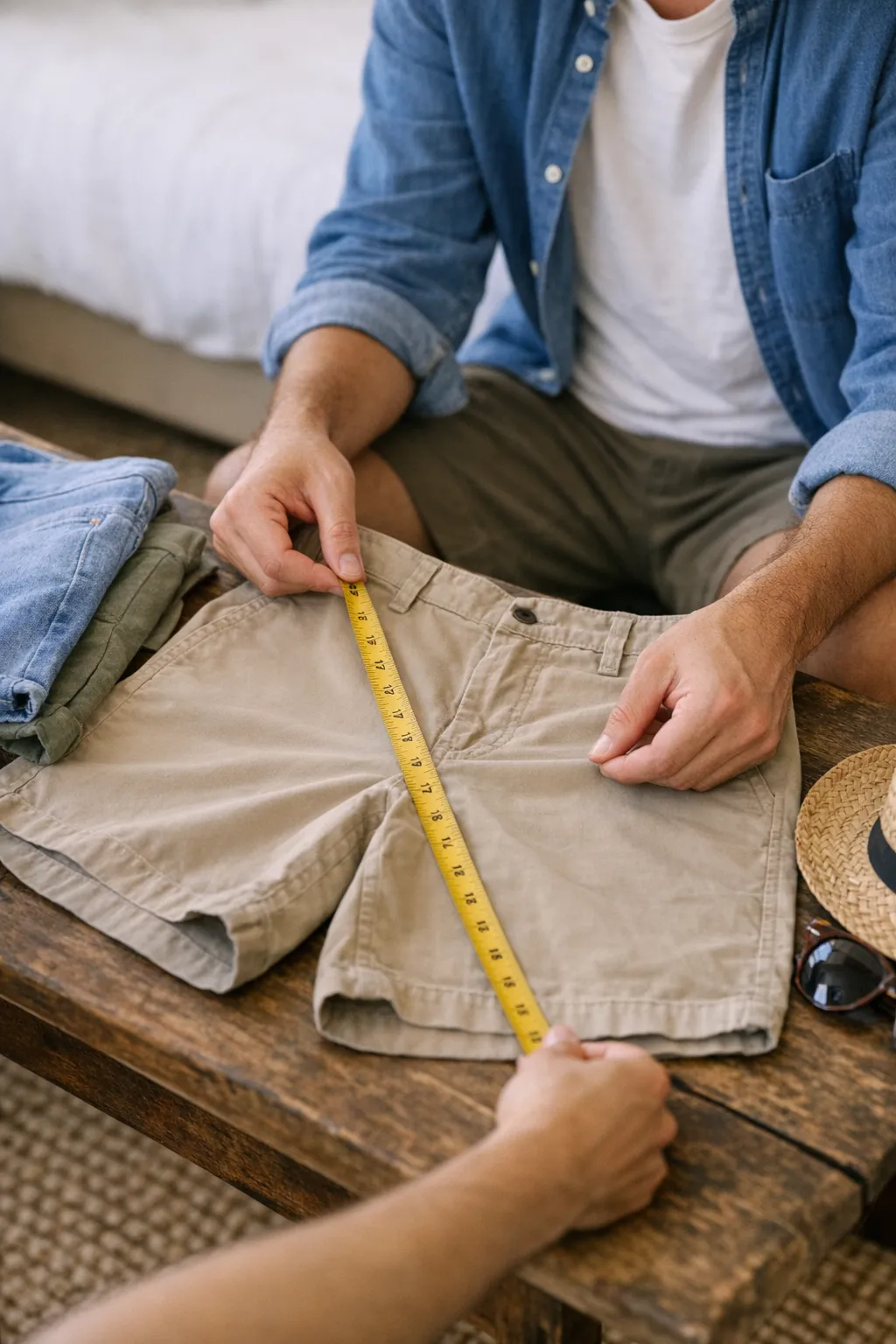
To confirm you’ve achieved a successful above-the-knee length, repeat movement tests across the candidate inseams and compare comfort and proportion in real wear. Start with your baseline and ensure the hem sits about 1–3 inches above the knee. Move through sitting, bending, and squatting to verify there’s no riding up or digging. Use The Pinch Trick to assess thigh width and confirm the silhouette stays tidy with your usual shoes and tops. If the length stays comfortable across activities, you’ve found your sweet spot.
- The hem sits 1–3 inches above the knee in standing and walking
- You can squat, bend, and sit without riding up or pinching
- The waistband is comfortable and adjustable
- The Pinch Trick confirms thigh width is proportionate to pants fit
- The fabric has stretch, breathability, and quick-dry properties
- The length works for your typical settings (casual, golf, beach, office)
- The silhouette remains clean with your usual footwear
- You tested multiple inseams (5", 7", 9") and found a personal sweet spot
- You feel confident wearing the chosen length
| Checkpoint | What good looks like | How to test | If it fails, try |
|---|---|---|---|
| Movement clearance | No digging, riding up, or restriction during movement | Perform a set of movements: squat, lunge, bend, sit | Length is too short or too long, switch to a different inseam |
| Hem position | Hem sits clearly above the knee | Stand and walk to confirm knee clearance | Move to a shorter or longer inseam and re-check |
| Width and fit | Thigh width feels proportional to pants | Apply The Pinch Trick around mid-thigh | Adjust to a different cut or size |
| Comfort and fabric | Fabric is breathable, stretchy, and comfortable | Wear for an extended period and move through daily activities | Choose a fabric with more stretch or a different size |
| Setting alignment | Length matches the intended setting (casual, golf, beach, office) | Pair with typical tops and footwear for the setting | Switch to a length that better suits the occasion |
Troubleshooting: Fixing common length issues for above-the-knee shorts
When your chosen inseam doesn’t read right in real wear, use targeted checks to identify the root cause and apply quick, practical fixes. Focus on movement comfort, knee clearance, and proportional balance across outfits. Start by confirming your height category and the setting, then test multiple inseams with real movements and adjust accordingly. This ensures your final length feels natural and versatile in daily life.
-
Symptom:
Shorts ride up during movement
Why it happens: Inseam is too short for your leg length or the fabric isn’t providing enough knee clearance.
Fix: Move to a longer inseam (7" or 9") and test with squats and lunges to confirm staying power.
-
Symptom:
Hem sits at or below the knee
Why it happens: Inseam is too long for your height, creating a disproportionate look and restricting motion.
Fix: Shorten to 5"–7" and re-test movement for ride-up.
-
Symptom:
Waistband digs in or pinches
Why it happens: Waistband tension, size too small or design lacks adjustability.
Fix: Try a size up or look for drawcord/elastic waistbands and recheck hip movement.
-
Symptom:
Thigh looks too tight or too baggy
Why it happens: Width is off, pinch test confirms improper thigh ease.
Fix: Adjust width with a different cut or size, retest with The Pinch Trick.
-
Symptom:
Fabric feels stiff or lacks stretch
Why it happens: Material chosen doesn’t offer enough stretch for dynamic moves.
Fix: Replace with a stretch or performance fabric and re-test movements.
-
Symptom:
Shorts don’t balance with footwear
Why it happens: Inseam doesn’t align with typical shoe height or sock choice for the setting.
Fix: Adjust inseam within the 5"–9" range and pair with appropriate shoes to re-evaluate balance.
-
Symptom:
Too bold thigh visibility
Why it happens: Thigh confidence setting pushes you to a shorter inseam than comfortable.
Fix: Increase length to 7" or 9" and observe comfort in sitting and walking.
-
Symptom:
Inseams feel inconsistent across styles
Why it happens: Different shorts (chino, denim, cargo, swim) have distinct inseam conventions.
Fix: Use recommended style-specific inseams (e.g., 7" for chinos, 7"–9" for denim) and test each in real wear.
What readers ask next about above-the-knee shorts length
- What’s the best starting inseam for most builds? A 7-inch inseam serves as a versatile baseline that works for many heights, test 5" and 9" if you’re between lengths to confirm your sweet spot.
- How do I know if a length is too short? If it reveals too much thigh or causes constant riding up during movement, try a longer inseam and recheck with squats and sits.
- Does height really affect inseam choice? Yes- shorter heights benefit from shorter inseams to avoid a disproportionate look, while taller heights often need longer options for balance.
- What is The Pinch Trick used for? It’s a quick test to judge thigh width so the shorts fit similarly to pants and don’t appear overly baggy or tight.
- Which fabrics work best for above-the-knee shorts? Look for stretch, breathability, and quick-dry properties so the shorts move with you and stay comfortable in heat.
- Can I wear 5" inseam shorts in an office? They can work in modern, fashion-forward offices if the shorts are slim, tailored, and paired with a polished top and shoes, otherwise, consider 7"–9" for a safer balance.
- How should I test a new length? Try the candidate lengths on with movements you do daily (sitting, standing, squatting, bending) and compare how they feel across activities.
Readers ask next about above-the-knee shorts length
What’s the best starting inseam for most builds?
A versatile baseline is a 7-inch inseam, which works for many heights and builds by balancing leg exposure and movement. Start there, then compare 5-inch and 9-inch inseams on real wear. Use movement tests-sitting, bending, squatting-to see which length stays secure and comfortable. Consider your setting and fabric, this shortest path helps you identify a personal sweet spot.
How do I know if a length is too short or too long?
If the thigh shows too much or the fabric rides up during movement, the length is too short. If the hem sits at or below the knee and looks disproportionate, it’s too long. Test with squats and walking for clarity. Aim for a length that feels natural in daily activities.
Does height really affect inseam choice?
Yes. Height influences how a given inseam reads on your frame. Shorter heights tend to benefit from shorter inseams to avoid a bottom-heavy look, while taller heights often require longer options for balance. Test multiple lengths with your typical outfits to confirm the most flattering read.
What is The Pinch Trick used for?
The Pinch Trick is a quick method to gauge thigh width and ensure the outer thigh reads like a tailored fit. Pinch the fabric at mid-thigh and compare it to your pant fit. If the fabric tightens or sags, adjust the inseam or cut accordingly.
How do I test movement for a new length?
Test movement by performing typical actions-sitting, standing, bending, squatting, and walking-while wearing each candidate inseam. Look for ride-up, digging, or restriction. Repeat across lengths to determine which option stays secure during daily activities.
Can I wear 5-inch inseam shorts in an office?
Yes, in some modern offices if they’re slim, tailored, and paired with a polished top and clean shoes. For conservative environments, 7- to 9-inch inseams tend to read safer and more balanced, offering a contemporary look without drawing excessive attention. Consider your office dress code and outfit harmony.
How should I pair tops and footwear with shorter shorts?
Pair shorter inseams with neutral tops and clean footwear to keep proportions balanced. A tidy top like a polo or button-down with streamlined shoes helps elongate the leg line and preserves a polished look. Avoid oversized tops that visually cut the leg line and disrupt the silhouette.
How many inseams should I test to find my sweet spot?
Test a few lengths in real wear: start with a 7-inch baseline, then compare shorter and longer options to see how they affect proportion and movement. Focus on knee clearance, thigh width, and overall comfort. Once you find a length that consistently reads balanced in daily routines, lock it in for most outfits.
What fabrics work best for above-the-knee shorts?
Look for stretch, breathability, and quick-dry properties in performance fabrics. A comfortable waistband and adaptable cut through the thigh help keep the silhouette clean. Chino, denim, cargo, and swim styles benefit from different blends, so test material against your movement.