
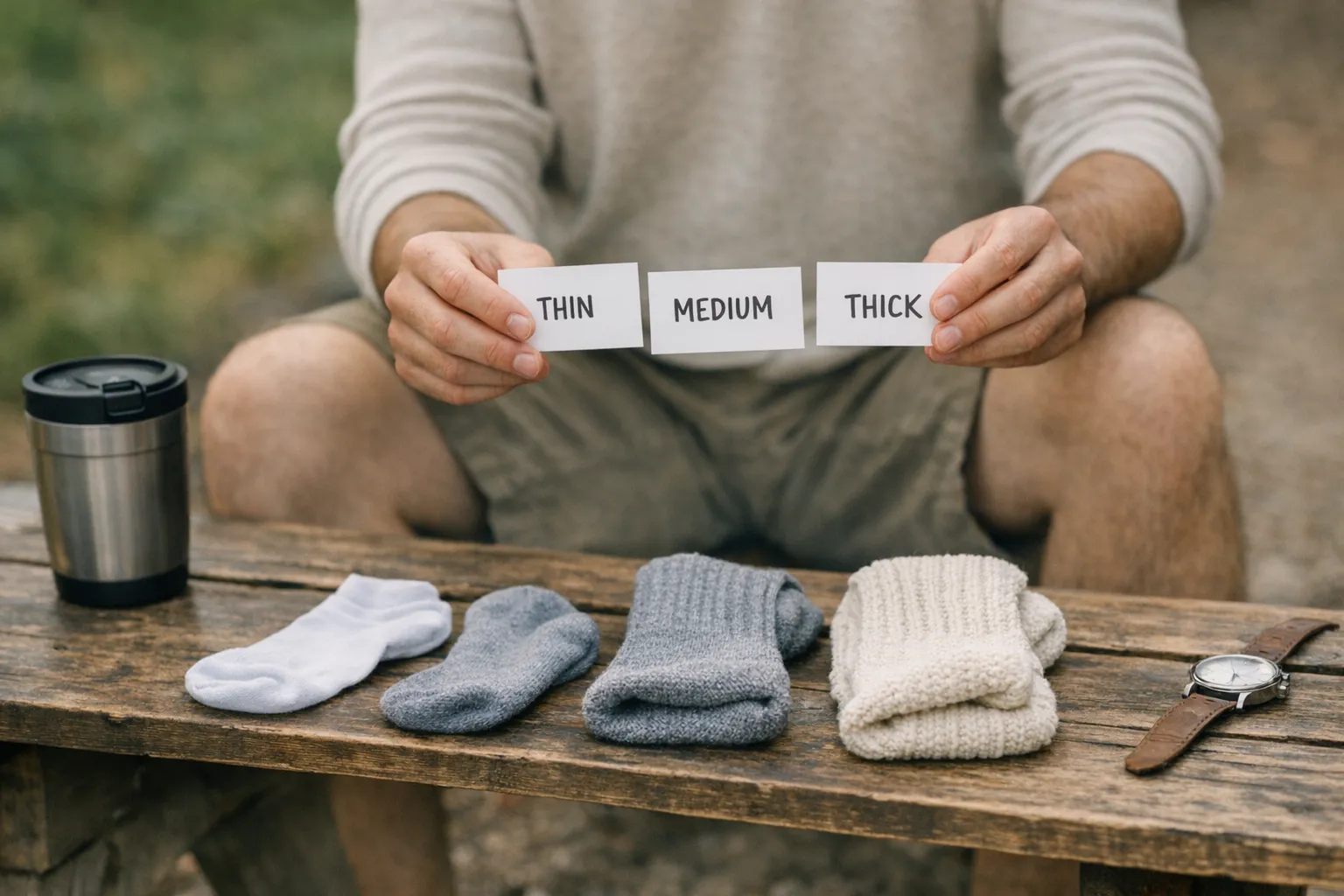
In this guide you will identify how thick your socks should be for all-day comfort by matching activity, climate, and footwear to a thickness category from Ultralight to Heavyweight. You will assess your day’s demands-office work, travel, or active time-and test a couple of thickness options with your usual shoes. The simplest path is to pick a midweight option for most days, verify fit with your work or casual shoes, and adjust up or down for extreme heat or cold. You’ll prioritize moisture management , arch support, and a snug, non-bulky feel. By choosing the right thickness and a breathable blend (merino, bamboo , or cotton blends), you’ll keep feet comfortable, dry, and ready for hours of wear. This plan aligns with the keyword: Men's socks: how to choose thickness and comfort for all day.
This is for you if:
- You want all-day comfort from socks and care about fit, moisture, and performance.
- You wear different shoes (dress shoes, sneakers, boots) and need thickness that works across them.
- You live in variable climates and want a single plan adaptable to warm and cold days.
- You value fabrics like merino, bamboo, and cotton blends for moisture management .
- You are willing to test a couple thickness options and rotate socks.
- You want guidance that aligns with premium brands and care routines.
Prerequisites for Choosing All-Day Sock Thickness
Before you start selecting thickness, map your daily activities, footwear, and climate. This planning step ensures you choose a thickness category from Ultralight to Heavyweight that actually fits how you move and where you’ll wear socks. With these prerequisites in place, you’ll compare moisture management, warmth, and comfort across tested options and rotate intelligently, reducing trial-and-error and boosting all-day performance.
Before you start, make sure you have:
- Access to a range of thickness categories (Ultralight, Lightweight, Midweight, Heavyweight) to compare.
- Clear daily context (office, travel, gym, outdoor) to match thickness to use.
- Your usual footwear lineup (dress shoes, sneakers, boots) for testing fit and bulk.
- Knowledge of current climate or season to balance warmth and breathability.
- Understanding of moisture management needs and odor control.
- Awareness of preferred material blends ( merino wool , bamboo, cotton blends) for comfort and durability.
- Ability to test multiple sock lengths (no show, ankle, crew, over-the-calf) with your shoes.
- Accurate sock size information and fit cues (heel alignment, toe room, top edge comfort).
- A plan to rotate socks to extend life and compare performance over several days.
- Care guidelines and washing routines to preserve thickness and elasticity.
- A rough budget and access to premium options if desired.
- Awareness of any brand guarantees or warranties to consider during selection.
Take Action: Step-by-Step Procedure for All-Day Sock Thickness
Set expectations: The procedure helps you pick the right thickness for Men's socks: all-day comfort guided by activity, climate, and footwear. You’ll compare thickness categories with your usual shoes and test a couple options. The aim is to find a balance of moisture management, warmth, and fit so feet stay dry and unbulky from morning to night. Follow these steps to make a confident, repeatable choice that supports premium comfort and durability.
-
Assess daily context
List the day’s activities and note the shoes you’ll wear. Consider office, travel, gym, or outdoor time and the expected climate. This context sets the thickness direction you’ll take.
How to verify: You have a clear activity plan and footwear list.
Common fail: Skipping this step leads to mismatched thickness and bulk.
-
Identify footwear compatibility
Check the shoes for space around the toe and the heel. Compare dress shoes, sneakers, and boots to the thickness you’re considering. Ensure the sock won’t create bulk or rubbing.
How to verify: Socks fit with the intended shoes without bulk or pressure points.
Common fail: Choosing socks that don’t work with your usual footwear.
-
Select thickness category
Choose Ultralight, Lightweight, Midweight, or Heavyweight based on activity and climate. Consider layering options if a single pair isn’t enough.
How to verify: The thickness fits the shoe profile and feels comfortable during basic movement.
Common fail: Picking thickness without testing with the actual shoes.
-
Pick material blend
Evaluate merino wool, bamboo, or cotton blends for moisture control and durability. Think about odor resistance and how the fabric handles heat and sweat.
How to verify: Material aligns with season and usage needs.
Common fail: Relying on cotton-only socks for workouts or long days.
-
Decide cushioning level
Determine whether you want no cushion, standard cushioning, or targeted/full cushioning based on duration and activities. Add arch support if your feet fatigue easily.
How to verify: Cushioning matches anticipated activity and terrain.
Common fail: Excessive bulk that reduces shoe fit or comfort.
-
Verify size and fit with footwear
Check heel alignment, toe room, and top-edge comfort while wearing the socks with your chosen shoes. Ensure there’s no pinching or sliding.
How to verify: Socks stay in place with no slipping or rubbing during movement.
Common fail: Poor sizing causing hotspots or crowding.
-
Wear-test for comfort
Walk, stand, and sit through typical daily activities with your socks and shoes. Observe moisture, heat, friction, and overall comfort.
How to verify: Comfort remains consistent over a representative wear period.
Common fail: Not testing movement leads to unseen issues.
-
Plan care and rotation
Outline washing guidelines and rotation to preserve thickness and elasticity. Schedule regular refreshes and keep gear separated by use to maintain performance.
How to verify: Care steps preserve shape and comfort across wears.
Common fail: Ignoring care shortens lifespan and reduces performance.
Verification: Confirm All-Day Comfort and Right Sock Thickness
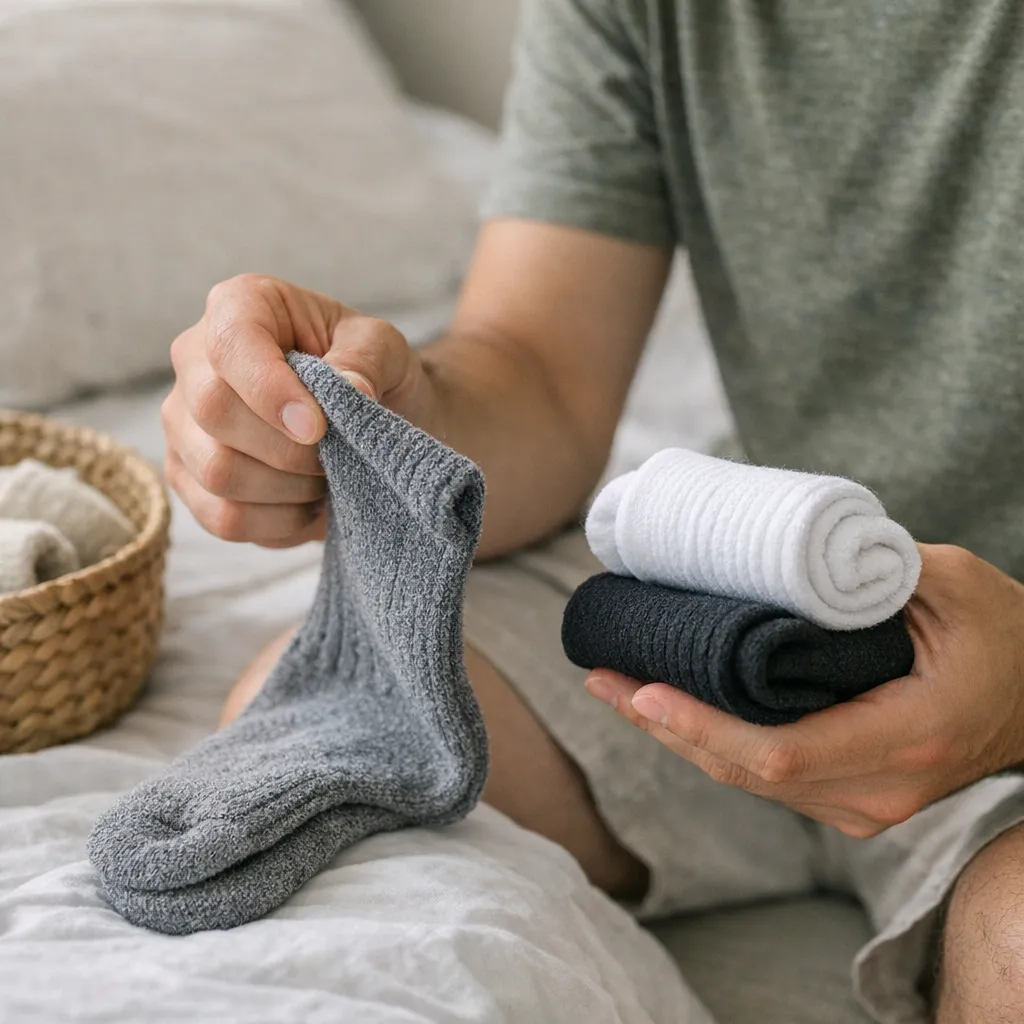
Verification focuses on proving the chosen thickness delivers all-day comfort across typical daily activities, footwear, and climates. You’ll confirm that moisture control, warmth, and fit hold up from morning through evening, with the sock remaining appropriately sized and unobtrusive under shoes. Use real-world wear with your usual outfits, observe any hotspots or overheating, and adjust material blends or thickness as needed. This process ensures your selection stands up to daily demands while maintaining premium comfort as promoted by LESH.
- Clear alignment between thickness and daily activity
- Socks stay up without slipping or bulging
- Moisture management remains effective during wear
- Temperature balance stays comfortable in expected weather
- Cushioning suits duration and terrain without bulk
- Under-shoe bulk is minimal and shoes fit well
- Odor control remains effective over time
- Fabric retains shape and elasticity after washes
| Checkpoint | What good looks like | How to test | If it fails, try |
|---|---|---|---|
| Material and thickness alignment | Chosen category matches activity and climate | Wear with typical shoes for a full day’s routine | Switch to an alternate thickness category or blend |
| Fit and retention | Heel stays on target, no sliding or constriction | Walk, sit, and stand in expected footwear | Size up or adjust elastic level |
| Moisture management | Feet feel dry and comfortable | Monitor during periods of activity and heat | Choose merino or bamboo blends with better wicking |
| Thermal balance | Warmth appropriate for season, no overheating | Assess comfort in current weather conditions | Move to lighter or heavier weight as needed |
| Cushioning suitability | Padding feels right for duration without bulk | Test walking long corridors or stairs | Adjust cushioning level or select targeted cushioning |
| Durability after washing | Shape and elasticity preserved | Wash according to care guidelines and re-check fit | Try a fabric blend with better shrink resistance |
Troubleshooting: Fixing All-Day Sock Thickness Issues
This quick guide helps you identify common problems when selecting thickness for all-day wear and provides actionable fixes you can implement immediately. By addressing fit, moisture management, warmth, and bulk, you can restore comfort across activities and footwear. Use these targeted remedies to narrow thickness choices, adjust fabrics, and fine-tune your rotation so feet stay dry, supported, and comfortable from morning to night.
-
Symptom:
Socks slip down during wear.
Why it happens: The top elastic or overall fit isn’t tight enough for your shoe profile.
Fix: Try a size up or down depending on the brand, or switch to a style with stronger heel grip and a snug top edge. Pair with shoes that suit the sock’s thickness and consider a lighter pair if shoes are loose.
-
Symptom:
Feet feel overly warm or clammy in mild weather.
Why it happens: Thick fabrics trap heat and moisture when the climate is moderate.
Fix: Move to Ultralight or Lightweight merino/bamboo blends and ensure the fabric is breathable with moisture-wicking properties.
-
Symptom:
Socks bunch or wrinkle under the ball of the foot.
Why it happens: Length or size is off for the shoe, or the sock lacks proper arch support.
Fix: Confirm the correct length for the shoe (no-show, ankle, or crew) and consider a pair with built-in arch support or a better fit around the midfoot.
-
Symptom:
Visible wear at heel or toe after short use.
Why it happens: Low-durability fibers or insufficient reinforcement in high-stress zones.
Fix: Invest in socks with reinforced heels/toes and higher-quality blends (nylon/spandex) that resist wear.
-
Symptom:
Persistent foot odor or dampness even after washing.
Why it happens: Cotton-dominant blends with poor moisture control promote odor and dampness.
Fix: Choose merino wool or bamboo blends with odor-control properties and ensure thorough drying after washing.
-
Symptom:
Dress socks feel bulky in formal shoes.
Why it happens: Thickness exceeds what dress shoes can comfortably accommodate.
Fix: Switch to Ultralight or Lightweight dress-appropriate socks and verify compatibility with your formal footwear.
-
Symptom:
Sizing mismatch causes hotspots or crowding.
Why it happens: Inaccurate size selection or inconsistent brand sizing.
Fix: Check the brand’s size chart, measure your foot, and choose the size that aligns with typical shoe size, consider half-sizes if available.
-
Symptom:
Irritation from seams at the toe.
Why it happens: Thick or bulky toe seams create friction inside shoes.
Fix: Opt for seamless or flat-seamed socks and verify construction before wear.
What readers ask next about all-day sock thickness
- How do I decide the right sock thickness for all-day wear? Start by mapping your activities and climate, then choose a thickness category from Ultralight to Heavyweight. Test with your usual shoes and rotate a couple of options to find what stays dry and comfortable all day.
- Can I wear the same thickness socks with dress shoes and sneakers? For most days, midweight or lightweight works with both, but formal footwear may benefit from thinner options to avoid bulk, always test fit with your dress shoes.
- Which fabrics help with moisture and odor? Merino wool and bamboo blends excel at moisture management and odor control, cotton-only socks tend to trap moisture and are less ideal for all-day wear.
- How can I test thickness before buying multiple pairs? Start with a midweight option and wear with your typical shoes for a full day, paying attention to heat, moisture, and fit, compare with a lightweight or heavyweight sample.
- Do I need extra cushioning for standing all day? If you stand a lot, choose socks with standard or targeted cushioning and adequate arch support, but avoid excess bulk that interferes with shoe fit.
- How important is top elastic for staying up? The top elastic should hold the sock without digging in, if it slips, try a sock with stronger grip or adjust size.
- How should I care for high-thickness socks to preserve warmth and shape? Follow the care label, wash cold, air-dry, and rotate pairs to distribute wear, avoid high heat that damages elasticity.
- Can layering socks improve comfort? Layering adds bulk and is generally not recommended for everyday wear, use a single appropriately thick sock or a breathable underlayer only in very cold conditions.
- How often should premium socks be replaced? Inspect elasticity and cushioning regularly, replace when fit or support declines, even with proper care.
All-Day Sock Thickness: Quick Answers
How do I decide the right sock thickness for all-day wear?
Start by mapping your daily activities and the climate you’ll encounter, then select a thickness category from Ultralight to Heavyweight. Test with your usual shoes and rotate a couple of options to compare heat, moisture, and fit. A practical default is a midweight sock that stays comfortable across most days, with adjustments for extreme heat or cold.
Can I wear the same thickness socks with dress shoes and sneakers?
Generally yes: midweight or lightweight socks work well with both dress shoes and sneakers, but there are exceptions. For formal footwear, avoid bulk that can crowd the shoe, opt for a thinner option with good fit and moisture control. Always test by walking in both types of shoes to confirm comfort, warmth, and no crowding.
Which fabrics help with moisture and odor?
Moisture and odor are best managed with performance blends. Merino wool blends excel at wick and regulate temperature, keeping feet drier and odor controlled. Bamboo fibers add breathability and natural odor resistance. Cotton alone tends to trap moisture and can feel damp after hours of wear. For durability and still-pleasant feel, look for blends that include nylon or spandex to maintain fit while offering moisture control.
How can I test thickness before buying multiple pairs?
Start with a midweight option and wear it with your typical shoes for a full day or a representative interval. Compare how the fabric handles heat, moisture, and fit, then repeat with a thinner and a thicker option to evaluate differences. Note comfort, bulk, and the way socks interact with your shoes to guide future purchases.
Do I need extra cushioning for standing all day?
If you stand for long periods, choose socks with standard or targeted cushioning that aligns with your activity and the terrain, but avoid adding bulk that can crowd the shoe. Look for built-in arches and midfoot support as you test, ensuring cushioning supports weight without reducing fit or causing overheating.
How important is top elastic for staying up?
Top elasticity should hold the sock up without digging in. If the sock slips, try a size up or a style with stronger grip and a snug top edge. Pair the thickness with appropriate footwear to reduce slipping, and recheck fit after a few steps to ensure stability.
How should I care for high-thickness socks to preserve warmth and shape?
Follow the care label to preserve warmth and elasticity. Use cold water, a gentle cycle, and air dry to protect fibers. Avoid high heat in dryers, which can shrink or deform thicker fabrics. Rotate socks to distribute wear evenly, and store them flat or gently folded to maintain shape, this preserves fit and insulation over time.