
To choose fabric weight for a long sleeve shirt, start by defining the season, warmth, and silhouette you want. Then reference a reliable fabric-weight guide to map your design to a target GSM or oz/yd² range appropriate for woven or knit fabrics. Confirm whether your chosen fabric is woven or knit, because weight behaves differently in each structure. Gather swatches that represent the target weight, feel the hand, compare opacity, and assess drape on a mock-up or sample pattern layout. Test layering with a basic underlayer to ensure comfort and movement. Compare a second weight option to understand how subtle changes affect silhouette and warmth. Finally, document the chosen weight and rationale so future shirts stay consistent. The core idea is to move from season and silhouette to a tested swatch-based weight decision-How to choose fabric weight for a long sleeve shirt.
This is for you if:
- You are planning a long sleeve shirt and want a reliable weight guide to balance warmth and drape
- You sew at home or in a small studio and need predictable results across seasons
- You want to compare woven and knit weights and their impact on silhouette
- You rely on swatches and pattern guidance to validate weight choices
- You aim to document weight decisions for future shirts and consistency
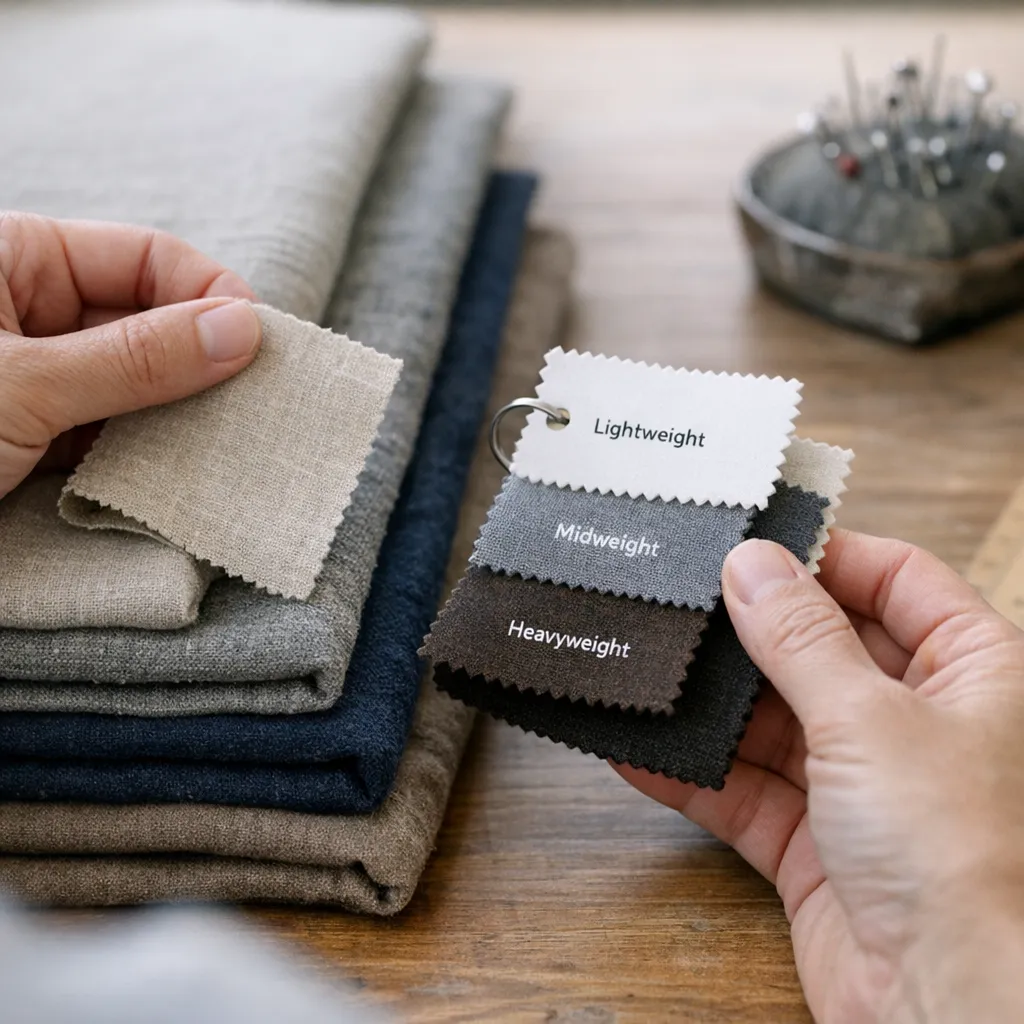
Prerequisites for choosing fabric weight for a long sleeve shirt
Having the right prerequisites ensures you start with a clear target and verifiable options. By assembling season, silhouette, and drape goals, plus access to reliable weight guides and swatches, you can compare candidates confidently. Understanding whether your fabric is woven or knit helps you anticipate how weight will behave in wear. Preparing a quick mock-up or swatch test early saves time and reduces guesswork as you move toward a final, well-documented decision.
Before you start, make sure you have:
- A clear long sleeve shirt concept (season, layering needs, silhouette)
- Access to a fabric weight guide or weight chart
- Knowledge whether the target fabric is woven or knit
- Availability of swatches or samples in target weights
- Pattern guidance or end-use specifications for the shirt
- A rough budget and MOQs if planning multiple shirts
- A simple mock-up or swatch-testing setup
- A method to document weight decisions for future reference
- A plan to compare different weights (second option for comparison)
- Understanding GSM and oz/yd² ranges
- Awareness of how weight interacts with warmth and layering needs
- Preparedness to adjust based on pattern silhouette and fabric behavior
Decide the Right Fabric Weight for Your Long Sleeve Shirt
This step-by-step guide sets expectations for a focused process: you’ll frame warmth, drape, and layering, map those needs to a target weight, and validate your choice with actual swatches and a quick mock-up. The goal is a practical, well-documented decision that matches your design, season, and silhouette without overcomplicating development or production.
Before you start, make sure you have:
-
Determine warmth and drape
Define how warm the shirt should feel and how you want it to fall on the body. Consider layering needs and whether you want a soft, fluid drape or a more structured look. This sets the foundation for the weight range you’ll choose.
How to verify: The planned warmth and silhouette align with the intended season during a quick try-on mock-up.
Common fail: Skipping layering considerations and selecting a weight that is too bulky or too sheer.
-
Map target weight range
Identify a practical weight range anchored to your shirt’s season and style. Use a weight chart to map the design to a target GSM or oz/yd², midweight ranges often provide versatility for long sleeves. Source .
How to verify: The chosen range matches pattern guidance and your design goals.\p>
Common fail: Failing to anchor the choice to a defined weight range.
-
Confirm fabric type
Decide whether the fabric is woven or knit and note how weight behaves in each structure. This ensures you don’t equate all weights across different fabric families.
How to verify: The selected weight produces expected hand and drape for the fabric type.
Common fail: Treating a knit and a woven the same regardless of weight.
-
Review pattern guidance
Consult the pattern or tech pack for any weight recommendations tied to the shirt’s silhouette and season. Use those specifics to constrain your options before swatching.
How to verify: Pattern guidance confirms the chosen weight supports the intended fit.
Common fail: Ignoring pattern notes and relying on guesswork.
-
Gather swatches
Collect samples that represent the target weight from multiple suppliers. Compare hand, opacity, and initial drape to your design references and fall expectations.
How to verify: Swatches align with the expected hand and drape in your reference images.
Common fail: Using a single source or missing opacity checks.
-
Test drape with mock-up
Sew a quick mock-up or use the pattern layout with the swatches to evaluate how the weight sits on the body and under layering. Observe movement and comfort.
How to verify: The mock-up demonstrates the intended silhouette and ease of wear.
Common fail: Skipping a live test and relying solely on theory.
-
Decide final weight
Choose the weight that best balances warmth, drape, and durability. Document the rationale for future reference and plan procurement accordingly.
How to verify: The final weight is recorded with a clear justification tied to the design goals.
Common fail: Not documenting the decision, leading to inconsistency later.
-
Document and plan procurement
Capture fiber content, weave/knit type, and the exact GSM/oz value chosen, plus supplier details and MOQs. Use this for tech packs and future runs.
How to verify: Tech packs reflect the final weight specifications and supplier quotes are aligned.
Common fail: Incomplete specs causing miscommunication during production.
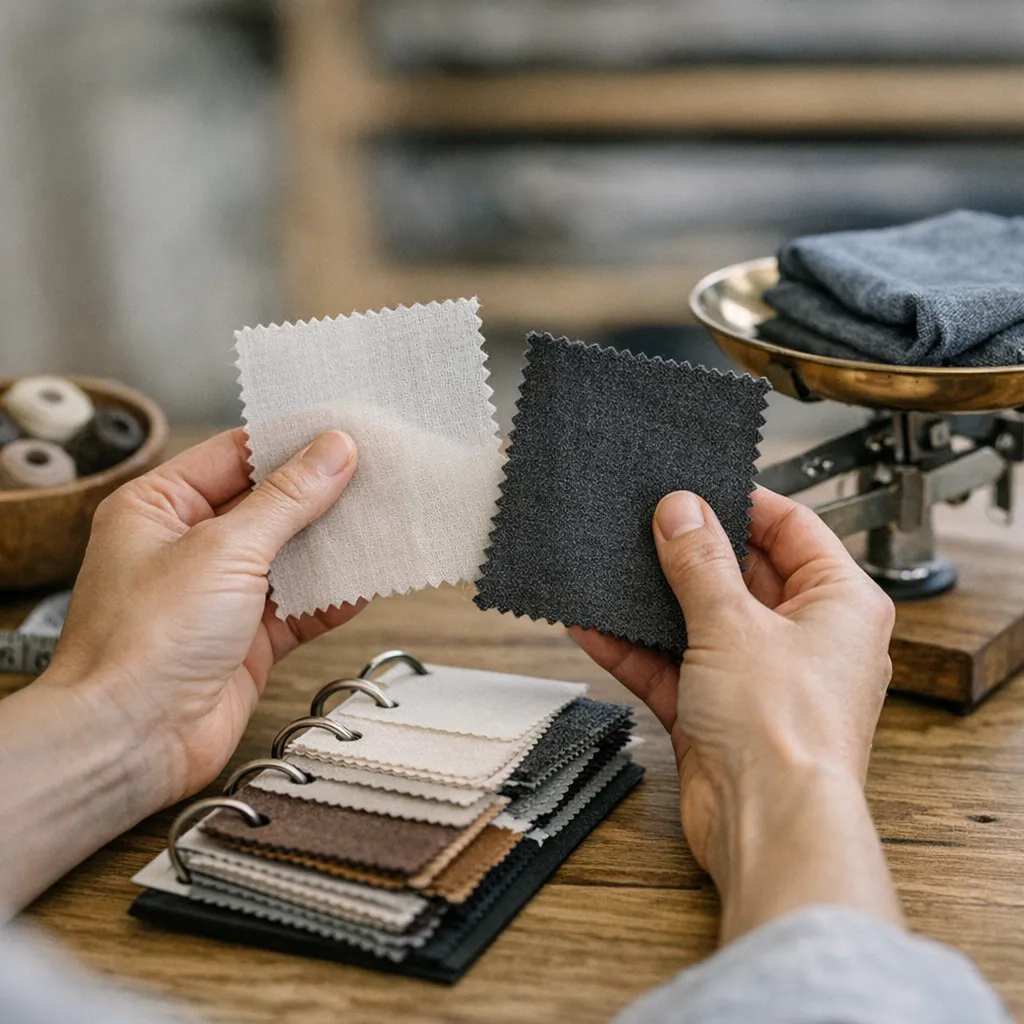
Verification: Confirming the right fabric weight for your long sleeve shirt
Verification ensures the weight decision delivers the intended warmth, drape, and layering ease. You’ll validate that pattern guidance aligns with the chosen weight, test with swatches for hand and opacity, and confirm the mock-up matches the desired silhouette on the body. Document the results and ensure consistency across potential fabric lots. Using a weight chart or guide during this phase anchors choices in real-world performance and seasonal needs, making the final selection repeatable and defendable. Source
- Confirm weight aligns with pattern guidance and season
- Validate swatch hand, drape, and opacity against references
- Test a live mock-up to verify silhouette and layering comfort
- Check warmth and layering compatibility for expected wear
- Document final weight choice with clear rationale
- Verify supplier availability and MOQs for the chosen weight
- Ensure consistency across fabric lots with a pilot comparison
- Reassess weight when switching between woven and knit fabrics
| Checkpoint | What good looks like | How to test | If it fails, try |
|---|---|---|---|
| Weight alignment with pattern guidance | Weight matches pattern-season silhouette | Cross-check weight value against pattern spec and compare swatches | Revisit the weight range or consult pattern notes |
| Swatch validation | Hand, drape, and opacity meet design references | Compare swatches to reference photos or spec sheets | Request alternative weights or finishes |
| Mock-up silhouette test | Mock-up shows intended fit and layering ease | Sew a simple mock-up and assess movement and comfort | Adjust weight or pattern ease and retest |
| Documentation and procurement readiness | Specs are complete and ready for production | Review tech packs and supplier quotes for alignment | Revise docs and re-quote if needed |
Troubleshooting: Common issues when choosing fabric weight for a long sleeve shirt
When refining fabric weight, small mismatches can cascade into fit, warmth, and drape problems. This section helps you quickly diagnose common symptoms and apply concrete fixes so the shirt meets design goals without reworking patterns. Use swatches, mock-ups, and wear tests to validate your weight choice and move from guesswork to a proven selection.
-
Symptom:
Too little warmth for the intended season
Why it happens: The fabric weight is lighter than required for the climate or layering needs.
Fix: Move up within the target weight range or add a lightweight underlayer for extra insulation while testing drape.
-
Symptom:
Drape feels stiff or bulky
Why it happens: The chosen weight has a dense weave or low stretch, reducing fluidity.
Fix: Try a lighter weight or a fabric with greater drape, and test on a mock-up to confirm movement.
-
Symptom:
Shirt is see-through or too sheer
Why it happens: The weight is too light for opacity, especially in light colors.
Fix: Choose a denser weave, darker color, or layer with a lightweight lining to maintain silhouette.
-
Symptom:
Layering feels bulky under another garment
Why it happens: The weight is too heavy for layering, causing bulk at cuffs, neck, or torso.
Fix: Select a lighter weight within the same category or adjust pattern ease to accommodate layering without bulk.
-
Symptom:
Pattern silhouette mismatches intended look
Why it happens: Pattern guidance presumes a different weight or fabric behavior.
Fix: Revisit pattern notes, test a swatch in the suggested weight, and adjust the fabric choice accordingly before cutting.
-
Symptom:
Inconsistent weight across fabric lots
Why it happens: Batch-to-batch variation in weave or finish affects weight perception.
Fix: Source from the same batch or dye lot, request lot information, and consider pilot runs to verify consistency.
-
Symptom:
Sewing performance problems on thick fabrics
Why it happens: The fabric is near or beyond the machine’s handling capability, causing skipped stitches or puckering.
Fix: Switch to a lighter weight within the recommended range, use a heavier needle, adjust stitch length, or employ a walking foot during sewing.
-
Symptom:
Budget or MOQ constraints force an unintended weight change
Why it happens: Availability and minimums push you toward a heavier or lighter option than ideal.
Fix: Reevaluate supplier options, request samples in multiple weights, and balance cost against design goals while documenting alternatives.
What readers ask next about choosing fabric weight for a long sleeve shirt
- What weight range is best for a versatile long sleeve shirt? For woven fabrics, aim for a midweight range around 170–260 GSM, for knits, use a comparable range while accounting for stretch and recovery. This keeps drape and warmth balanced across seasons.
- How does knit vs woven affect weight choice? Knits can feel lighter or heavier than their labeled weight because of stretch and structure, so weight isn’t the only indicator of feel or drape.
- How many swatches should I test? Start with 2–3 weights that fit your target range, then compare hand, opacity, and drape to your reference silhouettes.
- How should I read pattern guidance for weight? Use pattern notes as the primary constraint and map your weight choice to the suggested silhouette and season, validating with swatches.
- Can I use a single weight for all sizes? Weight can work across sizes, but test a couple of sizes to ensure consistent drape and fit, especially at seams and cuffs.
- How do I check opacity and layering? Check color and weave/knit structure with an underlayer or camisole to ensure modesty and silhouette in lighter colors.
- What about season and climate? Use lighter weights for warmer months and heavier weights for cooler months, factoring in layering needs and mobility.
- How should I document the final choice? Record the final weight with GSM/oz, fabric type, fiber content, weave/knit, and the pattern reference for future runs.
Common Questions About Choosing Fabric Weight for a Long Sleeve Shirt
What weight range is best for a versatile long sleeve shirt?
For a versatile long sleeve shirt, choose a midweight range that balances warmth with drape across seasons. For woven fabrics, target roughly 170–260 GSM, for knits, apply a comparable range while accounting for stretch and recovery. This keeps the silhouette flexible and comfortable whether layered or worn solo, and aligns with common garment guidance and swatch testing to guide the final decision.
How does knit vs woven affect weight choice?
Knits can feel lighter or heavier than their labeled weight because of stretch and structure, so weight isn’t the only indicator of feel or drape. Treat knits and wovens as separate families: consider recovery and stretch in knits, and weave density and drape in wovens. Always compare swatches and test on a mock-up to verify behavior.
How many swatches should I test?
Start with 2–3 weights within the target range to build a quick comparison. Gather swatches representing core weights, then evaluate hand, opacity, and drape against a small mock-up or pattern layout. If possible, include a fourth option to see subtle shifts in warmth and structure.
How should I read pattern guidance for weight?
Pattern notes should be the primary constraint, mapping the suggested silhouette and season to a specific weight range. Use swatches to confirm the pattern’s ease and drape remains achievable with your chosen fabric. If the pattern allows alternatives, test two weights and compare the fit and movement before finalizing.
Can I use a single weight for all sizes?
Weight can work across sizes, but validate on multiple sizes to ensure consistent drape at key points like shoulders, cuffs, and torso. Even small differences in scale can change how a fabric behaves, so test at a couple of sizes and adjust ease or pattern cut if necessary. This reduces surprises in production.
How do I check opacity and layering?
Assess opacity by comparing color and weave with an underlayer or camisole, especially in lighter colors. If the fabric is too sheer for the intended look, choose a denser weave or darker shade, or plan a lightweight lining to preserve silhouette without sacrificing warmth.
What about season and climate?
For summer and transitional seasons, lighter midweight fabrics often work well, for winter, move toward heavier weights while evaluating layering needs and mobility. Consider breathability and moisture management as well, since heavier fabrics can trap heat if layered improperly.
How should I document the final choice?
Record the final weight with GSM or oz, fabric type, fiber content, weave/knit, and the pattern reference used. Save swatches and supplier details for future runs, and note the rationale so team members understand why that weight was chosen. This ensures consistency across batches and seasons.