
In this guide you will determine the right T-shirt length by calculating your chest length and sleeve length against the official size chart for the chosen LESH style, then select Regular, Relaxed, or Oversized to match your silhouette. Start with your measurements using a flexible tape: chest at fullest part under the arms, sleeve length from center back of neck to cuff, and body length if needed. Open the product’s size chart on the LESH site and compare your numbers to the Chest, Length, and Sleeve values, if between sizes, size up to account for cotton shrinkage. Choose the silhouette that fits your look, then verify that the shoulder seam sits at the edge of the shoulder bone and the hem falls below the belt line but not too far down. Finally, test the shirt by moving and checking in a mirror-confirm with a reference shirt from LESH for consistency.
This is for you if:
- You want a T-shirt length that flatters your torso and avoids a short look
- You plan to compare size charts across LESH collections using measurements rather than labels
- You are choosing between Regular, Relaxed, or Oversized silhouettes
- You consider cotton shrinkage and want to size accordingly
- You value using a reference shirt or LESH size guide to verify fit
- You measure chest, sleeve and body length to map to the chart

Prerequisites for choosing the right T-shirt length
Preparing the right prerequisites ensures you measure accurately, compare against the correct size chart, and choose a silhouette that flatters your torso. Having the right tools and reference shirts lets you map your measurements to the exact Chest, Length, and Sleeve values, accounts for cotton shrinkage, and confirms shoulder and hem placements before you commit to a size.
Before you start, make sure you have:
- A copy of the LESH size chart for your chosen style (Regular, Relaxed, Oversized)
- A reference shirt you wear for measurement guidance
- A flexible tape measure or ruler
- Ability to measure chest length and sleeve length as described
- Knowledge of your preferred silhouette
- Awareness of cotton shrinkage tendencies
- Access to the product page chart and international size notes
- Quiet space to take accurate measurements
- A mirror for quick check of fit and hem position
- Willingness to compare measurements to chart values and adjust size accordingly
- Time to review care label instructions to preserve fit after washing
- Option to test fit by movement and re-check after washing
Take Action: Choose the Right T-Shirt Length That Doesn't Look Short
To avoid a short looking T-shirt, follow a clear sequence that starts with your preferred silhouette and ends with a tested fit. You will gather measurements from a reference shirt, compare them to the style’s size chart, map to the closest size, and factor in shrinkage before confirming the final choice. You will verify shoulder alignment and hem position by moving and testing the garment in a mirror so the length flatters your torso across everyday movements. This practical approach minimizes guesswork and keeps the look balanced after washing.
-
Decide silhouette
Choose whether you want a Regular, Relaxed, or Oversized look. Consider your body shape and how the fabric should drape across your torso. This decision determines how much length matters and which chart values to prioritize.
How to verify: The chosen silhouette matches your personal style and the product page description.
Common fail: Choosing a silhouette without checking the chart or a garment you own.
-
Gather measurements
Wear a reference shirt to ensure consistent drape. Use a flexible tape to measure chest length and sleeve length, plus body length if needed. Record the measurements and keep the tape level and snug but not tight.
How to verify: Measurements are repeatable when rechecked with the reference shirt.
Common fail: Not using a reference shirt or measuring incorrectly.
-
Open size chart and note values
Open the LESH size chart for the chosen style. Note the Chest, Length and Sleeve values and note whether the style is Regular, Relaxed, or Oversized. Remember to check international size notes if you shop across regions.
How to verify: You have the numeric values from the chart in front of you.
Common fail: Relying on the label size instead of chart numbers.
-
Map measurements to chart
Compare your measurements to the chart and pick the closest size. If you are between sizes, lean toward the larger one to allow movement. Double-check that sleeve length aligns with your cuff goals.
How to verify: The mapped size matches your chest length and sleeve length.
Common fail: Relying on one measurement or ignoring sleeve length.
-
Account for shrinkage
Consider cotton shrinkage and adjust your final choice accordingly. If between sizes, size up to accommodate washing. Review care instructions to minimize length changes in wash cycles.
How to verify: Shrinkage was accounted for in the final selection.
Common fail: Ignoring shrinkage notes.
-
Verify shoulder and hem positions
Check that the shoulder seam sits at the shoulder bone. Ensure the hem falls below the belt line but not too far below the fly. Make sure the silhouette aligns with your chosen Regular or Relaxed look.
How to verify: Shoulder alignment and hem position match your target silhouette.
Common fail: Relying on appearance alone rather than measurements.
-
Test movement and finalize
Put on the shirt and move your arms, bend, and squat as needed. Observe whether the length remains flattering and the fabric does not ride up. If all checks pass, finalize your size choice and commit to washing guidance.
How to verify: Movement confirms the length stays balanced during activity.
Common fail: Only testing while standing still.
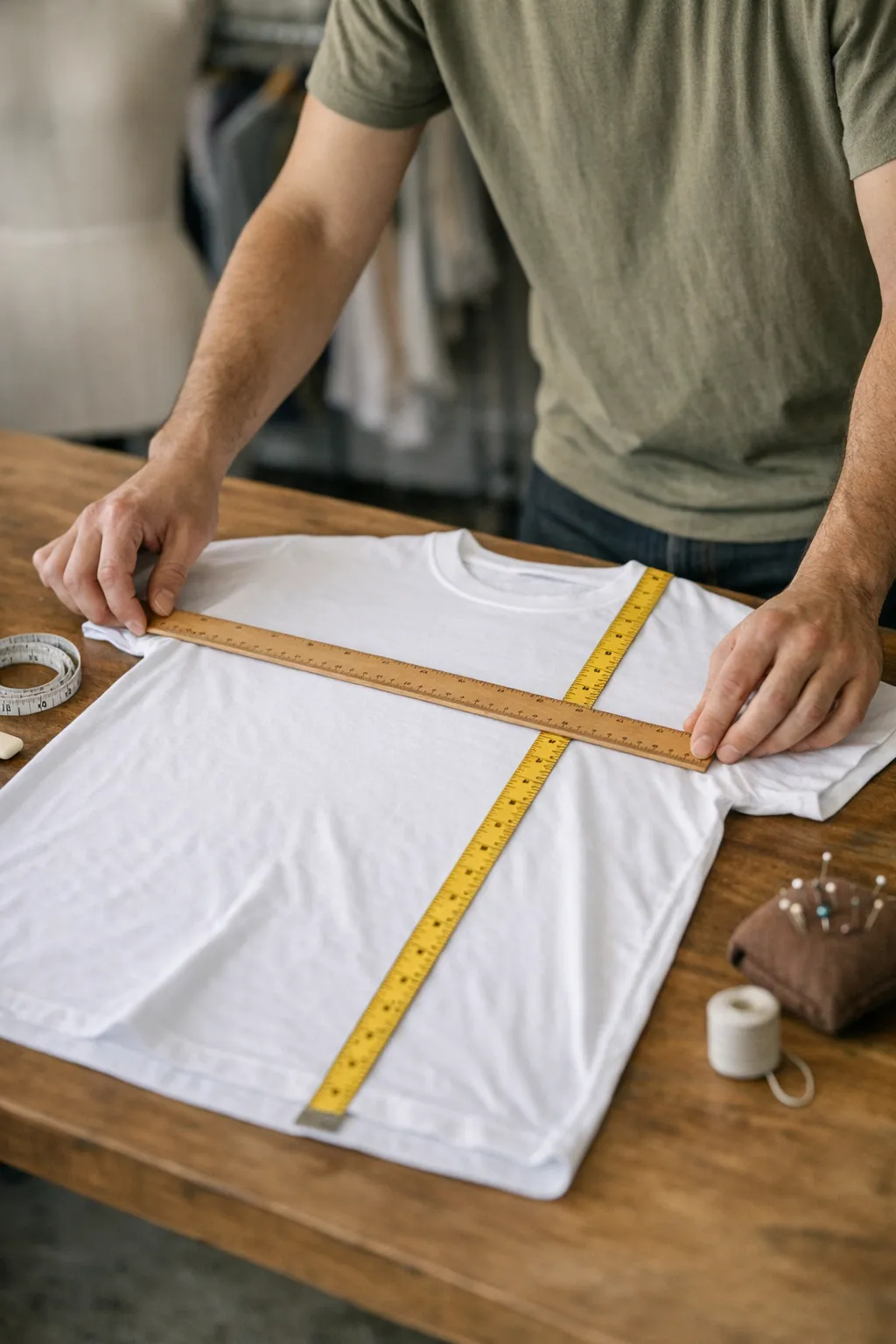
Verification: Confirm Your T-Shirt Length Outcome Is Balanced
You will confirm that the chosen T-shirt length looks balanced in real wear. This involves a quick mirror check, a movement test to ensure the hem and fabric stay in place during daily activities, and cross-referencing against the official size chart for the selected LESH style. By validating shoulder alignment, sleeve length, and the hem relative to your belt line, you ensure the shirt maintains the intended silhouette after washing and multiple uses.
- Hem sits below the belt line but not far below the hips
- Shoulder seams align with the shoulder bone when standing naturally
- Sleeve length looks balanced and allows comfortable cuff placement
- Chest length drapes smoothly without pulling or bunching
- Shirt maintains position during arm movement
- Measurements match the chosen style chart values (Chest Length Sleeve)
- Care instructions indicate how washing might affect length and shape
| Checkpoint | What good looks like | How to test | If it fails, try |
|---|---|---|---|
| Hem position | Hem near belt line, not dipping toward mid-thigh | Move, bend, walk, see how hem sits during activity | Size up if between options, recheck chart |
| Shoulder alignment | Shoulder seam lines up with edge of shoulder | Raise arms and shrug, observe seam stay put | Try a different silhouette if needed |
| Sleeve length | Sleeve finishes where intended for style (mid-bicep or cuff) | Lift arms to check sleeve clearance | Choose a different size if sleeves feel restrictive |
| Chest length | Chest drapes smoothly across torso | Twist torso and take a deep breath to check fabric drama | Go up a size if fabric pulls |
| Movement retention | Shirt stays in place during typical activity | Test common moves (reach, sit, stand) | Adjust length by switching silhouette or size |
Troubleshooting: Fix common length issues fast
If the T-shirt length isn’t giving you a balanced look, use this quick checklist to diagnose the cause and apply concrete fixes. You’ll confirm whether the hem, shoulders, or sleeve length are off, check for fabric shrinkage after washing, and adjust by choosing the right LESH style or size. Each fix is actionable so you can adjust confidently and keep the shirt looking proportional through daily movement and after care.
-
Symptom:
Hem sits higher than the belt line after trying on
Why it happens: The shirt may be too small or fabric has shrunk from washing.
Fix: Check the size chart and move up a size if needed, wash in cold water and air dry to minimize further shrinkage, consider a Regular or Oversized silhouette for extra length.
-
Symptom:
Hem rides up when raising the arms
Why it happens: Length is marginal for your torso or the sleeve/shoulder fit is off.
Fix: Reassess chest and sleeve measurements, try a style with a longer sleeve or looser shoulder, and verify shoulder seam alignment on the chosen silhouette.
-
Symptom:
Shoulders pull or bunch at the seam during movement
Why it happens: Wrong silhouette for your body type or an ill-fitting shoulder width.
Fix: Switch to Regular or Relaxed if you currently have Oversized, or vice versa, ensure the shoulder seam sits at the shoulder bone.
-
Symptom:
Sleeves appear too long or bunch up
Why it happens: Sleeve length values on the chart don’t match your arm length.
Fix: Choose a size with shorter sleeve measurements or select a style with the desired sleeve length, then test by lifting your arms.
-
Symptom:
Between sizes with unclear fit
Why it happens: Brand variation and fabric tension can shift the final length.
Fix: Map your measurements to the chart, prefer the larger size if between options, and confirm with the product page chart for that style.
-
Symptom:
Post-wash length shorter than expected
Why it happens: Cotton shrinkage during laundering affects length.
Fix: Pre-shrink by washing cold and air drying, size up for future purchases and follow care label guidance to minimize shrinkage.
-
Symptom:
Regional size maps cause confusion
Why it happens: Different regions map sizes differently even for the same label.
Fix: Rely on chest length and sleeve measurements from the chart rather than the label, use international conversion notes only as a guide.
What Readers ask next about getting the right T-shirt length
- How do I determine my ideal T-shirt length? Start with your chest length and sleeve length, then map them to the style’s size chart. Decide on a silhouette (Regular, Relaxed, or Oversized) and account for cotton shrinkage to choose a length that drapes without riding up.
- Why do different brands have different length charts? Brands vary because charts reflect different silhouettes and fabrics. Always read the product page chart rather than the label.
- Should I size up for cotton shrinkage? Yes if between sizes to accommodate shrinkage, even with pre-shrunk fabrics, consider washing impact.
- How can I check shoulder alignment and sleeve length? Ensure the shoulder seam sits at the edge of your shoulder bone and the sleeve ends where you want it for your chosen silhouette.
- What is the difference between Regular, Relaxed, and Oversized fits for length? Regular is a classic fit, Relaxed is looser through chest and waist, Oversized is very loose with dropped shoulders, these styles influence how length reads on the body.
- How do I read a size chart across regions? Rely on chest length and listed dimensions rather than label, international mappings vary and can map regional sizes differently.
- What measurements should I take at home? Measure chest around the fullest part, body length from shoulder to hip, and sleeve length from the center-back of the neck to the cuff end.
- How can I test length in motion? Move your arms and bend to ensure the hem stays in place and doesn’t ride up during activity.
Readers' Questions About Getting the Right T-Shirt Length
How do I determine my ideal T-shirt length?
Start by taking your chest length and sleeve length and mapping them to the LESH size chart for the selected style. Decide on Regular, Relaxed, or Oversized to fit your silhouette goal. Account for cotton shrinkage by sizing up if you are between sizes, then verify shoulder alignment and the hem position. Finally, try a quick movement test in a mirror to ensure the length flats your torso during daily activity.
Why do different brands have different length charts?
Brands vary because charts reflect different silhouettes, fabrics, and cut methods. Even within a single brand, collections can shift the intended drape. Always read the product page size chart rather than relying on the label. Compare numeric measurements such as chest length and sleeve length instead of trusting a printed size, use those values to decide which size will balance shoulder fit and hem position for your torso.
Should I size up for cotton shrinkage?
Yes if you are between sizes or if the fabric is 100 cotton. Cotton tends to shrink with hot washes or high heat drying, so sizing up gives you room to wash without riding up at the hem or pulling across the chest. If the care label states pre-shrunk, you may not need to size up. Always verify the care instructions and test after washing.
How can I test length in motion?
Put the shirt on and move through common actions like reaching, bending, and walking. Check that the hem stays in place and doesn’t ride up when your arms are raised. Look in a mirror from multiple angles to verify the silhouette remains balanced as you move. If the shirt shifts excessively, reassess sleeve length or shoulder fit and consider a different size or silhouette.
What is the difference between Regular, Relaxed, and Oversized fits for length?
Regular is a classic straight cut that sits around the hips, Relaxed adds room through the chest and waist for a looser drape, and Oversized intentionally extends length with dropped shoulders. Your chosen silhouette directly shapes how long the shirt will feel on your torso, an Oversized style can appear longer because of the dropped shoulders and longer hem, while Regular remains the most versatile for most outfits.
How do I read a size chart across regions?
Rely on chest length and listed dimensions rather than the regional label. International size mappings vary, Asian sizes may map differently to European or US charts. Always convert using the numeric chart values rather than the letter size and check the product page notes for cross-region guidance to ensure length accuracy.
What measurements should I take at home?
Measure chest around the fullest part, sleeve length from center-back of the neck to the cuff, and body length from shoulder to hip if needed. Use a flexible tape, keep it level, and wear a fitted shirt as a guide for drape. Record the numbers and map them to the style chart to pick the best size.
How do I verify length after washing?
Check length after washing by comparing to the care label guidance and re-measuring chest length, sleeve length, and hem position if possible. Allow garments to air dry and avoid high heat, as cotton can shrink. Reassess fit in a mirror and with movement, adjust future purchases if shrinkage affected the balance.
Do I need to use a reference shirt?
A reference shirt helps you judge drape and length on your own body. Use it to measure chest length, sleeve length, and overall hem behavior against the target LESH style chart. This baseline reduces guesswork and helps you compare different sizes or silhouettes more accurately before buying.
How do I decide between Regular and Oversized for length?
If you want a clean, versatile look, start with Regular. If you prefer a relaxed, fashion-forward silhouette with more drape, choose Oversized and accept a longer hem and dropped shoulders. Use the chart values to compare chest, length, and sleeve measurements, then pick the option that aligns with your comfort and the brand's expected fit.