
You can wear black and other dark colors in summer without overheating, and the secret has nothing to do with avoiding dark tones altogether. The key is fabric choice and silhouette. By selecting breathable materials such as linen, cotton voile, cotton poplin, and viscose, and by choosing loose or relaxed fits that allow air to move around your body, dark summer dressing becomes entirely practical. You will start by auditing what you already own, fill any gaps with lightweight staples, build outfits around a single versatile base piece, and then finish with open footwear and minimal accessories . Skip heavy layering during peak heat hours, keep your silhouettes airy, and you will stay comfortable and stylish no matter how high the temperature climbs.
This is for you if:
- You love wearing black or dark colors and do not want to give them up when summer arrives
- You have struggled with overheating in dark outfits and want a practical, fabric-first solution
- You are building a summer wardrobe or packing for a holiday and want versatile dark pieces that work across multiple occasions
- You want outfits that transition easily from daytime activities to evening events without a full outfit change
- You are open to shopping for or styling breathable black staples such as linen trousers, cotton dresses, or viscose skirts
- You want to keep accessories and footwear simple while still looking polished in the heat
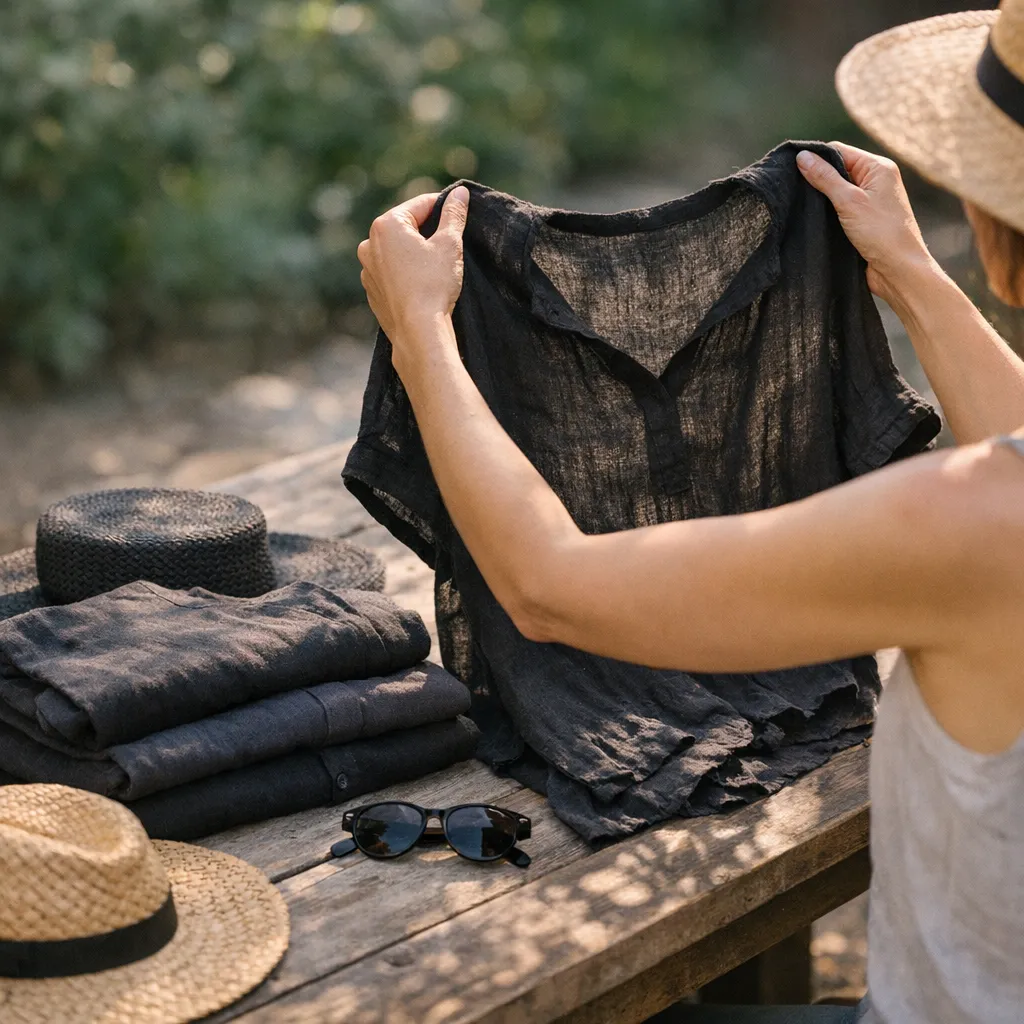
What You Need Before You Start
Getting your summer dark wardrobe right depends on having the correct building blocks in place before you begin styling. Showing up with the wrong fabrics or silhouettes will undermine every other decision you make, no matter how carefully you accessorize or plan your outfits. Checking these prerequisites first saves you time, keeps you comfortable in the heat, and ensures every piece you reach for actually works for warm weather wear.
Before you start, make sure you have:
- A willingness to prioritize fabric weight and breathability over color alone when choosing dark summer pieces
- At least one lightweight black or dark base piece in a breathable fabric such as linen, cotton voile, cotton poplin, or viscose
- Access to a retailer or secondhand source where you can find or replace pieces that do not meet the breathability standard
- A clear idea of the occasions you are dressing for, whether daytime outings, evening events, beach days, or holiday travel
- Open or strappy sandals or other breathable footwear that pairs well with dark summer outfits
- A small selection of lightweight accessories such as simple earrings or a crossbody bag that will not add bulk or heat to your look
- An understanding that loose and relaxed silhouettes allow airflow and are essential for comfort when wearing dark colors in heat
- The willingness to avoid heavy layering during the hottest parts of the day, even if layering is normally part of your personal style
- A black swimsuit if beach or pool settings are part of your summer plans
- A lightweight cover-up or open-weave layer for transitioning from beach to other settings or for managing direct sun exposure
- Awareness that certain garment details such as heavy zips, thick belts, and metal buckles trap heat and are worth avoiding in summer dark outfits
- A basic packing or wardrobe plan if you are traveling, built around versatile black pieces that can be worn more than once without washing
How to Wear Dark Colors in Summer Without Overheating (Step by Step)
This process does not require a full wardrobe overhaul. You can work through these steps in a single afternoon, whether you are preparing for a holiday, a heatwave, or simply rethinking how you approach dark summer dressing. The steps build on each other, so follow them in order the first time. Fabric choice drives everything here, so give that decision the most attention before moving on to styling and accessories.
-
Audit your existing dark pieces for breathable fabrics
Go through your wardrobe and pull out every black or dark item you would consider wearing in summer. Hold each piece and assess the fabric weight by feel. Separate anything made from linen, cotton voile, cotton poplin, viscose, or modal into a keep pile, and set aside anything made from denim, polyester, or heavy woven fabric. Only the breathable pieces move forward into your summer rotation.
How to verify: Your keep pile contains only lightweight, breathable fabrics that feel airy when held up to light or air.
Common fail: Keeping dark pieces out of habit rather than assessing fabric weight honestly, which leads to overheating later.
-
Source lightweight black staples if your wardrobe has gaps
If your audit leaves you with very few usable pieces, identify the specific item types you are missing, such as a linen skirt, a cotton voile dress, or a viscose blouse. Shop for these individually rather than rebuilding your entire wardrobe at once. Brands like LESH offer elegant black pieces designed with clean, relaxed silhouettes that suit warm weather dressing. Focus on one or two versatile staples that can anchor multiple outfits rather than buying many single-use pieces.
How to verify: Every new piece you bring in is confirmed as a lightweight, breathable fabric before purchase.
Common fail: Buying dark pieces based on appearance alone without checking fabric composition on the label.
-
Choose a versatile centerpiece as your outfit foundation
Pick one strong base item to anchor each look. Good options include a black midi dress in cotton voile, a gathered linen maxi skirt, wide-leg linen trousers, or a lightweight jumpsuit in a cotton or linen blend. The centerpiece should be able to carry the outfit on its own without needing extra layers to feel complete. Choose cuts that are relaxed or A-line rather than fitted, since looser shapes allow air to circulate around the body.
How to verify: You can put on the centerpiece alone and feel comfortable, with no tightness around the torso, hips, or arms.
Common fail: Selecting a structured or fitted dark piece as the base and then trying to compensate with accessories, which does not solve the heat problem.
-
Pair the base piece with a breathable dark or neutral top
If your centerpiece is a bottom such as trousers, shorts, or a skirt, add a top in a breathable fabric. A black racerback tank, a short-sleeve cotton blouse, or a simple camisole in modal or organic cotton all work well. Keep the top relaxed rather than cropped or tight. You can also balance a dark bottom with a white linen tank or an open-weave cotton shirt if you want to introduce contrast and additional airflow.
How to verify: The top and bottom together feel cohesive and neither piece feels heavier than the other when worn.
Common fail: Pairing a lightweight dark bottom with a thick or structured dark top, which creates a heavy overall look and traps heat at the upper body.
-
Limit layering and keep the silhouette airy during peak heat
Avoid adding a third layer such as a jacket, cardigan, or overshirt during the hottest part of the day. If the occasion or a cooler evening requires something extra, choose only one lightweight layer, such as an open-weave cotton shirt worn loosely over the shoulders. The goal is to keep the silhouette open rather than bundled. Dark colors already absorb more sunlight than lighter tones, so any additional layering compounds the heat effect significantly.
How to verify: Your finished look has no more than two layers at any point, and both layers use breathable fabrics.
Common fail: Adding a dark blazer or structured jacket out of habit when a single breathable layer would achieve the same polished result without the heat.
-
Select open footwear and keep accessories minimal
Choose strappy sandals or other open footwear that allows airflow rather than closed shoes or boots. For accessories, opt for lightweight earrings, a simple chain necklace, or a woven crossbody bag rather than heavy statement jewelry or bulky bags. Metal jewelry worn close to the skin can heat up quickly in direct sun, so keep pieces small and minimal. The less physical contact your accessories make with your skin, the cooler you will feel overall.
How to verify: Footwear exposes most of the foot to air, and accessories add style without adding noticeable warmth or weight.
Common fail: Wearing enclosed dark shoes or stacking multiple metal accessories that heat up against the skin during outdoor wear.
-
Adapt the look for beach or pool settings
If your day involves a beach or pool, anchor your dark summer look with a black swimsuit as the base. A sleek one-piece or a style with cut-out details works well within a black color palette. Add a lightweight cover-up such as a sheer cotton shirt or a linen wrap over the swimsuit for walking in direct sun. Avoid wearing a swimsuit in non-beach contexts without a proper cover, as the sun exposure without protection increases heat and discomfort.
How to verify: Your beach outfit includes the swimsuit plus at least one lightweight cover option that you can remove or add as needed.
Common fail: Wearing a black swimsuit without any cover-up during extended direct sun exposure, which increases heat absorption against the skin.
-
Transition the same outfit from day to evening with minimal changes
One of the strongest advantages of a well-built dark summer outfit is its versatility across the day. To shift the same look from afternoon to evening, swap strappy flat sandals for a heeled version and add one bolder accessory such as a statement earring or a small structured clutch. A bold lip color can also shift the mood of an all-black or dark outfit dramatically without requiring a clothing change. Keep the core pieces exactly as they are and let the accessories do the transitional work.
How to verify: The evening version of the outfit feels noticeably more polished than the daytime version using only footwear and accessory changes.
Common fail: Adding an extra layer of clothing for the evening rather than swapping accessories, which reintroduces the layering and heat problem you resolved during the day.
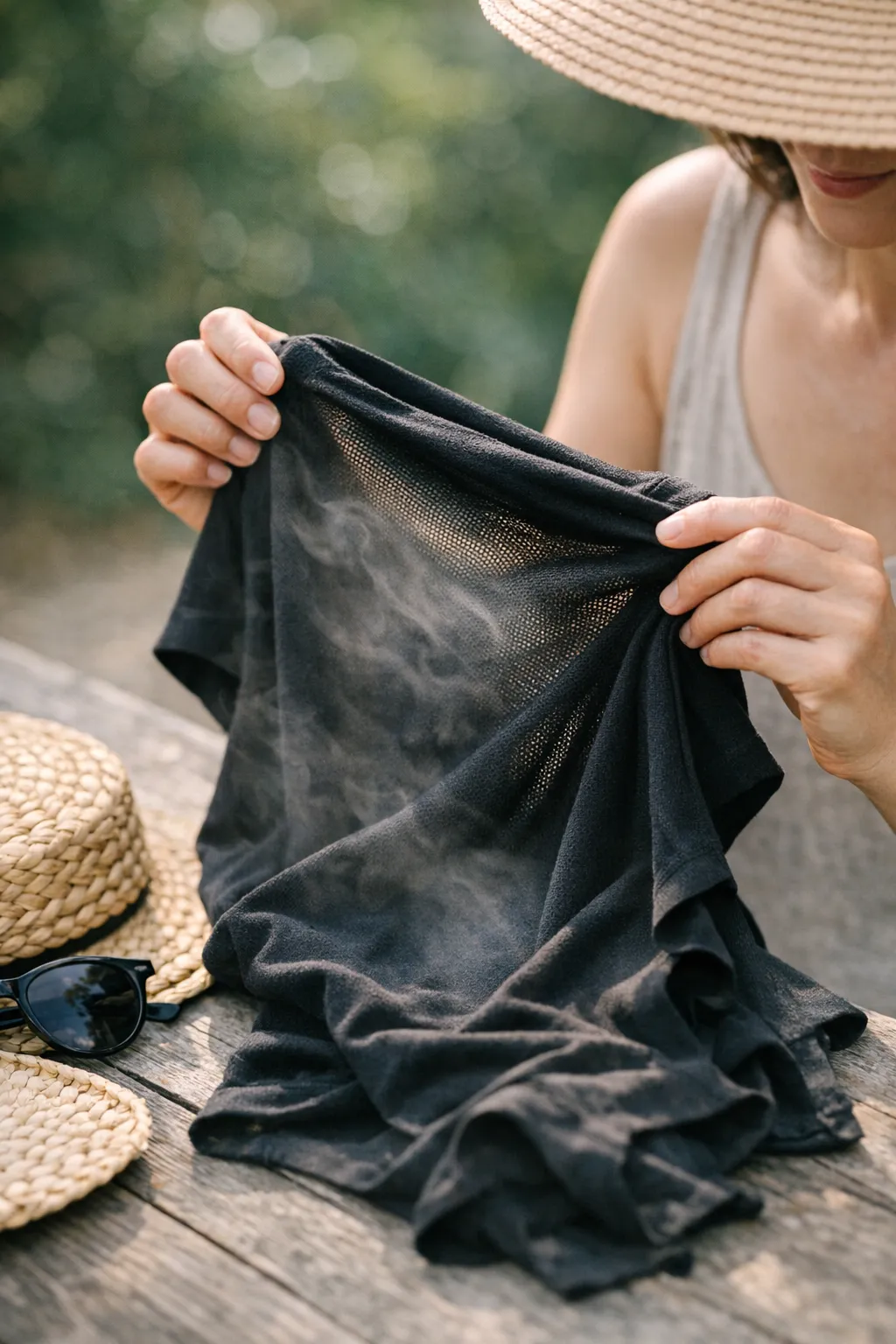
How to Know It Is Working
The real test of a successful dark summer outfit is how your body feels after wearing it for several hours in warm conditions, not just how it looks in the mirror before you leave the house. Run through the checklist below after you have fully assembled your look and again after wearing it for a few hours outside. If most points are met, your fabric and silhouette choices are doing their job. If something feels off, use the table below to trace the problem back to its source.
- Your dark pieces feel noticeably lightweight when held up or worn, with no dense or heavy sections of fabric pressing against the skin
- Air moves freely around your torso, arms, and legs when you walk or shift position
- You are wearing no more than two layers at any point in the outfit, and both layers use breathable fabrics
- Your silhouette looks relaxed and airy rather than structured or fitted across the body
- Footwear is open enough to allow airflow around the foot and does not trap heat
- Accessories feel light against the skin and no metal pieces have become uncomfortably warm in direct sun
- After several hours of wear in warm conditions, you do not feel significantly hotter than you would in a lighter colored outfit of the same fabric weight
- Your outfit can transition from day to evening with only a footwear or accessory swap, without needing an additional clothing layer
- If beach or pool wear is included, a lightweight cover-up is available and easy to add over your swimsuit when in direct sunlight
- The overall look feels polished and intentional rather than compromised by heat management decisions
| Checkpoint | What good looks like | How to test | If it fails, try |
|---|---|---|---|
| Fabric breathability | Each dark piece feels light and allows air to pass through when held up | Hold the fabric up to a light source and check for a slight translucency or airflow when fanned | Replace the piece with one in linen, cotton voile, cotton poplin, or viscose |
| Silhouette fit | The outfit has a relaxed, non-restrictive shape with room around the torso and legs | Move your arms, sit down, and walk a few steps to check for tightness or restricted airflow | Size up or switch to an A-line, wide-leg, or flowy cut in the same fabric |
| Layering level | No more than two layers are worn during the hottest part of the day | Count the number of garment layers covering your torso at the peak sun hours | Remove the outermost layer or replace it with a single open-weave cotton shirt worn loosely |
| Footwear airflow | Open or strappy sandals allow the foot to breathe without trapping heat | Check that the top of the foot and toes are largely exposed to air when wearing the chosen footwear | Swap closed shoes for strappy sandals or other open summer footwear |
| Accessory heat | Accessories feel neutral or cool against the skin even after time in direct sun | After wearing for an hour outdoors, touch each metal accessory and check for uncomfortable warmth | Remove heavy metal pieces and replace with lightweight earrings or woven accessories |
| Overall comfort after extended wear | Body temperature feels manageable and comparable to wearing a light-colored outfit of similar fabric weight | Wear the outfit for several hours in warm conditions and assess heat buildup around the back, underarms, and legs | Revisit fabric choice on the piece covering the largest surface area and swap for a lighter weight option from LESH or a similar breathable range |
Troubleshooting Common Problems With Dark Summer Outfits
Even with the right intentions, dark summer dressing can go wrong in specific and fixable ways. Most problems trace back to one of three root causes: fabric weight, silhouette fit, or layering decisions. Use the entries below to identify what is going wrong in your current look and apply the targeted fix rather than abandoning dark colors altogether. Each solution is practical and can be applied immediately without rebuilding your entire outfit.
-
Symptom:
You feel noticeably hotter in your dark outfit than you expected, even in supposedly lightweight fabric.
Why it happens: The fabric may be labeled as lightweight but still has a tight, dense weave that blocks airflow. Not all cottons or synthetic blends behave the same way, and some retain heat despite feeling soft to the touch.
Fix: Check the fabric label for the specific fiber content and weave type. Replace the problematic piece with one confirmed as linen, cotton voile, cotton poplin, or viscose, all of which have open weaves that allow genuine airflow. Brands like LESH offer dark pieces in clean, breathable constructions worth considering as replacements.
-
Symptom:
Your dark outfit looks heavy or dull even though the individual pieces are lightweight.
Why it happens: An all-dark look without any tonal contrast or textural variation can read as flat, especially in bright summer light. The problem is visual rather than physical, but it makes the outfit feel seasonally wrong.
Fix: Introduce one contrasting element without changing the color palette dramatically. A white linen tank under an open dark shirt, a woven bag, or a single light-colored accessory creates enough contrast to lift the look. Alternatively, choose a dark piece with subtle texture such as broderie anglaise or open-weave fabric to add visual interest.
-
Symptom:
Linen pieces crease badly within an hour of wearing them.
Why it happens: Linen is highly breathable but creases easily, particularly in relaxed or wide-leg cuts where fabric folds occur naturally during sitting or movement.
Fix: Accept a degree of creasing as part of linen's natural character and lean into relaxed styling rather than fighting it. Avoid over-ironing before wearing, as linen will crease again quickly. Choose linen blends rather than pure linen if heavy creasing bothers you, since a small percentage of cotton or viscose in the blend reduces wrinkling while maintaining breathability.
-
Symptom:
The outfit feels restrictive and warm around the torso even though the fabric is breathable.
Why it happens: The silhouette is too fitted, which prevents air from circulating between the fabric and the skin regardless of how breathable the material is. Fabric breathability only works when there is space for air to move.
Fix: Size up in the specific piece causing the issue, or replace it with an A-line, relaxed, or wide-leg cut in the same fabric. A fitted black linen piece will always feel hotter than a loose one in identical linen, so silhouette matters as much as fabric choice.
-
Symptom:
Metal accessories become uncomfortably hot against the skin after time outdoors.
Why it happens: Metal conducts and retains heat quickly in direct sunlight, and pieces worn close to the skin such as necklaces, bangles, or belt hardware heat up in proportion to their size and mass.
Fix: Replace large or heavy metal accessories with smaller, lighter versions or swap entirely to woven, resin, or fabric-based accessories. If you want to keep metal jewelry, choose smaller fine pieces rather than chunky statement items, and remove them during peak sun hours if discomfort persists.
-
Symptom:
Your dark evening look feels too similar to the daytime version and lacks polish.
Why it happens: The day-to-evening transition was skipped or only partially completed, leaving the outfit without the signals that communicate evening dressing.
Fix: Swap flat sandals for a heeled version of a similar sandal style, add one bold accessory such as a statement earring or a structured clutch, and consider a bold lip color. These three changes alone shift a casual dark summer outfit into an evening-ready look without adding any extra clothing layers.
-
Symptom:
Your dark packing list feels repetitive and you run out of outfit variation quickly during a trip.
Why it happens: Building a wardrobe entirely from similar dark base pieces without enough accessory variation results in looks that feel interchangeable after a few days of wear.
Fix: Pack a small set of varied accessories, including at least two or three different earring styles, one woven bag, and one lightweight cover-up that changes the shape of an outfit. These additions create multiple distinct looks from the same core pieces without adding significant weight or bulk to your luggage.
-
Symptom:
A black swimsuit feels uncomfortably hot during extended beach time in direct sun.
Why it happens: Black swimwear absorbs sunlight directly against the skin with no intervening fabric layer, which increases heat sensation during prolonged exposure in strong sun.
Fix: Always keep a lightweight cover-up within reach when wearing a black swimsuit in direct sun. A sheer cotton shirt, a linen wrap, or a simple cotton sarong provides enough of a barrier to reduce heat absorption significantly while remaining easy to remove when entering the water.
Questions to Ask Before Building Your Summer Dark Wardrobe
- Does black really absorb more heat than lighter colors? Yes, dark colors absorb more sunlight than light ones, which is why fabric choice becomes especially important when wearing black in summer. A loose linen or cotton voile piece in black will still feel significantly cooler than a fitted polyester one in white.
- Which single fabric makes the biggest difference for wearing black in heat? Linen is consistently the strongest performer for hot weather dark dressing because its open weave structure allows air to move freely through the fabric. It works well for both bottoms such as trousers and skirts and as a base for dresses.
- Can you wear a black outfit to a beach day without overheating? Yes, provided your base is a black swimsuit with a lightweight linen or cotton cover-up that you can remove and add as needed. Avoid wearing a full dark clothing outfit directly on the beach during peak sun hours without breathable cover options.
- Is it possible to wear tailored dark pieces in summer without sweating? Tailored pieces in 100 percent linen are a practical option for summer because the fabric remains breathable even in a more structured cut. If temperatures are extreme, swap tailored linen trousers for black Bermuda shorts as a cooler but equally polished alternative.
- How many dark pieces do you actually need for a summer travel wardrobe? A small focused edit of three to five versatile pieces, such as a dress, a skirt or trouser, a tank top, and a swimsuit, covers most occasions when paired with varied accessories. Outfit repetition is less noticeable in dark colors than in prints or pastels.
- What is the fastest way to make a dark summer outfit feel less heavy? Introduce one contrasting element such as a white linen tank, a woven bag, or a light-toned accessory to break up the visual weight. Textured dark fabrics like broderie anglaise or open-weave cotton also add lightness without changing the color palette.
- Should you avoid black jeans entirely in summer? Standard black denim is a poor summer choice because the thick weave traps heat regardless of how loose the fit is. If you want a dark trouser look in summer, replace denim with wide-leg linen or cotton poplin trousers in black instead.
- How do you keep a dark summer look from feeling repetitive across a full week? Use accessories as the primary tool for variation rather than changing base pieces every day. A few different earring styles, a change of bag, and a switch between sandal heights create noticeably different looks from the same core black wardrobe items.
Common Questions About Wearing Dark Colors in Summer
Can you actually wear black in a heatwave without overheating?
Yes, and the deciding factor is fabric rather than color. Black clothing made from linen, cotton voile, cotton poplin, or viscose allows air to circulate freely and performs comparably to lighter colors in the same fabric weight. The combination of breathable material and a loose or relaxed silhouette is what keeps you cool, not the absence of dark tones from your wardrobe.
What are the best fabrics for wearing black in summer?
Linen is the strongest all-round option because its open weave structure promotes consistent airflow even in high temperatures. Cotton voile and cotton poplin are excellent alternatives for dresses and tops, offering softness alongside breathability. Viscose and modal work well for tank tops and blouses where a slightly drapey, lightweight feel is preferred. All of these fabrics outperform polyester and dense synthetic blends in warm weather.
Is linen the only breathable option for dark summer clothing?
Linen is the most widely recommended option but it is not the only one. Cotton voile, cotton poplin, viscose, and modal all offer genuine breathability in warm weather. The key is to look for fabrics with an open or lightweight weave rather than relying on a single fiber type. Linen blends are also worth considering, as they reduce creasing while maintaining most of the breathability benefits of pure linen.
Should you avoid layering completely when wearing dark colors in the heat?
Heavy layering during the hottest part of the day should be avoided, but a single lightweight layer is acceptable when needed. An open-weave cotton shirt worn loosely over the shoulders or a sheer linen cover-up adds minimal heat while serving a functional purpose. The rule is to keep layers breathable and loose rather than eliminating them entirely, especially for evening wear or when moving between air-conditioned and outdoor spaces.
How do you make a black summer outfit work for both day and evening?
The most efficient approach is to keep the core outfit unchanged and use accessories and footwear to signal the shift in occasion. Swapping flat strappy sandals for a heeled version, adding a bold earring, and introducing a statement lip color transforms a casual daytime dark look into an evening-ready one without adding any extra clothing layers. This approach also prevents the heat buildup that comes from adding a jacket or blazer for the evening.
What footwear works best with dark summer outfits?
Strappy sandals are the most practical choice because they expose the foot to airflow and keep heat accumulation low. For daytime, flat or low-heeled strappy styles paired with a crossbody bag create a relaxed but polished look. For evening, a heeled sandal in the same open style elevates the outfit without sacrificing comfort. Closed shoes and boots retain heat around the foot and are best avoided during peak summer temperatures.
Can you wear a black swimsuit as part of a summer wardrobe beyond the beach?
A black swimsuit works best as a beach or pool anchor rather than as a standalone top in other settings. However, paired with a lightweight linen skirt or wide-leg trousers and a cover-up, it can transition into a casual outdoor lunch or poolside setting naturally. Always add a lightweight cover-up for extended time in direct sunlight, as black swimwear absorbs heat quickly against the skin without an intervening fabric layer.
How do you keep a dark summer wardrobe from feeling boring or repetitive?
Accessory variation is the most effective tool for keeping a black-focused wardrobe feeling fresh across multiple days of wear. A few different earring styles, a switch between a woven bag and a structured clutch, and a change of sandal height create noticeably distinct looks from the same core pieces. Textural variety within dark pieces, such as choosing broderie anglaise, open-weave cotton, or gathered linen, also adds visual interest without introducing new colors.