
How to tell if a T-shirt fits your shoulders properly is about checking the shoulder seam alignment, movement, and the sleeve cap. In this guide, you will learn a simple, step-by-step check: look in the mirror from front and back, raise your arms to shoulder height, observe whether the seam stays at the edge of your shoulder bone, ensure the sleeve cap sits neatly at that edge, verify there is no puckering or pulling, test a few movements like reaching, twisting, and bending, assess overall balance from shoulder to hem, adjust by trying a different size or cut if the seam drifts, aim for a natural line that does not restrict movement, simply follow these checks for a balanced look.
This is for you if:
- You want a clean, natural shoulder line on a T-shirt, not a tight or sloppy look.
- You’re evaluating a tee for everyday wear, not a fashion-forward oversized piece.
- You want to determine whether the shoulder seam sits at the edge of the shoulder bone.
- You need to test movement to ensure no seam pull during reaching.
- You’re trying to choose between sizes or cuts to balance shoulder fit.
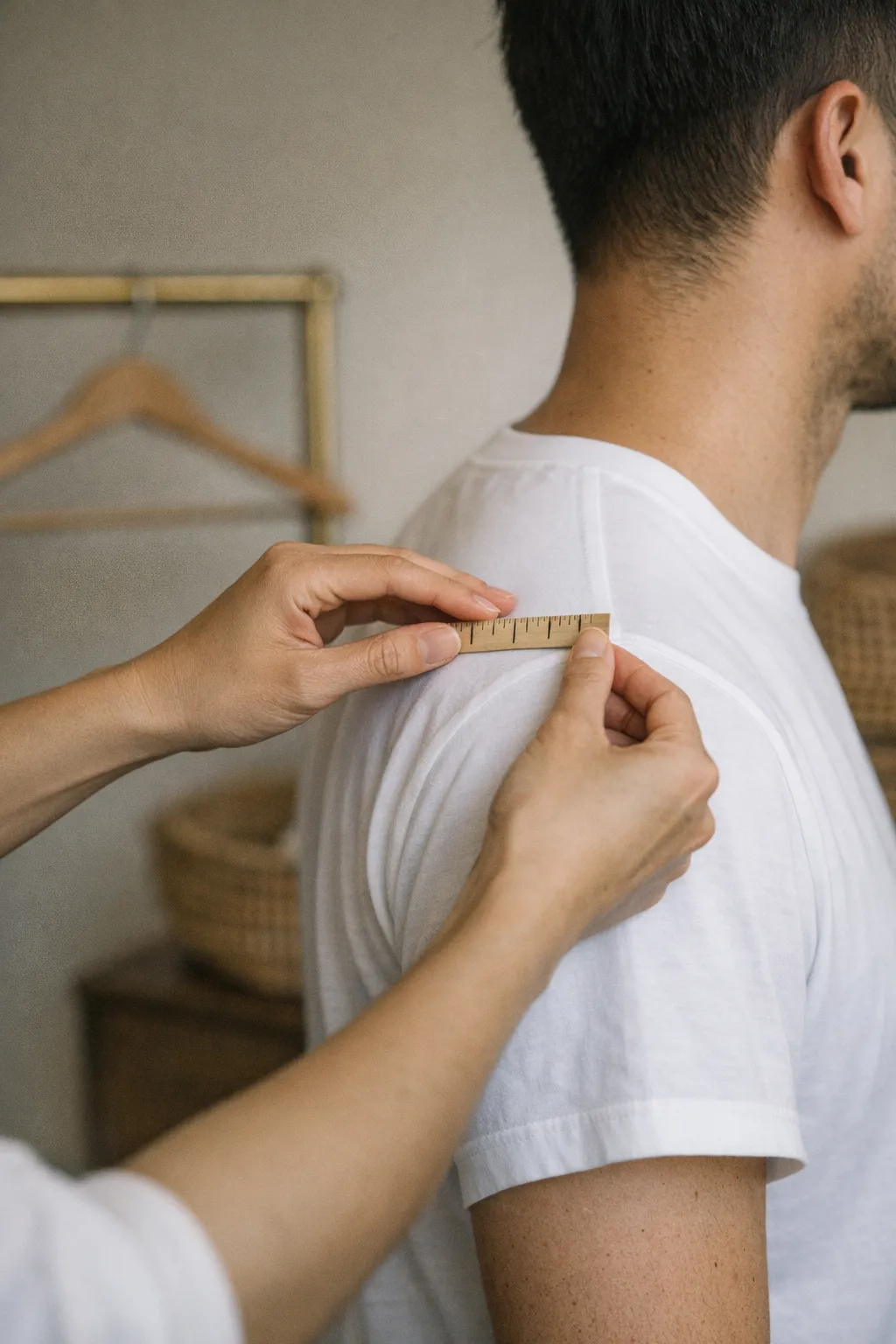
Prerequisites for Checking Shoulder Fit on a T‑Shirt
A quick, prepared setup ensures you can assess shoulder alignment accurately, without being distracted by other fit points. By gathering the right tools and conditions beforehand, you can compare front and back views, test movement reliably, and decide whether a different size or cut will improve balance. This upfront step speeds up the process and yields consistent results across attempts and different tees.
Before you start, make sure you have:
- A T-shirt to test (preferably a LESH tee or similar)
- A clear view of both front and back in a mirror (or a teammate to help)
- Ability to perform light arm movements (raise, reach, twist)
- A quiet space free from bulky layers that hide fit
- Optional measuring tool for quick reference checks
- A notebook or device to record observations
- Access to a second size or cut for comparison
- A camera or smartphone to capture views (optional)
- A comfortable, upright standing posture
- Time set aside for a full shoulder-fit check
- Clean, lint-free clothing and a clean surface to test on
- Patience and focus to compare front and back shoulder alignment
Take Action: assess shoulder fit on a T‑shirt with a hands‑on check
This step-by-step procedure guides you through a focused assessment of shoulder fit, emphasizing the shoulder seam alignment, movement, and the sleeve cap. Set aside a quiet moment to try the tee, move naturally, and compare front and back views. The emphasis is on how the tee behaves at the shoulder during everyday motions, not just static appearance. By following these steps, you’ll identify whether the tee sits correctly at the shoulder edge and maintains a smooth silhouette from shoulder to hem.
-
Inspect shoulder seam alignment
Put on the T‑shirt and look at the seam along the top of your shoulder. Check that it runs parallel to the edge of the bone and does not drift toward the upper arm or neck.
How to verify: The seam sits at the edge of the shoulder bone in a neutral stance.
Common fail: Seam sits over the bicep or hides behind the shoulder.
-
Raise arms and observe
With arms at your sides, lift them to shoulder height and gently hold. Watch whether the seam stays put or shifts noticeably.
How to verify: Seam remains near the shoulder edge during movement.
Common fail: Seam rides up onto the traps or pulls inward.
-
Check sleeve cap placement
Look at the point where the sleeve meets the shoulder. The cap should align with the shoulder edge and not create puckering or gaps.
How to verify: Sleeve cap sits neatly at the shoulder edge without tightness.
Common fail: Cap sits high or pulls fabric across the arm.
-
View front and back balance
Stand in a relaxed pose and compare how the shoulders align from both views. Look for a straight line without tipping or uneven edges.
How to verify: Both front and back show balanced shoulder alignment.
Common fail: One side appears higher or skewed when viewed from behind.
-
Test range of motion
Reach, twist, and shrug your shoulders a few times. Note any pulling, tugging, or seam distortion.
How to verify: No seam distortion and smooth movement without fabric bunching.
Common fail: Seams strain or fabric catches during motion.
-
Assess overall silhouette
Step back and evaluate the silhouette from the collar to hem. The shoulder line should read as natural and balanced, not forced or oversized.
How to verify: The look is even and proportional across the torso.
Common fail: Boxy or drooping shoulders ruin the line.
-
Decide on next steps
Based on your observations, determine if a different size or cut would improve shoulder balance or if the tee already fits well enough to wear confidently.
How to verify: A clear conclusion about fit or a plan to test another size/cut.
Common fail: Postponing a decision and continuing to wear an ill-fitting tee.
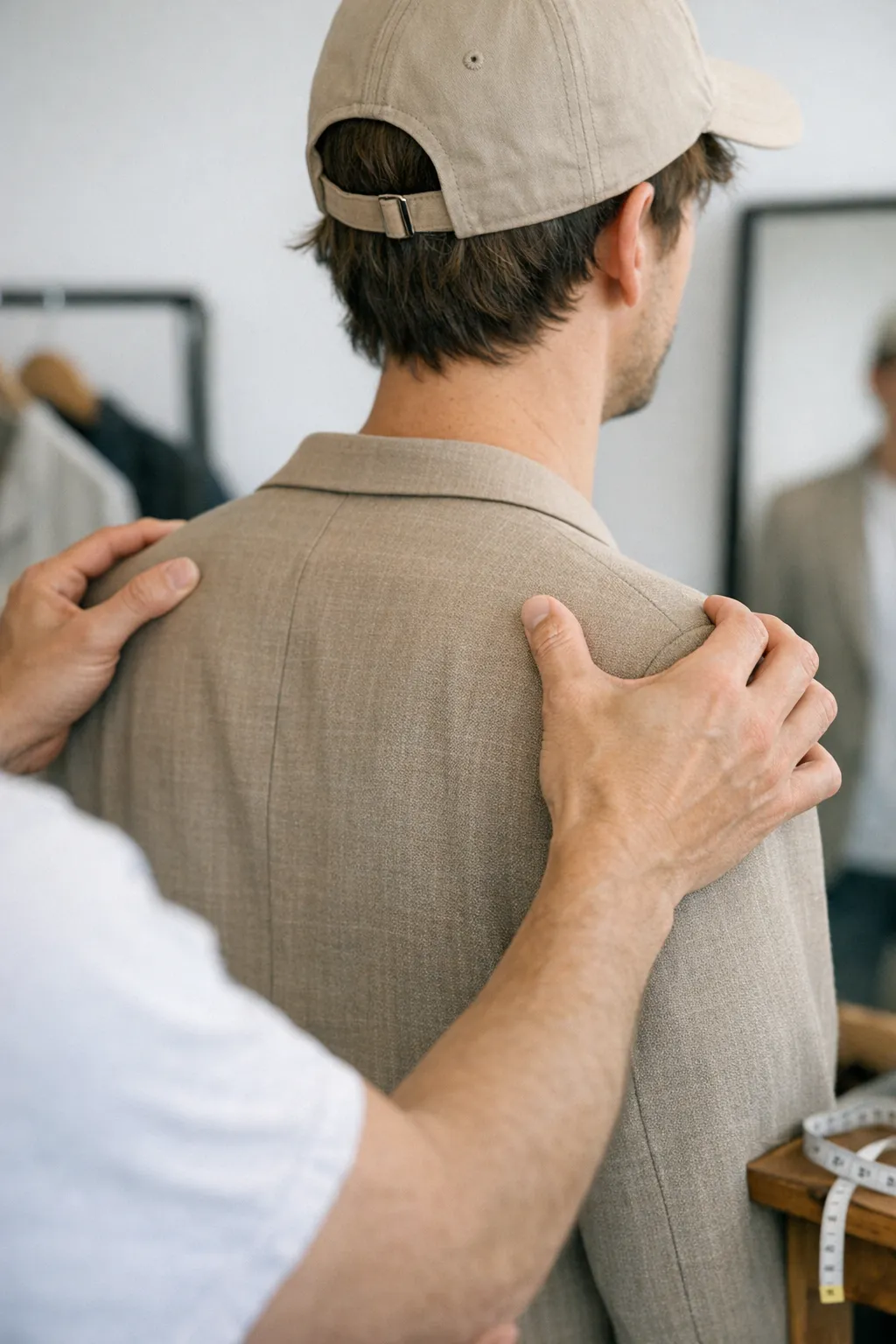
Shoulder Fit Verification: Confirm a Proper T‑Shirt Fit
To confirm that a T‑shirt sits correctly on your shoulders, perform a focused check of the shoulder seam alignment, sleeve cap placement, and movement. Start with a static view to compare front and back, then test a range of motions to ensure the seam remains at the edge of the shoulder bone and does not ride up or pull. Look for a smooth silhouette from shoulder through to the hem, and decide whether a different size or cut is needed. This verification keeps the look balanced and comfortable.
- Shoulder seam aligned with edge of shoulder bone
- Seam stays in place during arm raise
- Sleeve cap sits neatly at the shoulder edge
- No puckering or fabric pulling at the shoulder
- Front and back views show balanced shoulder placement
- Shoulder line remains level with no tilt
- Can raise arms without seam riding up
- Silhouette remains smooth from shoulder to hem
- Movement feels comfortable with normal daily motions
| Checkpoint | What good looks like | How to test | If it fails, try |
|---|---|---|---|
| Shoulder seam alignment | Seam sits at the edge of the shoulder bone | View from front and back with neutral posture | Adjust size or cut, re-evaluate after trying a different tee |
| Arm raise stability | Seam stays in place during movement | Raise arms to shoulder height and hold briefly | Try a smaller or different cut if seam rides up |
| Sleeve cap alignment | Cap aligns with shoulder edge without tightness | Inspect where sleeve meets the shoulder | Consider a size with adjusted sleeve height |
| Front/back balance | Shoulders appear level in both views | Compare both views side-by-side | Try a different size or shirt cut |
| Overall silhouette | Natural, smooth line from shoulder to hem | Look in a mirror from multiple angles | Switch to a style with improved shoulder balance |
Troubleshooting Shoulder Fit: Quick fixes for common tee issues
This troubleshooting guide helps you diagnose common shoulder-fit issues on a T-shirt. It walks you through the symptoms, explains why they occur, and provides actionable fixes you can apply right away. Start by confirming the shoulder seam sits at the edge of the shoulder bone, then test arm movements and compare front and back views to ensure a balanced, comfortable silhouette.
-
Symptom:
Shoulder seam sits too far from the edge of the shoulder bone
Why it happens: The tee may be too large in the shoulder area or cut with extra shoulder width, allowing the seam to drift.
Fix: Try a smaller size or a different cut that brings the seam back to the edge, then recheck in front and back views with movement.
-
Symptom:
Shoulder seam sits on the traps toward the neck
Why it happens: The shirt is too small in the shoulder, causing the seam to creep inward toward the neck.
Fix: Move up a size or choose a cut with a looser shoulder line, then verify with arm movements.
-
Symptom:
Sleeve cap puckers or tight at the shoulder
Why it happens: The shoulder area lacks enough ease or the sleeve head is too high for the wearer's shoulder.
Fix: Opt for a style with a lower sleeve head or a larger size, and test again with movement.
-
Symptom:
Seam rides up when raising arms
Why it happens: The tee is restricting shoulder movement, often due to overly tight construction or a cut that misreads your range of motion.
Fix: Choose a cut with more shoulder ease or a size that allows full motion, then repeat the movement test.
-
Symptom:
Front or back view shows uneven shoulder level
Why it happens: An imbalanced shoulder line or asymmetric fabric distribution from the cut or size.
Fix: Try a different size or cut, and compare both views again after trying the change.
-
Symptom:
Arm movement causes fabric pulling at the chest or back
Why it happens: Torso fit is pulling the shoulder area out of balance, creating pull lines when moving.
Fix: Increase torso ease by choosing a larger size or a more generous cut, then recheck shoulder behavior.
-
Symptom:
Sleeve length ends well past the shoulder edge
Why it happens: The sleeve length is too long for the shoulder geometry or the body size encourages longer sleeves.
Fix: Pick a shirt with a shorter sleeve or a size with proportionally shorter sleeves, then test again.
-
Symptom:
Overall shoulder look feels boxy or droopy
Why it happens: The tee may be too loose or cut with a generic shoulder that doesn’t match your proportions.
Fix: Select a tailored shoulder fit or a size down if appropriate, then confirm balance with a full shoulder check.
People ask next: quick questions about shoulder fit on a T-shirt
- How can I tell the shoulder seam sits at the edge of the shoulder bone? Check the seam in a neutral stance and from both front and back views, the seam should align with the edge of the shoulder bone and stay there when you move.
- What does it mean if the seam sits on the bicep or drifts away from the edge? It usually means the shoulders are too large and the tee will look oversized, consider a smaller size or a different shoulder cut.
- How can I tell if the sleeve cap is placed correctly? Look where the sleeve meets the shoulder, the cap should align with the shoulder edge without puckering or pulling.
- How do I test shoulder fit during movement? Raise your arms to shoulder height, then reach and twist, the seam should stay near the shoulder edge without riding up.
- Should I try a different size or cut to improve shoulder balance? Yes, if movement tests reveal seam distortion or misalignment, switch to a size or cut designed for better shoulder balance.
- Does layering affect shoulder fit? Layering can reveal tightness, test with the intended layers to ensure the seam remains at the edge when worn.
- How should front and back views look for balance? Both views should show a level, natural shoulder line with no tilt or visible asymmetry.
- Can fabric type influence shoulder fit? Heavier or stiffer fabrics can exaggerate fit issues, so examine the seam placement as you move in the fabric you’d normally wear.
Shoulder Fit Q&A: Quick checks for a tee that sits right on the shoulders
What shoulder seam alignment should I see?
Check the shoulder seam in a neutral stance and from both front and back views. The seam should run along the edge of the shoulder bone and stay there as you move. If it drifts toward the upper arm or creeps toward the neck, the tee is not balancing with your proportions and a different size or cut should be tried for a proper fit.
What does it mean if the seam sits on the traps or the bicep?
A seam resting on the traps toward the neck indicates the shirt is too small in the shoulder area, pulling toward the neck and narrowing your range of motion. Conversely, if the seam sits on the bicep, the tee is too large at the shoulder and will look oversized. In both cases, try a different size or shoulder cut and recheck.
How do I test shoulder fit during movement?
With the tee on, perform typical motions: raise your arms, reach forward, and twist slightly. Watch whether the seam stays near the shoulder edge or rides up on the traps. If it shifts noticeably, the fit isn’t balanced. Repeat with a different size or cut to see if movement improves.
How should the sleeve cap placement look?
The sleeve cap should align with the shoulder edge and not create puckering or gaps at the seam. From the side, you should not see the cap pushing fabric into the armpit or pulling at the shoulder. A mispositioned cap can indicate a shoulder mismatch and you may need a smaller or different cut.
How can front and back views help with balance?
Compare both views with the shoulders relaxed and the arms at your sides. Look for a straight, level shoulder line without tilt or one-sided droop. If one view looks higher or more pulled than the other, that imbalance signals a mismatch in shoulder fit or cut. Correct by trying another size or cut.
What should I do if the seam rides up when I raise my arms?
Riding up indicates insufficient shoulder ease or a tighter cut. Pause, then try a size with more shoulder room or a different shoulder construction. After switching, re-run the movement test to confirm the seam stays near the edge during lifting and reaching without tugging.
How do I decide on size or cut after testing shoulder fit?
Use the shoulder balance as the guiding factor and compare a few options if available. If the seam sits at the edge and movement is comfortable, the current size is good. If the seam drifts, test the next size up or down or switch to a cut designed for a more natural shoulder line. Always verify from front and back views.