
Buying men's clothing online does not have to mean gambling on fit. The most reliable way to reduce size risk is to take accurate body measurements before you browse, compare those measurements directly against the specific brand size guide for each item you consider, factor in how the fabric behaves, and cross reference your findings with real customer reviews. When your measurements fall between two sizes, always choose the larger one. Brands like LESH publish detailed size guides precisely because sizing varies across labels and regions, and no single universal chart applies everywhere. Follow a consistent process each time you shop and you will dramatically cut down on returns, exchanges, and the frustration of receiving something that simply does not fit the way you expected.
This is for you if:
- You shop for men's clothing online and have received items that did not fit despite ordering your usual size
- You want a repeatable system for choosing the right size without needing to visit a store
- You are buying from a brand you have never ordered from before and are unsure how their sizing compares to what you normally wear
- You have struggled to understand how to read or use a brand size guide correctly
- You want to understand how fabric type affects fit and whether you should adjust your size choice accordingly
- You are tired of paying for returns or going through the hassle of exchanges after every online order
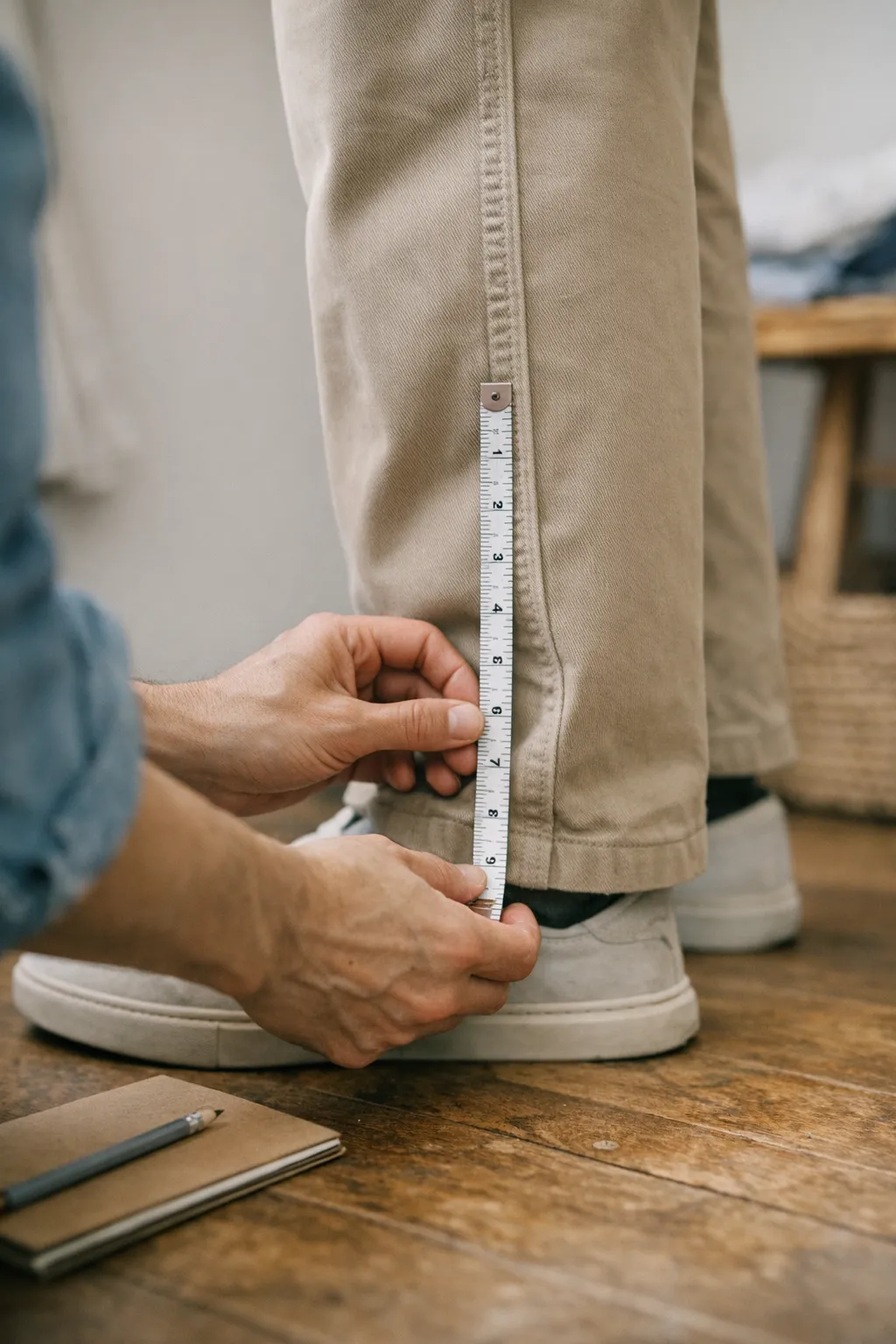
What You Need Before You Start Measuring and Shopping
Skipping the preparation stage is one of the most common reasons men end up with clothing that does not fit. Having the right tools ready before you begin means your measurements will be accurate, your size chart comparisons will be meaningful, and your final purchase decision will be based on real data rather than guesswork. Taking five minutes to gather everything listed below will save you far more time later.
Before you start, make sure you have:
- A soft fabric measuring tape, the kind used for sewing and tailoring, not a rigid metal builder's tape
- A substitute if no tape is available, such as a piece of string, a ruler, and a marker to transfer measurements
- A partner or friend to help you measure areas like your chest, shoulders, and back accurately
- Several blank pieces of paper and a pen to record every measurement as you go
- A flat wall and a hard floor surface for taking your height measurement correctly
- Access to the size guide published by the specific brand or retailer you are shopping from
- A unit conversion method ready in case the brand uses inches while you measure in centimeters or vice versa
- The product description for each item you plan to buy, including the fabric composition listed by the retailer
- A blank sheet of paper large enough to trace your foot for accurate footwear sizing
- Access to the product review section for each item so you can read real fit feedback from other buyers
- An understanding that sizes differ between brands and that your measurement from one retailer does not automatically apply to another, including premium labels like LESH where fit is cut to specific proportions
- A plan for what you will do if the item arrives and does not fit, including awareness of the retailer's return or exchange policy before you place your order
How to Measure, Compare, and Choose the Right Size When Buying Men's Clothing Online
This process works best when you complete it in order, from taking measurements through to placing your order. The measuring stage requires a partner and some focused attention, but once your numbers are recorded you can reuse them across multiple purchases. The comparison and review stages are quick. The steps below cover every decision point where size risk is highest, so follow each one before moving to the next.
-
Set up your measuring environment correctly
Put on form fitting clothing or measure directly against your body so nothing adds bulk to your readings. Stand on a hard flat floor, keep your posture natural and upright, and have your partner hold the tape rather than measuring yourself where possible. Keep your paper and pen within reach so you record each number immediately after taking it.
How to verify: You have everything laid out and your partner understands which measurement they are about to help you take.
Common fail: Measuring over thick clothing adds false volume and produces numbers that do not reflect your actual body.
-
Measure your chest, shoulders, and collar
For your chest, wrap the tape under your armpits and around the fullest part of your chest with your arms resting at your sides. For shoulder width, run the tape straight across your back from the outside edge of one shoulder to the outside edge of the other. For your collar, wrap the tape around the base of your neck where a shirt collar would sit.
How to verify: Each reading has been taken twice and both results match before you write the number down.
Common fail: Pulling the tape too tight across the chest produces a smaller number and leads to shirts that restrict movement.
-
Measure your waist, hips, and thighs
Place the tape around your stomach at belly button level, approximately four fingers above your navel, for your waist. For hips, wrap the tape around the widest point of your seat above the crotch line. For thighs, measure just below the crotch around the fullest part of one thigh while standing with your feet slightly apart.
How to verify: You have three separate numbers recorded clearly and labeled so there is no confusion between them later.
Common fail: Using the waist measurement alone when buying trousers and ignoring the hip and thigh numbers leads to bottoms that fit at the waist but cannot be pulled past the hips.
-
Measure your inseam, sleeve length, and height
For your inseam, use a pair of trousers that already fit you well and measure from the crotch seam straight down to the hem. For sleeve length, start at the center back of your neck, run the tape out to the end of your shoulder, and continue down to your wrist with your elbow slightly bent. For height, stand with your heels and the back of your head against a wall, mark the point on the wall, and measure from the mark to the floor.
How to verify: Your inseam number matches the fit of a trouser you already own and feel comfortable in.
Common fail: Measuring sleeve length with a straight arm rather than a slightly bent one produces a shorter number and results in sleeves that pull when you move.
-
Record all measurements in both centimeters and inches
Write every number in both units before moving on. Brand size guides vary widely in which unit they use, and having both ready means you will never need to convert mid comparison when you are browsing. Label each measurement clearly so there is no ambiguity between, for example, your waist and your hip reading.
How to verify: Your written record contains a labeled number in both units for every measurement you have taken.
Common fail: Assuming the brand uses the same unit you measured in and misreading the chart as a result.
-
Locate and read the size guide for that specific brand
Go to the product page or the retailer website and find the size guide published for that brand, not a generic chart. Brands including LESH provide their own sizing references because their garments are cut to specific proportions that differ from other labels. Compare your recorded measurements to the chart line by line, checking every relevant dimension for the garment type you are buying.
How to verify: You are looking at a size guide from the exact brand you are purchasing from, not a general online reference.
Common fail: Using a size chart from a previous brand purchase and assuming it applies to the new retailer.
-
Apply the size up rule when your measurements fall between two sizes
If any of your key measurements sit at the upper edge of one size or the lower edge of the next, choose the larger size. A garment that is slightly generous can often be worn as intended or adjusted by a tailor, while one that is too small cannot be made larger. This rule applies across all garment categories including shirts, trousers, and outerwear.
How to verify: The size you have selected accommodates your largest relevant measurement without requiring you to be at the very top of that size bracket.
Common fail: Choosing the smaller size hoping the fabric will stretch enough to compensate, which rarely produces a comfortable result.
-
Check the fabric composition and adjust your decision if needed
Read the fabric content listed in the product description before finalising your choice. Cotton garments may shrink after the first wash, so sizing up slightly is often sensible. Wool tends to hold its shape and fit closer to the body. Polyester blends resist shrinking but may feel less forgiving if the fit is already close. Nylon can run tighter than other materials due to its low stretch.
How to verify: You have read the fabric percentage breakdown in the product listing and considered whether it affects your size choice.
Common fail: Ignoring the fabric notes entirely and receiving a cotton item that fits well on arrival but becomes too small after washing.
-
Read customer reviews specifically for fit information
Go to the review section and look for comments from buyers who mention their measurements or body type alongside their size verdict. Focus on phrases like runs large, runs small, true to size, or size up. Reviews from buyers with a similar build to your own are the most useful data point at this stage and often confirm or challenge what the size chart suggests.
How to verify: You have found at least a few reviews that mention fit directly and your size choice aligns with the consensus from buyers of a similar build.
Common fail: Reading only the most recent reviews regardless of content rather than filtering for those that specifically address fit and sizing.
-
Place your order and confirm the return policy before checkout
Before completing your purchase, check the retailer's return and exchange terms so you know exactly what your options are if the item does not fit on arrival. Note any time limits or conditions. If the fit is close but not quite right when the item arrives, consider a local tailor or alteration service as a practical alternative to returning the garment entirely.
How to verify: You can clearly state what the return window is and what condition the item must be in to qualify for an exchange.
Common fail: Assuming returns are straightforward without checking the policy first, then discovering limitations only after the item has been opened or worn.
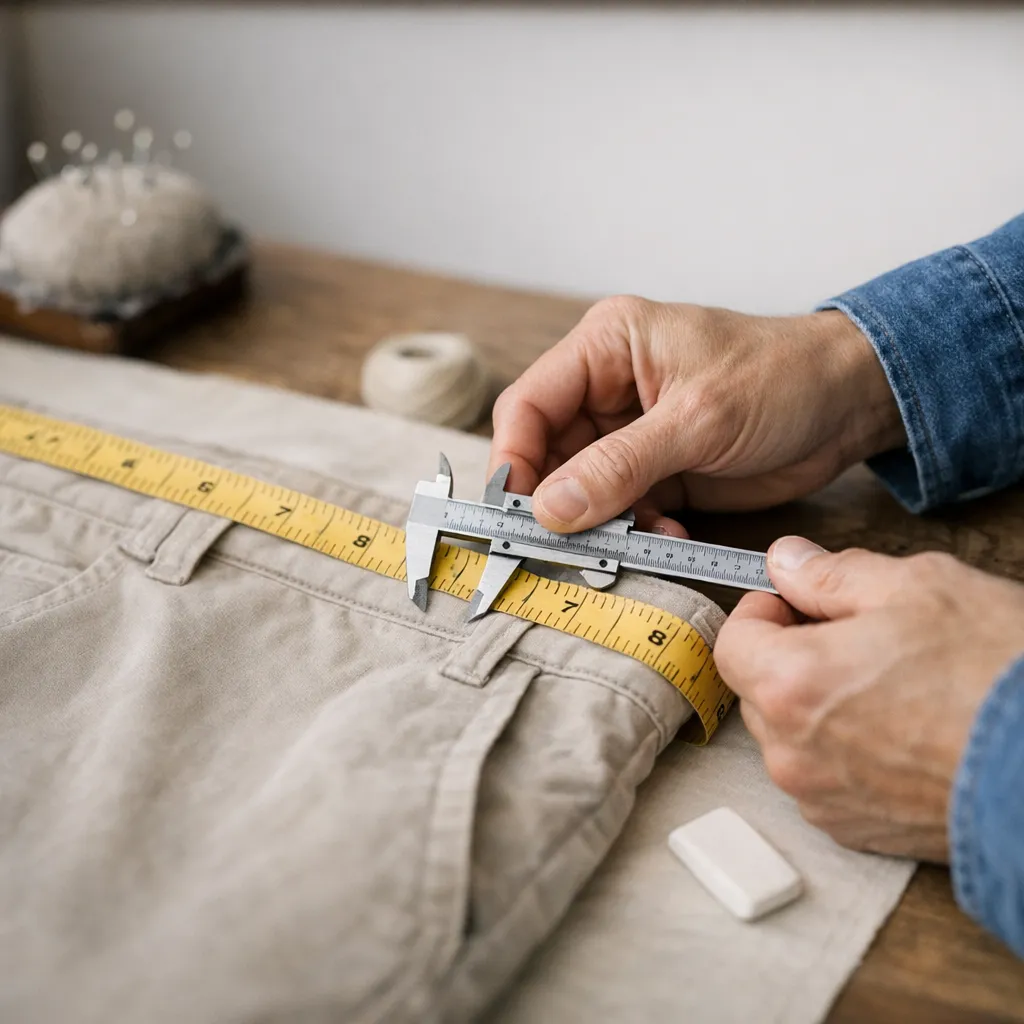
How to Confirm You Have Chosen the Right Size Before and After Your Order Arrives
Verification happens at two points: before you place the order and after the item arrives. Before checkout, your size decision should be supported by at least three sources of evidence, your own measurements, the brand size guide, and real customer reviews. After delivery, you can physically measure the garment itself and compare it against both your body measurements and the clothes you already own that fit well. This two stage check closes the loop and builds a reliable reference for every future purchase from that brand.
- Every key body measurement has been recorded in both centimeters and inches before you consulted any size chart
- You compared your measurements to the size guide published specifically by the brand you are buying from, not a generic reference
- Your chosen size accommodates your largest relevant measurement without sitting at the very top of that size bracket
- You identified the fabric composition in the product description and considered whether shrinkage or structure affects your size decision
- You read customer reviews and found fit feedback from buyers with a similar build that supports your chosen size
- If your measurements fell between two sizes, you selected the larger one before placing the order
- You confirmed the retailer return and exchange policy before completing checkout
- When the item arrived, you measured the actual garment at the chest, waist, and length and compared those numbers to your body measurements
- The garment fits without pulling at the shoulders, restricting movement at the chest, or gaping at the waist
- You have recorded the brand, size label, and garment measurements together so you can reference them for future purchases from the same retailer
| Checkpoint | What good looks like | How to test | If it fails, try |
|---|---|---|---|
| Body measurements recorded | All key dimensions written down in both units with clear labels | Run through your list and confirm chest, shoulder, waist, hip, inseam, sleeve, collar, and height are all present | Retake any missing measurements with a partner before proceeding to the size chart |
| Brand size guide consulted | You are reading the size guide from the exact brand you are purchasing from | Confirm the size guide URL or page belongs to the brand, not a third party comparison site | Go directly to the brand or retailer website and locate their official sizing page |
| Measurements compared to chart | Your measurements align clearly with one size bracket across all dimensions | Check each measurement against the chart row by row and note any that fall at a size boundary | Apply the size up rule for any measurement that sits at the top of a bracket or between two sizes |
| Fabric type reviewed | You have read the fabric content and considered its impact on fit | Find the fabric percentage breakdown in the product description and note any materials known to shrink or run tight | Size up for high cotton content items or any fabric noted as having low stretch |
| Customer reviews checked | At least a few reviews from buyers with a similar build confirm your size choice | Filter or scan reviews for fit language such as true to size, runs large, or size up | If reviews consistently suggest sizing differently from the chart, follow the review consensus |
| Garment measured on arrival | Actual garment dimensions match your body measurements within a comfortable range | Lay the garment flat and measure chest width, length, and waist, then compare to your recorded body numbers | If the garment is slightly off but close, consult a local tailor before initiating a return |
| Return policy confirmed | You know the return window, conditions, and process before the item arrives | Locate the retailer returns page and note the deadline and any restrictions on worn or washed items | Contact customer service before opening the packaging if you are unsure about the policy terms |
Troubleshooting Common Size Problems When Buying Men's Clothing Online
Even when you follow the process carefully, sizing problems can still occur. Most issues trace back to one of a small number of root causes: measurement error, brand variation, fabric behavior, or misreading a size chart. The entries below cover the most frequent symptoms buyers encounter, explain why each one happens, and give you a clear action to take so you can resolve the problem quickly and avoid repeating it.
-
Symptom:
The item arrived in your usual size but feels noticeably tighter or looser than expected.
Why it happens: Size labels are not standardized across brands. Vanity sizing means the same number can represent garments that differ by several centimeters in actual dimensions, so a size from one brand carries no reliable meaning when applied to another.
Fix: Stop relying on your habitual size label and start comparing your recorded body measurements directly to the brand size chart for every new retailer you buy from, including brands like LESH where garments are cut to their own specific proportions.
-
Symptom:
The shirt fits well at the chest but pulls tightly across the shoulders.
Why it happens: Chest and shoulder measurements do not always scale together on a size chart, and many buyers measure only their chest without recording shoulder width separately.
Fix: Always measure shoulder width as a standalone dimension and compare it to the brand chart independently of your chest reading. If the two measurements point to different sizes, prioritize the shoulder measurement for fitted shirts and size up accordingly.
-
Symptom:
The trousers fit at the waist but cannot be pulled comfortably over the hips or thighs.
Why it happens: Waist size is the most commonly checked measurement for trousers, but hip and thigh dimensions are equally important and are frequently overlooked during the comparison stage.
Fix: Record your hip and thigh measurements alongside your waist before buying any trousers and check all three against the brand chart. If any one of the three sits at a size boundary, apply the size up rule.
-
Symptom:
A cotton item that fit well on arrival became too small after the first wash.
Why it happens: Cotton fabrics can shrink when washed, particularly if the garment has not been pre shrunk by the manufacturer. Buyers who do not check the fabric composition before purchasing are caught off guard by this.
Fix: Read the fabric content in the product description before ordering. For items with a high cotton percentage, size up by one and wash on a cooler cycle to minimize further shrinkage.
-
Symptom:
The size chart suggested one size but customer reviews consistently recommend a different one.
Why it happens: Size charts reflect intended dimensions but do not always account for how a garment is cut, how the fabric behaves in wear, or how the item compares to the label after finishing and construction.
Fix: When there is a conflict between the size chart and the consensus from multiple reviews, follow the review guidance. Real buyers describing their actual experience with a specific item are a more reliable fit signal than a chart alone.
-
Symptom:
Your measurements fall between two sizes on every chart you consult.
Why it happens: Body proportions do not always map neatly onto the incremental steps used in standardized size charts, which are built around averaged body dimensions rather than individual variation.
Fix: Default to the larger size in every case where you are caught between two options. A garment with a little extra room can be worn as intended or adjusted by a tailor, while one that is too small has no practical remedy.
-
Symptom:
The sleeve length is correct but the cuff sits too high on the wrist.
Why it happens: Sleeve length measurements are often taken with the arm fully extended, but the correct method requires a slightly bent elbow to account for the fabric needed to cover the arm during natural movement.
Fix: Retake your sleeve measurement with your elbow bent at a natural angle. Use this revised number when consulting size charts and note that the corrected figure will typically be slightly longer than a straight arm reading.
-
Symptom:
You ordered the correct size according to the chart but the garment fits nothing like the product photos suggested.
Why it happens: Product photography is styled to present clothing in its most flattering form, often on models whose proportions differ significantly from the average buyer. Marketing images are not a reliable guide to how a garment will fit on your specific body.
Fix: Use your measurements and the size chart as your primary decision tools and treat product photos as purely visual references. Supplement your judgment with customer reviews that include photos or detailed fit descriptions from real buyers.
-
Symptom:
The item fits but feels uncomfortable after a few hours of wear, particularly around the waist or thighs.
Why it happens: Static measurements taken while standing do not always capture how a garment feels during movement, sitting, or extended wear. Fabric with low stretch compounds this issue.
Fix: When buying garments in fabrics with little or no stretch such as rigid denim or structured wool, add a small amount of ease to your measurements before consulting the chart and consider sizing up even if the chart suggests your exact size is available.
-
Symptom:
You are unsure whether to return the item or keep it and have it altered.
Why it happens: Returns are the default response to a poor fit, but many sizing issues are minor and can be resolved more efficiently and at lower cost by a local tailor.
Fix: Assess whether the fit issue is structural, such as a garment that is too small overall, or correctable, such as a hem that is too long or a waist that is slightly generous. For correctable issues, visit a tailor before initiating a return, as alterations are often faster and less expensive than the return process.
Questions Shoppers Ask After Getting Their Size Wrong Online
- Why does the same size fit differently across different brands? Size labels are not standardized, and vanity sizing means the same number can represent garments that differ by several centimeters in actual dimensions. Always compare your body measurements to the specific brand size guide rather than assuming your usual label applies.
- Should I always size up if I am between two sizes? Yes, as a general rule. A garment with a little extra room can be worn comfortably or adjusted by a tailor, while one that is too small cannot be made larger.
- How do I measure my inseam without a partner? Use a pair of trousers that already fit you well, lay them flat on a surface, and measure from the crotch seam straight down to the hem. This gives you a reliable inseam reference without needing assistance.
- Do customer reviews actually help with sizing decisions? Yes, particularly when reviewers mention their measurements or describe how the item fits relative to the size chart. Look for consistent patterns across multiple reviews rather than relying on a single comment.
- How does fabric type affect which size I should choose? Cotton can shrink after washing, so sizing up is often sensible for high cotton garments. Fabrics with low stretch such as rigid denim or structured wool require more ease, while polyester blends tend to hold their shape and dimensions more reliably.
- What is garment to garment matching and how does it help? Garment to garment matching compares the actual physical dimensions of a product you want to buy against the dimensions of a garment you already own and know fits well. This approach sidesteps the unreliability of size labels entirely and focuses on real measurements.
- Is it worth getting an item altered instead of returning it? For minor fit issues such as a hem that is too long or a waist that is slightly generous, a tailor can often resolve the problem faster and at lower cost than going through a return and reorder process.
- Why do my measurements sometimes point to different sizes for the same garment? Body proportions do not scale uniformly across size charts, which are built around averaged dimensions. When different measurements suggest different sizes, prioritize the measurement most critical to that garment type, such as shoulders for shirts or hips for trousers, and size up where there is doubt.
- How often should I retake my measurements? Retake your measurements any time your body changes noticeably, after significant weight change, or at least once a year. Measurements taken more than a year ago may no longer reflect your current dimensions accurately enough for reliable size comparisons.
Sizing Questions Answered for Men Shopping Online
What is the most accurate way to measure yourself for online clothing shopping?
The most accurate approach is to use a soft fabric measuring tape, wear form fitting clothing or measure directly against your body, and have a partner assist you for measurements like chest, shoulders, and back. Take each measurement twice and record both readings before writing down your final number. Measuring alone often produces inaccurate results, particularly for chest and shoulder width where the tape position is difficult to control.
Why do the same size jeans fit differently across different brands?
Size labels are not standardized across the industry, and vanity sizing means that brands intentionally label garments with smaller numbers than their actual dimensions to appeal to buyers. A size that represents one set of measurements at one brand can differ by several centimeters at another. The only reliable way to navigate this is to compare your actual body measurements against the specific size guide published by each individual brand before purchasing.
Should I size up or size down if I am between two sizes?
Always size up when your measurements fall between two options on a size chart. A garment with a small amount of extra room can be worn comfortably as intended or taken to a tailor for a minor adjustment. A garment that is too small cannot be made larger, and wearing something that restricts movement at the chest, shoulders, or thighs will never feel right regardless of how it looks.
How do I account for fabric shrinkage when choosing a size online?
Check the fabric composition listed in the product description before placing your order. Garments with a high cotton content are the most likely to shrink after the first wash, so sizing up by one is a sensible precaution for these items. Polyester blends are more dimensionally stable and less likely to shrink significantly. Washing on a cooler cycle also helps slow the rate of shrinkage in natural fiber garments over time.
Can customer reviews really help me find the right size?
Yes, particularly when reviewers describe their measurements or body type alongside their size verdict. Look for consistent patterns across multiple reviews rather than acting on a single comment. Phrases like runs small, true to size, or sized up and it fits perfectly are the most actionable signals. Reviews from buyers with a similar build to your own carry more weight than general comments that do not reference specific dimensions or fit comparisons.
What is garment to garment matching and how does it reduce returns?
Garment to garment matching is an approach that compares the actual physical dimensions of a product you want to buy against the measured dimensions of a garment you already own and know fits you well. Rather than relying on abstract size labels or body measurement charts, it focuses on real measurements at the item level. This method bypasses the inconsistencies caused by vanity sizing and brand variation, making it significantly more reliable for predicting whether a new item will feel familiar in fit.
How do I measure my inseam accurately without a partner?
The simplest method is to use a pair of trousers that already fit you well. Lay them flat on a hard surface, align the legs so the seams are straight, and measure from the crotch seam down to the hem. This gives you a consistent and reliable inseam reference without requiring any assistance. Avoid trying to measure your inseam directly on your body without help, as it is difficult to hold the tape accurately and the reading will often be off.
When should I consider getting a garment altered instead of returning it?
Alterations are worth considering when the fit issue is minor and correctable rather than structural. A hem that is too long, a waist that is slightly generous on trousers, or shirt sleeves that are a little short can all be addressed by a local tailor quickly and at modest cost. If the garment is too small across the chest or shoulders, or the proportions are fundamentally wrong for your body shape, a return is the more practical option.
How often should I update my body measurements for online shopping?
Retake your measurements any time your body changes noticeably, or at minimum once a year. Measurements taken more than twelve months ago may no longer reflect your current dimensions accurately, and using outdated numbers when consulting a size chart will produce the same outcome as not measuring at all. Keeping a current record means you can move quickly when you find an item you want to buy without having to start the process from scratch each time.